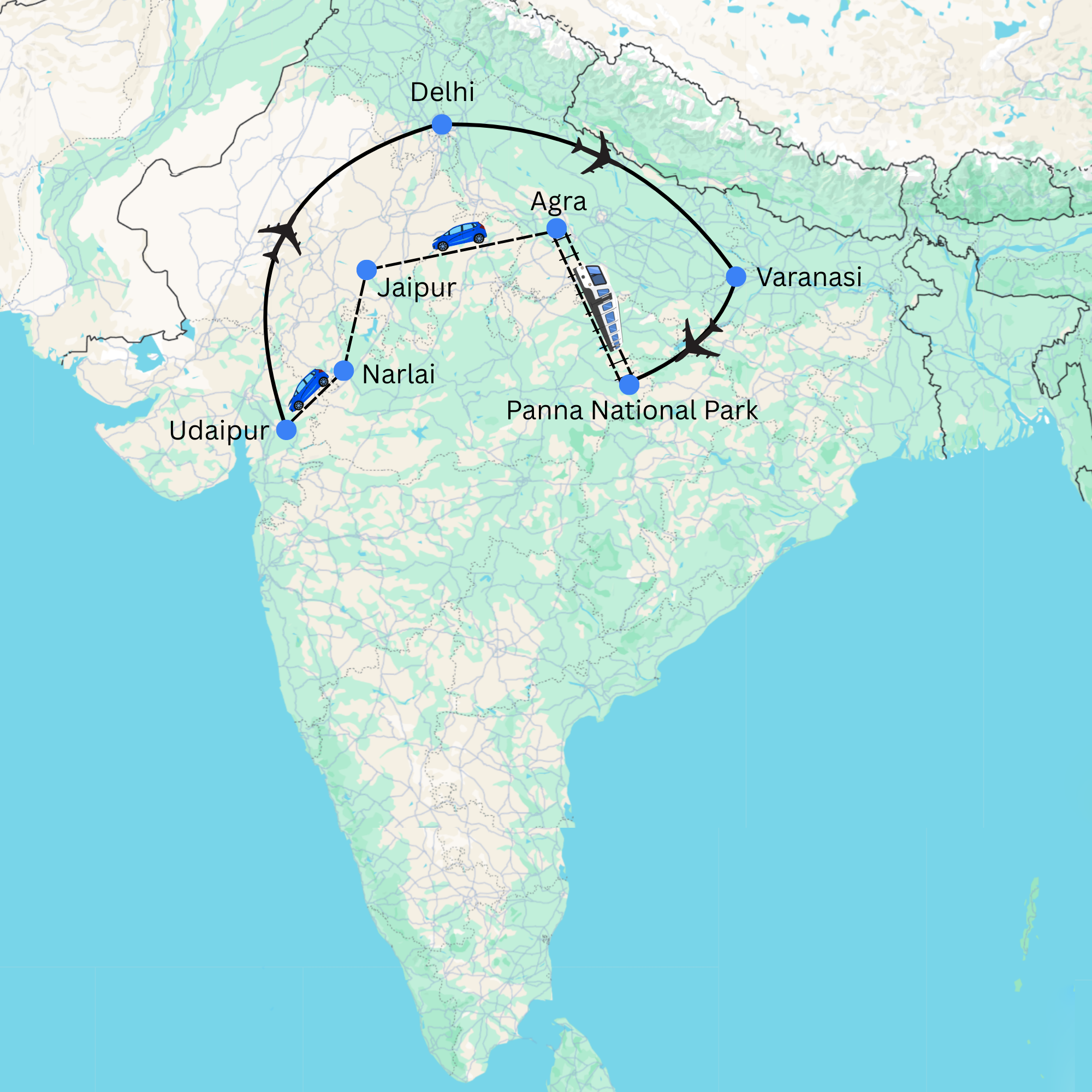
March 6th, 2027: Delhi Arrival Greeting & Transfer to Hotel.
You are greeted in the arrival greeting area and ushered to your private vehicle. Most flights arrive either in the evening or at night, and we recommend that our guests consider arriving a day earlier as this allows you to recuperate from jetlag and serves as insurance against international flight delays and cancellations. An additional night’s stay can be added at the time of reservation, including the option to add services for the afternoon.
You are driven through New Delhi’s broad avenues to your hotel and assisted with your check-in if it is 3 pm or later. The Leela Palace New Delhi is widely regarded as the city’s finest luxury hotel for leisure travelers, offering a distinctly Indian expression of grandeur paired with exceptional service. The property reflects a modern interpretation of palatial architecture, with richly detailed interiors, curated artwork, and an atmosphere designed for comfort rather than business formality, and you are in an upgraded two bay suite with city views.
The next day’s plans are briefly discussed and you are at leisure until we pick you up in the morning of the next day. Tomorrow you can choose to stop for a secure ATM withdrawal, and/or have your guide assist during a shopping stop to pick up essentials. Welcome to India, home to incredible historical monuments, a plethora of natural wonders, and the world’s most unique and colorful culture. (Overnight – The Leela Palace New Delhi)
March 7th, 2027: Delhi. New Delhi - 100,000 Years in A Day
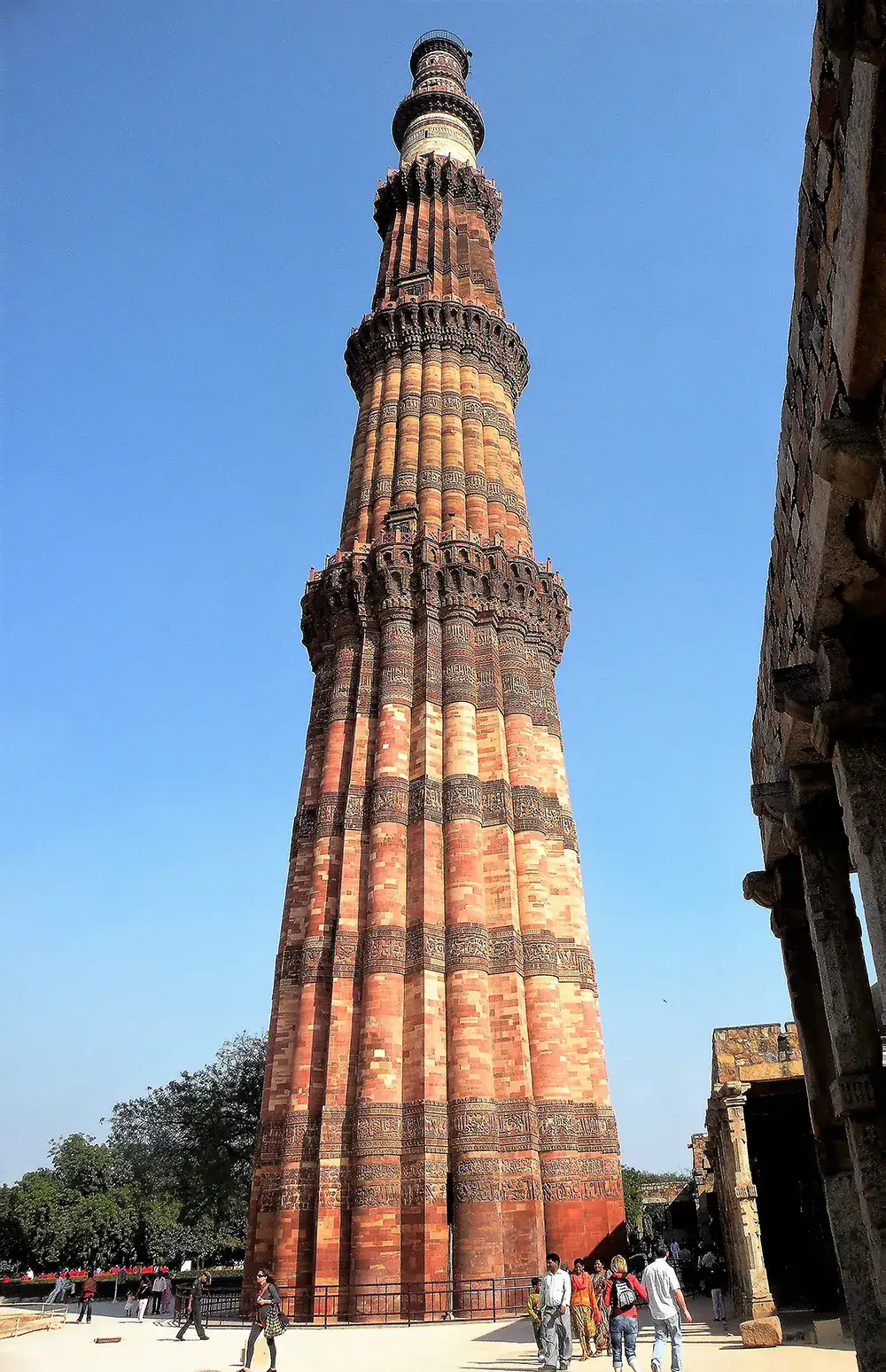
Morning: Qutab Minar (UWHS) Your day begins with a drive to the medieval world and the Qutab Minar,the 12th-century towering victory column that rises over 240 feet. The incredible sandstone tower was completed in 1199 and is not merely a monumental tower—it is a statement of power, the proclamation of a new era following centuries of Hindu rule. Your guide will help you decode the stunning Arabic inscriptions and Indo-Islamic motifs on the Minar’s facade.
Surrounding the Minar are remnants of Quwwat-ul-Islam, the first mosque built in India after Islamic conquests. Constructed partly from reassembled elements of earlier Hindu and Jain temples—an architectural smorgasbord that somehow evocatively symbolizes transition and continuity. Visit the Ashokan Iron Pillar that was brought here centuries before the Minar, standing rust-free after 2300 years.
Mangar Bani – Echoes of Prehistory (100,000 Years Ago) Leaving the 12th Century behind, you drive on to Mangar Bani, an extraordinary archaeological treasure just discovered on the outskirts of Delhi. This forested valley is the largest Neolithic tool-making site in the Indian subcontinent, with artifacts dating back over 100,000 years — a staggering glimpse into the earliest chapters of human history.
Your guide will lead you through areas accessible under the regulations of state and federal archaeological authorities, as the access situation is dynamic and the archaeological work has not really begun as of summer 2025. Within the rugged terrain of the Aravalli Hills, prehistoric caves have revealed paintings dating back 20,000–40,000 years, offering a rare and profound window into early human imagination. The landscape itself is part of the story: Mangar Bani is surrounded by a sacred groveand borders a 700-year-old village.
Lotus Temple Your next stop in Delhi is the serene and iconic Lotus Temple, built in 1986. Shaped like a blooming lotus flower and set amidst 26 acres of manicured gardens, this Bahá’í House of Worship welcomes all faiths and beliefs—symbolizing the oneness of humanity and spiritual truth.
Constructed from gleaming white marble imported from Greece, the temple comprises 27 petal-like structures arranged in clusters of three to form nine entrances. Inside, the vast prayer hall is silent—no rituals, no sermons, only personal contemplation. The contrast with Delhi’s older, more ornamented structures is striking, underscoring a spiritual modernism rooted in simplicity and inclusivity.
Optional Break: Lunch at a Local Eatery - Depending on your preferences, your guide can escort you to regional North Indian cuisine or international fare.
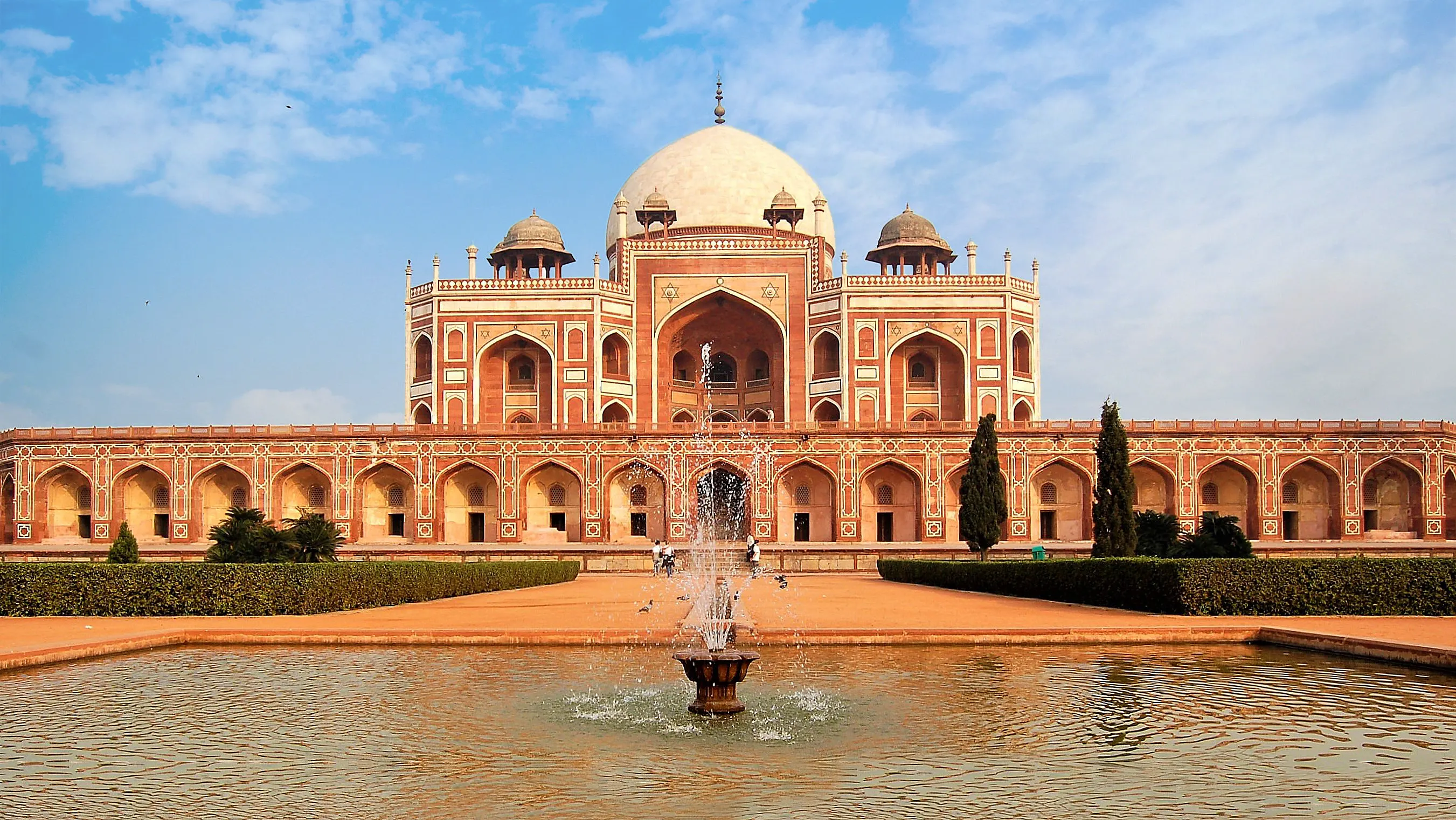
Humayun’s Tomb (UWHS) Post lunch, you continue to Humayun’s Tomb, a masterpiece of Mughal architecture and the inspiration for the Taj Mahal. Commissioned in 1565 by the Empress for her husband, Emperor Humayun, the structure is the first major garden-tomb on the Indian subcontinent and marks a revolutionary shift in architectural design.
Crafted from red sandstone and white marble, the monument rises symmetrically from a Persian-style Charbagh garden. Your guide will explain how this was not merely a mausoleum but a symbolic paradise, echoing Quranic visions of eternal life. The interplay of scale, geometry, and light creates a space that is both regal and serene—reflecting the Mughal empire’s blend of Persian aesthetics and Indian craftsmanship.
Lodhi Art District – Delhi’s Open-Air Contemporary Canvas Your journey through time concludes in Lodhi Art District, India’s first public art district, where 21st-century creativity now colors the walls of a residential neighborhood built in the 1940s. Under the aegis of the St+art India Foundation, over 50 artists from around the world have transformed these buildings into a vibrant canvas of murals—blending Indian themes with global styles.
From evocative portraits of Indian women to abstract geometries, from social messages to surrealist scenes, this is where ancient heritage meets contemporary voice. Your guide will interpret key works and discuss how the area reflects Delhi’s evolving cultural identity.
As you return to your hotel, consider the arc of 100,000 years you’ve just traversed—from prehistoric hunters carving tools in Mangar Bani, to medieval emperors shaping dynasties, to modern artists redefining public spaces. No city on Earth offers such a journey across time in a single day. (Overnight – The Leela Palace New Delhi)
March 8th, 2027: Delhi. Shahjahanabad (Old Delhi)
Your day begins with a short drive to Shahjahanabad (named for its founder Shah Jahan), where the skyline is suddenly punctuated by domes, minarets, and weathered havelis. This is true Old Delhi, founded in 1639 as the Mughal Empire’s final great imperial capital. Unlike other ruins of past dynasties, Shahjahanabad remains a dense, vibrant urban world — layered with centuries of faith, food, trade, and memory.
The legendary Mughal Empire was our planet’s greatest ruling dynasty during the 16th and 17th centuries, Yes, in India, not in Europe or China! Their control stretched over a vast region well beyond India, and you will experience many of their awe-inspiring creations. The Taj Mahal, Red Fort, and Agra Fort (these three are the creations of the dynasty’s greatest builder, Shah Jahan) are just a few of their UNESCO World Heritage sites that you will experience.
North India, its cuisines, racial identity, and a lot more, is heavily influenced by the Mughal’s long rule. The result is an incredible fusion of cultures and styles in the cuisine, fine arts, architecture, social taboos, and a lot more.
Red Fort (UWHS) You begin your exploration at the imposing Red Fort, known in Shah Jahan’s time as Qila-e-Mubarak—the Blessed Fort. Built between 1639 and 1648 from deep red sandstone, this sprawling complex was once the seat of the most powerful empire in the world.
Your guide will lead you through the ceremonial halls and private quarters of the Mughal emperors: the Diwan-i-Am, where emperors addressed their subjects; the Diwan-i-Khas, where ambassadors and nobility gathered under a ceiling once inlaid with silver and gold; and the once-thriving Rang Mahal or “Palace of Colors.” The layout reflects the emperor’s attempt to recreate paradise on earth, using Persian-inspired garden and water features.
Note: On Mondays, when the Red Fort is closed, your guide will instead drive you along its perimeter for exterior views and an overview of its architectural and historical significance.
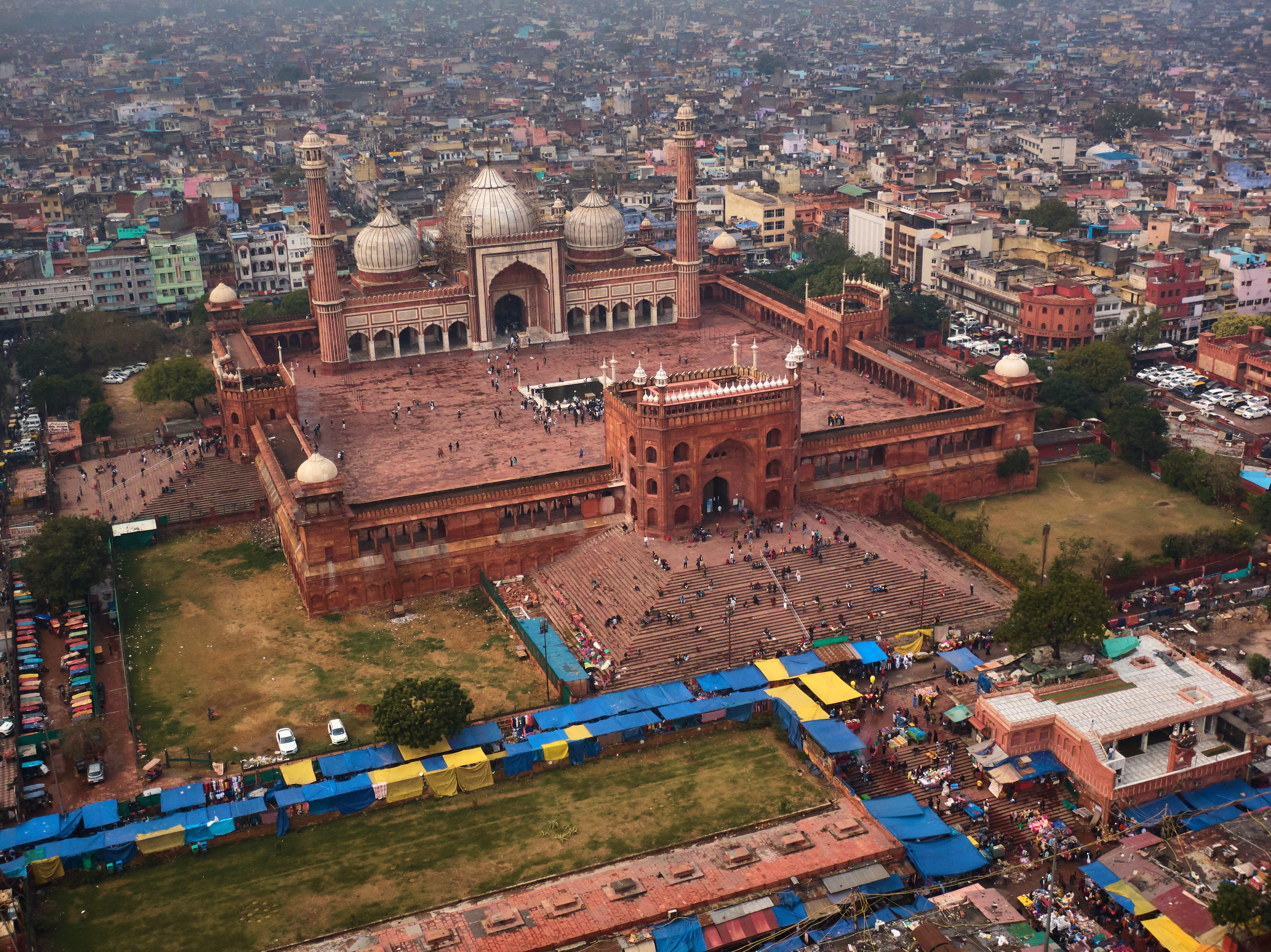
Jama Masjid A very short distance away rises the colossal Jama Masjid, also built by Shah Jahan and completed in 1656. Climb the shallow stone steps to enter a vast courtyard that can hold over 25,000 worshippers. The mosque’s red sandstone and white marble minarets dominate the skyline—a commanding expression of the emperor’s desire to blend faith with beauty.
Your guide will explain the mosque’s architectural innovations and religious symbolism. Unlike the formality of European cathedrals, the mosque pulses with daily life, prayer, and the soft hum of devotion.
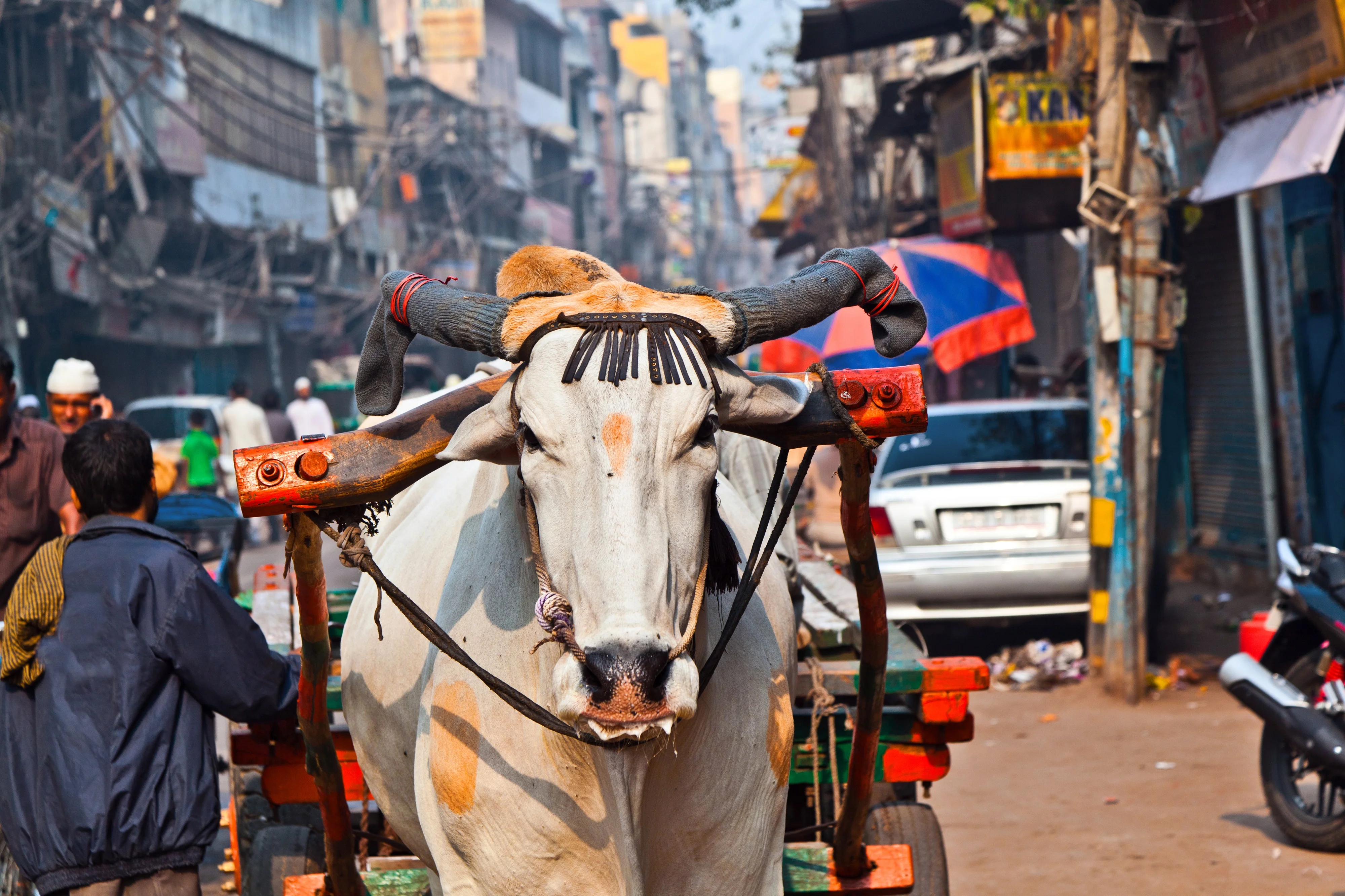
E-Rickshaw Ride in Chandni Chowk From the mosque’s gates you’ll board an e-rickshaw and your guide will accompany you on a ride through the storied lanes of Chandni Chowk, the moonlit market built by Shah Jahan’s daughter, Jahanara Begum. This street, once bisected by a canal reflecting moonlight, was the commercial heart of Mughal India.The narrow lanes still bustle with life. Street vendors, spice sellers, jewelers, and bookbinders—all coexist in tightly packed shopfronts that have changed little in centuries.
Parathe Wali Gali You disembark at Parathe Wali Gali, a narrow alleyway (Gali) legendary for its stuffed, pan-fried breads (parathas) served with chutneys and pickles - some shops here have been run by the same families for over a century.
Your guide will point out the most iconic establishments, explain the regional variations of this beloved snack, but we strongly recommend against dining in this environment. Your hotel serves all sorts of parathas.
Naughara Lane Just steps away lies Naughara Gali, a quiet oasis hidden behind the commotion. This short, serene lane is lined with beautifully preserved 18th-century Jain havelis—each painted in pastel shades, with ornate doorways and decorative arches.
Khari Baoli – World’s Largest Spice Market
Your exploration concludes with a guided exploration of Khari Baoli, the largest spice market on our planet, active since the 17th century. Not a place for quiet here, porters race up staircases with sacks of turmeric, masala, and dried fruit; wholesalers shout orders over ringing phones; and the air is thick with the pungent perfume of cardamom, fennel, cinnamon, and red chili.
Your guide can take you inside traditional spice shops, explain the origins and uses of key Indian spices, and help you understand how trade in these aromatic treasures once linked Delhi to distant corners of the world. This is more than a market—it’s a living museum of commerce, cuisine, and empire.
After the final exhilarating walk through Old Delhi’s labyrinth, your guide and driver will return you to your hotel. Though only a few hours have passed, you’ve touched the lifeblood of a city where the past is not distant—it is spoken, tasted, inhaled, and walked upon. (Overnight – The Leela Palace New Delhi)
March 9th, 2027: Delhi - Varanasi.
Flight to Varanasi, a Journey to the Sacred. Your day begins with an assisted checkout from your hotel in Delhi in the morning. You are escorted to Delhi Airport for your early afternoon flight to Varanasi, the spiritual heart of India and one of the oldest continuously inhabited cities in the world. Upon arrival at Varanasi Airport, depending on your preference, there is the option to pause for a lunch break at a local restaurant.
Sarnath – Where the Wheel of Dharma First Turned A small detour on the way to your lodging brings you to the serene site of Sarnath, where Siddhartha Gautama, the Buddha, delivered his first sermon over 2,500 years ago—setting in motion the Wheel of Dharma and laying the foundations of Buddhism.
You will take a short walk through the main archaeological park, where ruins of ancient monasteries and temples stand in quiet reverence. The centerpiece is the towering Dhamek Stupa, originally built 2300 years ago by India’s greatest emperor, Ashoka. Parts of the stupa were rebuilt in the 5th–6th century CE.
It marks the exact spot where the Buddha is said to have taught his first five disciples. Your guide will interpret the layers of history around you—Mauryan brickwork, Gupta-style carvings, and other attributes that continue to draw pilgrims from across the world.
Sarnath Museum (Optional) If you’re interested, a visit to the small Sarnath Archaeological Museum, home of India’s National Emblem takes a very short while. Its modest size belies the significance of its collection. Here you will find the exquisitely carved Ashokan Lion Capital, a 3rd-century BCE sculpture featuring four back-to-back lions—now immortalized as the national emblem of India. Your guide will explain the symbolism behind the lions, wheels, and base figures, and how Emperor Ashoka used such imagery to spread both imperial authority and Buddhist ideals. The Lion Capital is part of a small collection of invaluable artifacts from the region.
Hotel Check-in. As the sun begins to lower, you are driven into Varanasi and escorted to your palace accommodations set amidst landscaped gardens on the edge of the city’s historic core. Originally built in the 19th century for the Maharaja of Varanasi, the palace is steeped in history and charm. Surrounded by 28 acres of lush gardens and mango orchards, the palace retains an atmosphere of quiet privilege that feels worlds away from the intensity around it. You are assisted with check-in and shown to your spacious historical suite, where high ceilings, period details, and a sense of old-world residence define the experience.
You are provided with an overview of the early morning plans. A very special experience awaits at dawn—your Ganga cruise and exploration of Varanasi’s sacred riverbanks and timeless rituals. (Overnight – Taj Nadesar Palace)
March 10th, 2027: Varanasi.
Morning: Sunrise on the Ganga, a Millennia-Old Ritual Along the Sacred River.Your day begins well before dawn with a hot beverage and light snack, followed by a drive to the Ganga. You’ll arrive at the Ghats just before sunrise, one of the most powerful and timeless experiences in all of India.
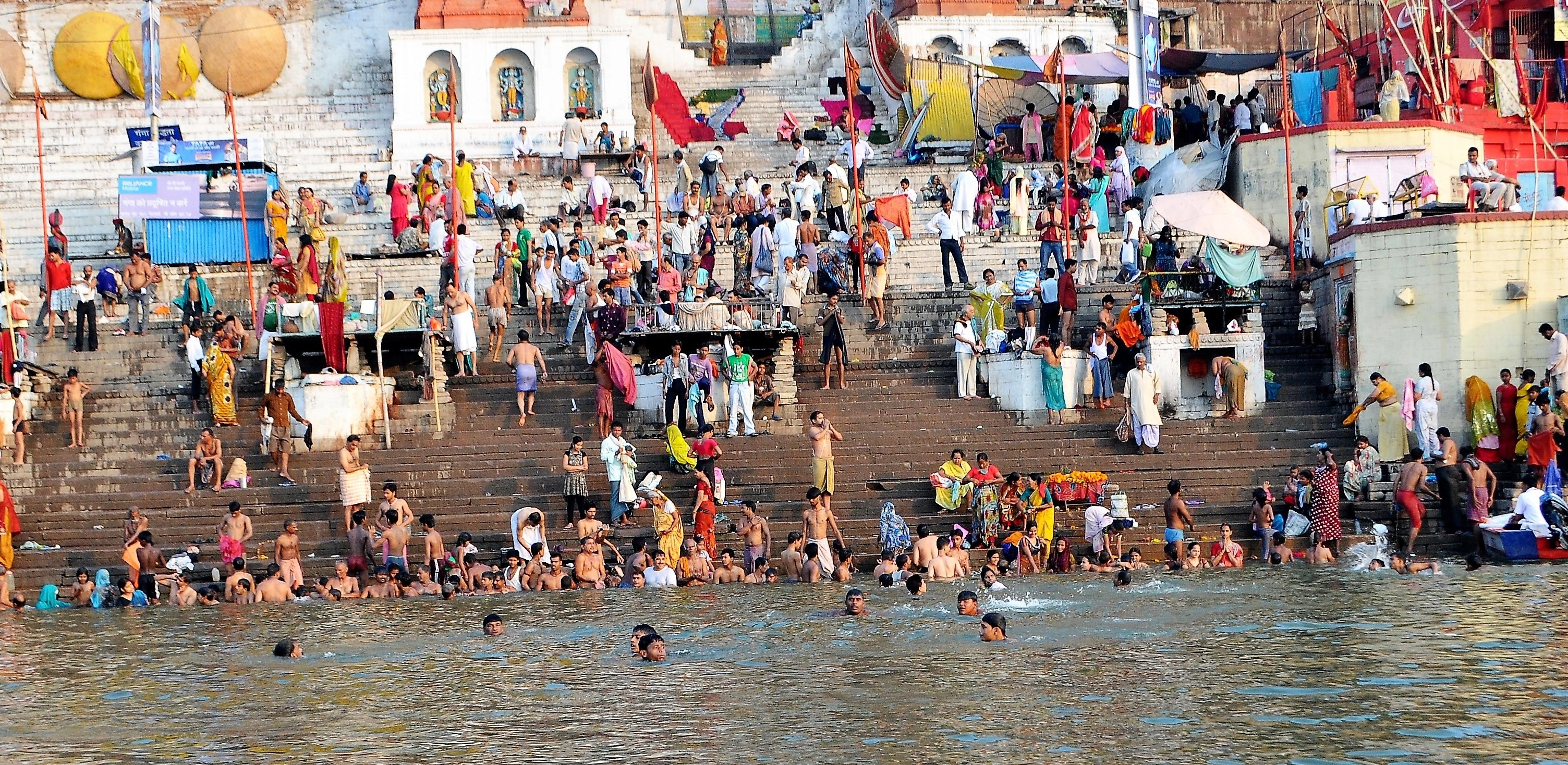
Boarding your private boat, you begin a slow cruise along theholiest stretch of the Ganga, observing morning rituals that have taken place here for thousands of years. As the sun rises over the river, the Ghats come to life:
Devout Hindus greet the dawn, immersing themselves in the sacred river as an act of purification
Women in sarees step modestly into the water to perform ablutions
Sadhus and priests, waist-deep in the Ganga, pour holy water over themselves in prayer
Others sit insilent meditation or practice yoga, facing the rising sun
You will also pass Manikarnika Ghat, the main cremation ghat of Kashi (the original ancient Holy City). Here, open-air cremations take place around the clock. Though solemn, it is a site of spiritual liberation—many Hindus believe that being cremated here breaks the cycle of rebirth and grants the soul salvation (moksha). Those interested can choose to visit the Ghat.
Your guide will provide respectful interpretation throughout the cruise, offering insight into the meaning and context of what you see—rituals that are both personal and universal, unchanged across millennia. After disembarkation, you are driven back to your hotel for a relaxed breakfast. The rest of the morning is at leisure—time to freshen up, rest, or enjoy the hotel’s facilities.
Afternoon: Drive to Ramnagar Fort via Banaras Hindu University - A Look at Varanasi’s Royal Past and an Immersive Walk Along the Sacred River
Following a break and lunch at your hotel, your exploration begins with a drive through Varanasi’s southern neighborhoods enroute to the far bank of the Ganga. On the way, you pass through the grounds of Banaras Hindu University (BHU)—India’s most respected Hindu academic institution, established in 1916.
Your guide will briefly point out notable landmarks of the expansive campus, and there is the option to stop for a short walk if you're interested. The tree-lined roads and university buildings offer a contrasting atmosphere to the riverfront’s dense spiritual landscape.
You then cross the Ganga on a fairly recently built bridge, heading to the opposite bank and leaving behind the intensity of Varanasi’s core.
Ramnagar Fort –destination is the 18th-century Ramnagar Fort, built from creamy Chunar sandstone as the official residence of the Kashi Naresh (King) of Varanasi. A modest palace, it is notable for its position directly on the river and for still housing the current royal family.
Inside, a small museum contains an eclectic mix of royal memorabilia—vintage cars, weaponry, costumes, and ornate palanquins. The layout includes open courtyards, carved balconies, and a Durbar Hall used for ceremonial events. Sections such as the Hanuman temple and Veda Vyasa shrine add cultural context.
Your guide provides background on the former role of the Kashi Naresh and explains how this aging residence still features in local ceremonies. From the fort’s upper levels, there are excellent views across the Ganga toward Varanasi’s central ghats.
Walk Along the Ghats After returning across the Ganga by vehicle, you will disembark near the western bank, from where your guide escorts you on foot through a crowded bazaar that serves pilgrims visiting the river. The narrow lanes are filled with shops selling ritual items, sweets, flowers, brassware, and religious souvenirs.
Emerging from the bazaar, you begin a guided walk along the Ghats, where a broad range of Hindu rituals and ceremonies unfold in real time. While you will have seen the cremation ghats during your morning experience, this walk offers the chance to witness other personal and communal rituals up close:
Sons shaving their heads to honor a recently deceased parent
Newly married couples praying with a priest for blessings
Infant naming ceremonies, conducted by Brahmin priests
Pilgrims bathing in the Ganga for various purposes
Your guide provides interpretation of these events, helping you engage meaningfully with what might otherwise seem distant or unfamiliar.
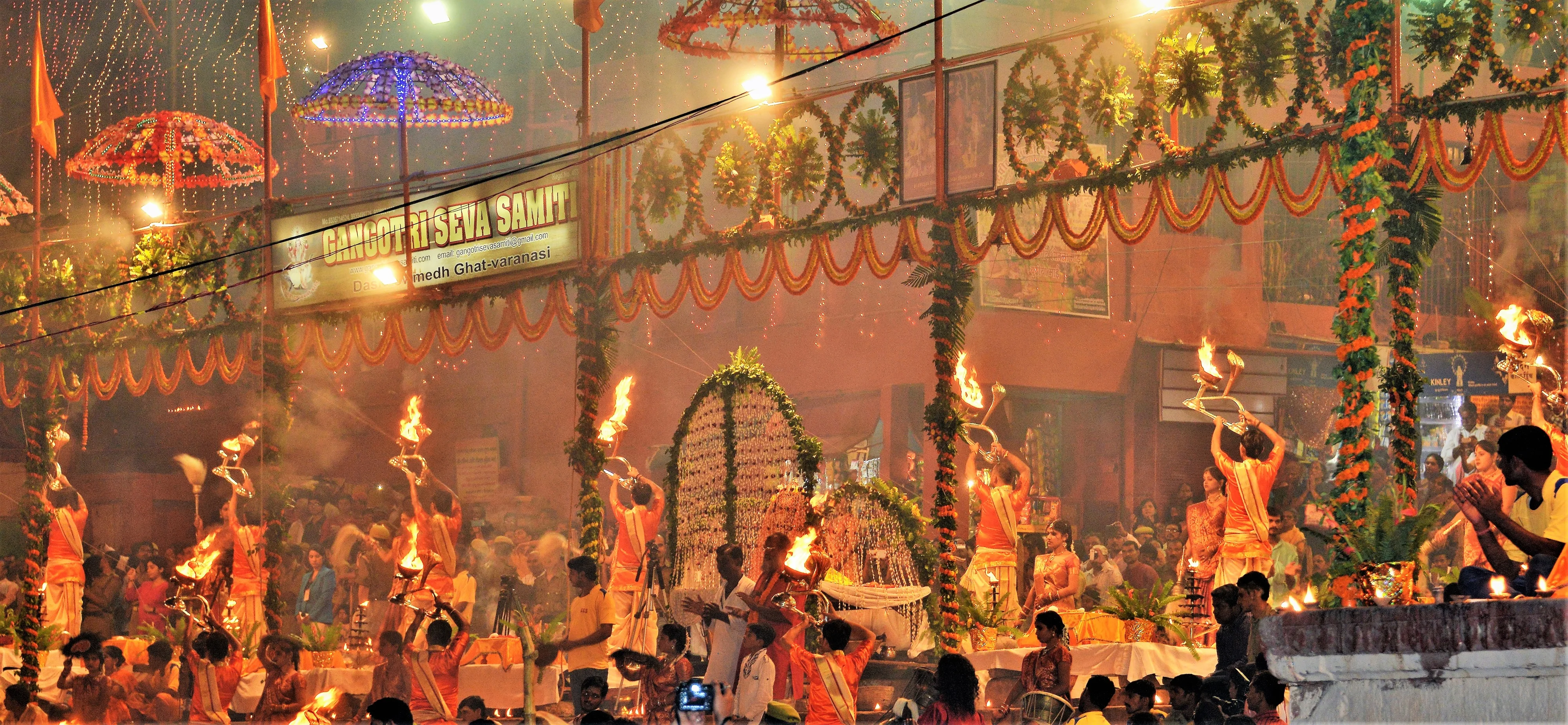
Sunset Cruise and Ganga Aarti at Dashashwamedh Ghat Your riverside walk concludes at a ghat where you are assisted in boarding your private boat for a sunset cruise along the Ganga. The cruise offers excellent views of evening activity along the river and floats past several well-known ghats.
The crowds are now gathering for the nightly Ganga Aarti at Dashashwamedh Ghat, your boat approaches the area but does not remain among the hundreds of vessels now crowding the water. What was once a few dozen boats has grown to well over two hundred, all jockeying for a partial glimpse of the ceremony.
To give our guests a far superior experience, your boat anchors a short distance away. You are then assisted in disembarking at a quieter ghat, from where your guide leads you on a brief walk to premium reserved seats located directly beside the ceremony platform. From here, you witness the Ganga Aarti up close — the chanting, drums, conch shells, and the synchronized movements of priests lifting large brass lamps in sweeping arcs of fire.
After the ceremony concludes, your guide escorts you through atmospheric bazaars and narrow alleys to your waiting vehicle. You are then driven back to your hotel for the evening. (Overnight – Taj Nadesar Palace)
March 11th, 2027: Varanasi – Khajuraho/Panna.
Mid-Morning Transfer to Varanasi Airport. After a relaxed breakfast and assisted checkout, you are driven to Varanasi Airport in the mid-morning for your early afternoon flight to Khajuraho.
Arrival at Khajuraho – Lunch Break. Upon arrival at Khajuraho Airport, you are greeted by your Guide and driven to a quality local restaurant for a relaxed lunch before beginning your exploration. The countryside around Khajuraho is peaceful and scenic, offering a welcome change of pace after Varanasi’s intensity.
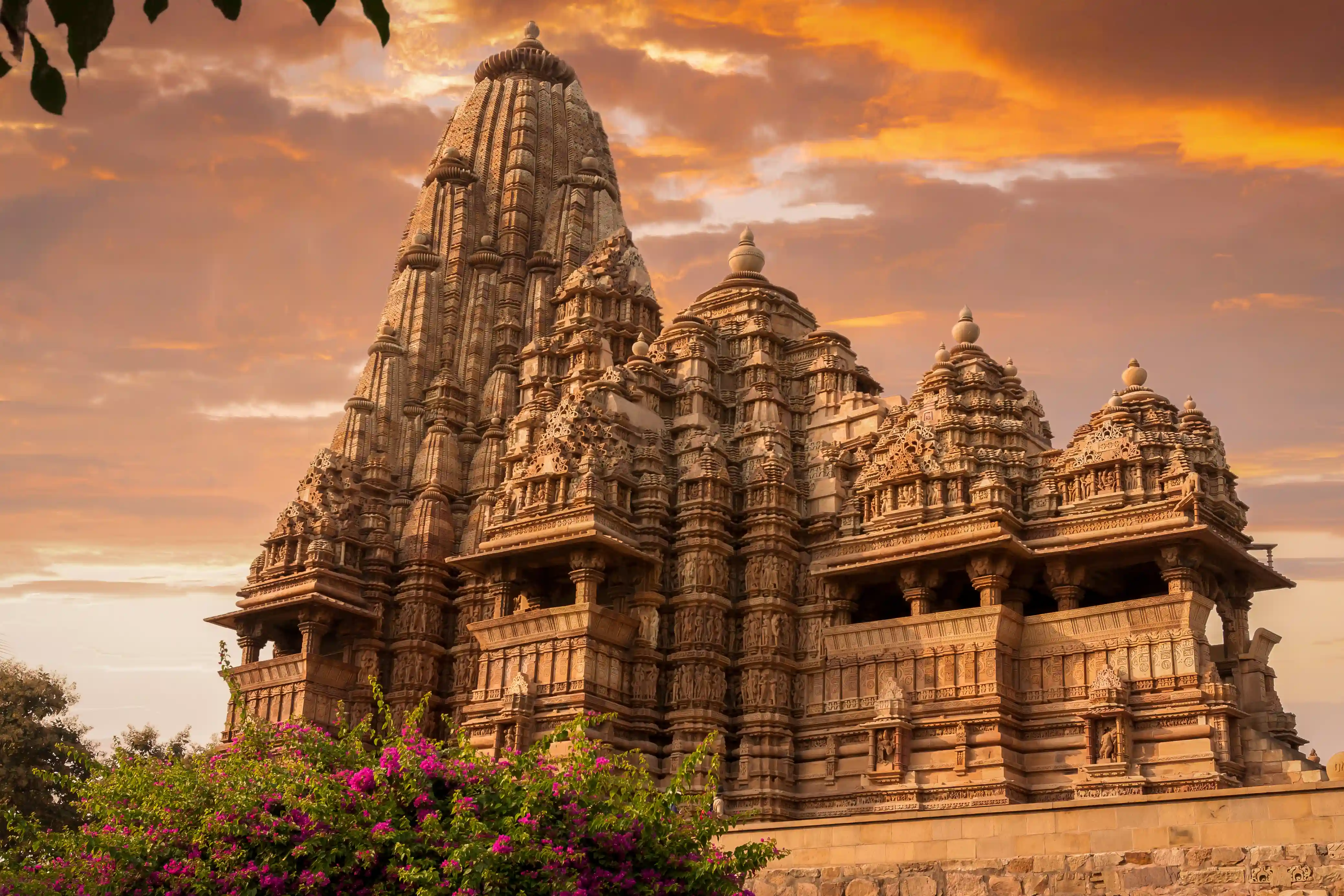
Khajuraho Western Group of Temples (UWHS). After lunch, you proceed to the Western Group of Temples, the finest and best-preserved of Khajuraho’s UNESCO World Heritage monuments. Built between the 10th and 11th centuries by the Chandela dynasty, these temples represent a pinnacle of North Indian temple architecture—harmonious proportions, deeply expressive carvings, and extraordinary craftsmanship.
Your guided exploration includes:
Lakshmana Temple – one of the earliest and most complete temples in Khajuraho, dedicated to Vishnu; its base friezes depict warriors, hunters, elephants, palace scenes, and everyday life in astonishing detail.
Kandariya Mahadeva Temple – the tallest and most celebrated of the temples, with more than 800 sculptures carved with breathtaking precision; it represents the Chandela style at full maturity.
Devi Jagadambi Temple – known for its refined carvings and serene inner sanctum dedicated to the Goddess.
Your guide will explain Khajuraho’s famed sculptural program—celestial beings, musicians, dancers, mythic protectors, and narrative panels illustrating the rhythms of life, devotion, and human experience. A small portion of this artwork—about five percent—is composed of extremely explicit depictions of sexual practices. These are presented within the wider context of medieval Indian philosophy, where erotic imagery symbolized fertility, cosmic creation, and the integration of worldly and spiritual life.
Drive to Panna & Check-In at Taj Pashan Garh Lodge. After the temples, you will drive to the nearby hills surrounding Panna National Park, arriving for check-in at Taj Pashan Garh—a secluded luxury safari lodge set within a pristine wilderness landscape.
Arrival here feels like a complete shift in atmosphere: the road winds through forested terrain before opening into a quiet lodge setting where stone cottages are thoughtfully spaced across the hillside, blending into the natural surroundings. The experience here is centered on nature, tranquility, and understated luxury, with warm Taj hospitality throughout.
You are assisted with check-in and escorted to your private stone cottage, designed with high ceilings, large windows, and outdoor sit-outs that allow you to fully absorb the sights and sounds of the forest. It is an ideal setting to unwind after the day’s touring—whether relaxing on your veranda, enjoying a shower, or simply taking in the peaceful environment before the evening. (Overnight – Taj Pashan Garh Lodge)
March 12th, 2027: Panna National Park.
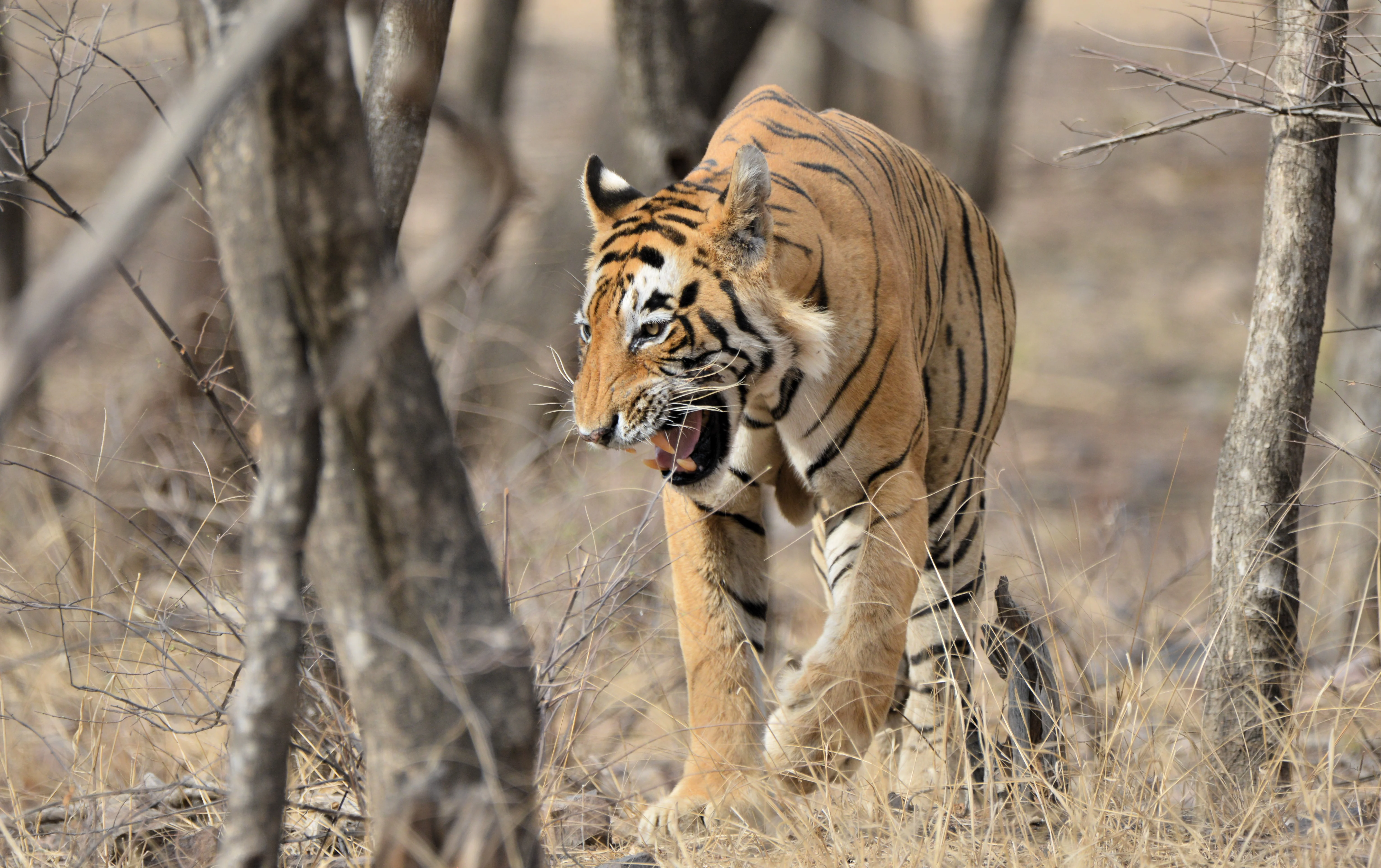
Morning Jeep Safari. After an early tea or coffee, you are escorted to your waiting jeep for your morning safari in Panna National Park. One of central India’s most beautiful reserves, Panna is known for its dramatic gorges, teak forests, and the Ken River, which supports a remarkable range of wildlife.
Tiger sightings in Panna are really good due to the healthy and growing population, and your chances are very high as our guests experience three safaris during their stay here. Many guests get multiple sightings. But a safari into the park is a fascinating experience even when you don't come across tigers. Other sightings commonly include nilgai antelope, sambar and chital deer, wild boar, langur monkeys, jackals, and a wide variety of birdlife, including both native and migratory species such as bar-headed geese, painted storks, crested serpent eagles, Indian vultures, kingfishers, and several magnificent species of hornbill.
Your safari will be accompanied by a Forest Department–assigned naturalist, and we maneuver to secure the better naturalists.
After the safari concludes, you return to the lodge for a late breakfast and time at leisure to enjoy the peaceful forest setting.
Lunch & Afternoon Jeep Safari. A fresh lunch is served at the lodge, and after lunch you will be heading for your second safari of the day. The early afternoon timing often brings a different pattern of wildlife activity, and predators begin to stir as the heat starts to ease. You will explore a different zone of the park, taking in new landscapes, riverine stretches, and vantage points, with your naturalist interpreting animal behavior, movement, and calls.
After the safari, you return to your lodge as the day winds down. Dinner is served, followed by another tranquil night in the forest. (Overnight – Taj Pashan Garh Lodge)
March 13th, 2027: Panna – Khajuraho – Agra.
Morning Safari or Guided Ken River Cruise.
After an early tea or coffee, you will enjoy a safari into the park this morning, or, at the time of journey reservation, you have the option to substitute the safari with a private guided cruise on the Ken River. The cruise offers excellent opportunities for birdlife viewing and the chance to spot wildlife along the riverbanks, including the endangered Gharial. Both experiences provide a rewarding and peaceful conclusion to your stay in this remarkable wilderness.
Return to the lodge for breakfast, followed by time to freshen up and complete your checkout.
Lunch at the Palace.
Lunch is served at the palace before your departure.
Transfer to Khajuraho Railway Station – Vande Bharat Express to Agra.
After lunch you are driven to Khajuraho Railway Station, where you are assisted in boarding Indian Railways pride and joy, the Vande Bharat Express. This modern, comfortable train operates between Khajuraho and Agra six days a week, except Mondays. (If your travel date falls on a Monday, an alternative routing will be arranged.)
Train through Indian Countryside. The train departs Khajuraho at 2:50 pm and arrives at Agra at 8:55 pm. Traveling on the Vande Bharat Express is comfortable and relaxing as the coaches feature wide, cushioned seats with good legroom and recline options. Large panoramic windows line both sides of the coach, giving you clear views of the countryside as the train moves through farmlands, small towns, rivers, and stretches of open landscape. It is a pleasant way to watch daily life unfold beyond the cities.
You are escorted to your premium seats and your baggage is ported and stored appropriately. Each wide seat has a tray table and conveniences like charging outlets, and refreshments are served - we recommend just the packaged water/drinks and snacks. The smooth motion of the train encourages you to relax and take in the scenery.
Arrival in Agra.
Upon arrival at Agra Railway Station, porters will collect your luggage and direct you to follow them to the exit. Your luggage is ported for the drive to The Oberoi Amarvilas—one of the world's most iconic luxury hotels, set just moments from the Taj Mahal. You are assisted with check-in and escorted to your room, where the design is intentionally calm and understated so the focus stays where it belongs: on the Taj. From your rooms expansive windiws, the view opens directly to the monument, luminous in the evening light—an unforgettable first look that is worlds away from the bustle of the station and the city. (Overnight – Oberoi Amarvilas)
March 14th, 2027: Agra.
Sunrise & Sunset at the Taj Mahal, Agra Fort, and Itmad-ud-Daulah
Please note: This day cannot be a Friday, as the Taj Mahal is closed on Fridays.
Sunrise at the Taj Mahal (UWHS)
Begin your day with a guided sunrise visit to the Taj Mahal, when the monument is bathed in soft golden light and the grounds are quiet. For most first-time visitors, walking through the red sandstone gateway and seeing the Taj framed in the early morning stillness is unforgettable.
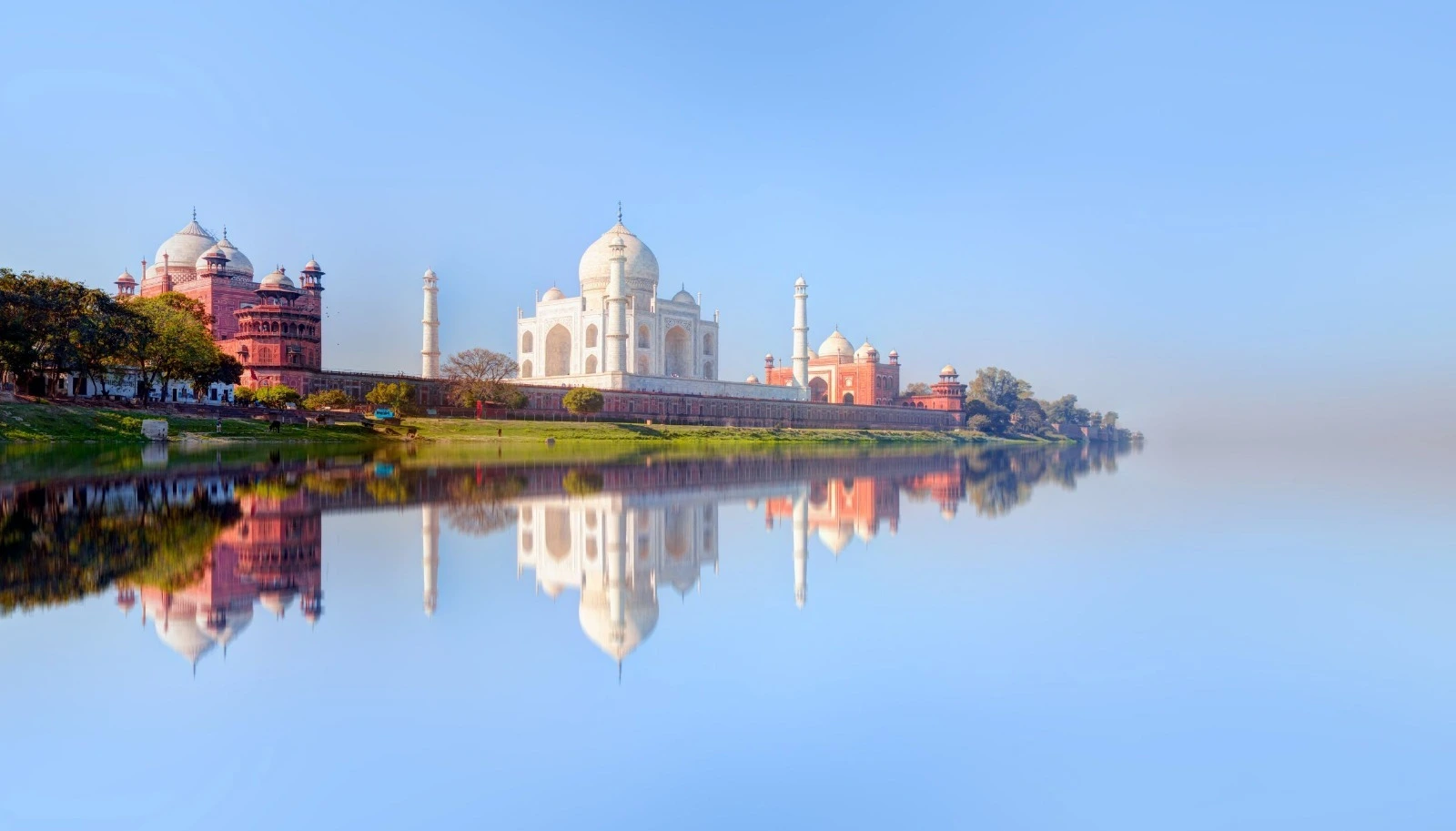
Your Easy Tours guide will explain the symbolism and engineering that was completed in 1653 by more than twenty thousand artisans working over years. The structure uses white Makrana marble inlaid with semi-precious stones—including lapis lazuli, carnelian, malachite, jasper, and turquoise—using the pietra dura technique that reached its zenith under the Mughals.
The monument's perfect symmetry is intentional: four identical facades, minarets angled outward to protect the main tomb during an earthquake, and a carefully calibrated central dome that rises 240 feet. Your guide will point out the optical illusions used by the builders—Arabic calligraphy that appears uniform due to increasing text size at higher levels, and the slightly taller outer arches that frame the central iwan to enhance its proportions.
The long reflecting pools were designed to mirror the marble structure at key times of day, and sunrise is among the most striking moments to see this effect. After this remarkable experience, you return to your hotel for breakfast and time to freshen up.
Agra Fort (UWHS)
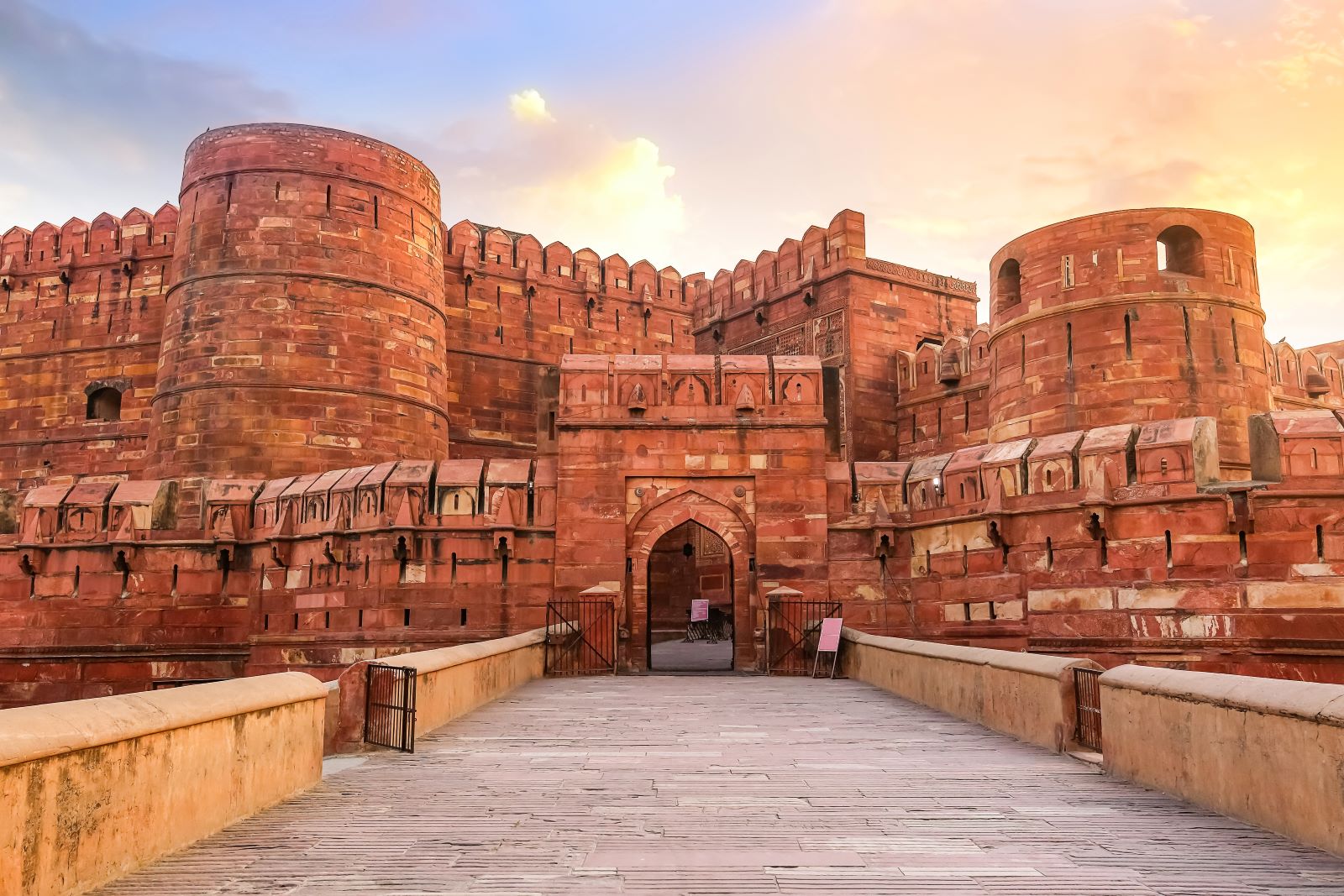
Late in the morning you will proceed for your exploration of the Agra Fort, a sprawling complex of palaces, halls, and courtyards built by the Mughal emperors. Your guide will walk you through the Diwan-i-Am, the Diwan-i-Khas, royal living quarters, and the pathways connecting these areas, sharing dramatic stories of royal life and succession. From one of the secluded terraces, you will take in a memorable view of the Taj Mahal from the very chambers where Shah Jahan spent his final years.
Itmad-ud-Daulah (The Baby Taj)
You then continue to Itmad-ud-Daulah, located across the Yamuna River. This exquisite white marble tomb is often seen as an architectural precursor to the Taj Mahal. Its delicate inlay work, refined lattice screens, and meticulously carved surfaces make it one of Agra's most beautiful monuments. Your guide will point out design elements here that later matured into the grand aesthetic of the Taj.
Sunset at the Taj Mahal (UWHS)
In the late afternoon, you proceed again to the Taj Mahal for your sunset visit. As the sun descends, the monument takes on warm golden and pink hues, shifting subtly as the light softens. You will have time to view these changing colors from different vantage points—across the reflecting pools, near the marble terraces, and through intricately carved jali screens.
Inside the mausoleum, you'll view the finely carved cenotaphs and the actual tomb chamber below, while your guide shares the story of Shah Jahan and Mumtaz Mahal, whose love and loss gave rise to this masterpiece. (Overnight – Oberoi Amarvilas)
March 15th, 2027: Agra – Jaipur.
After breakfast and assisted checkout, you begin your journey toward Jaipur.
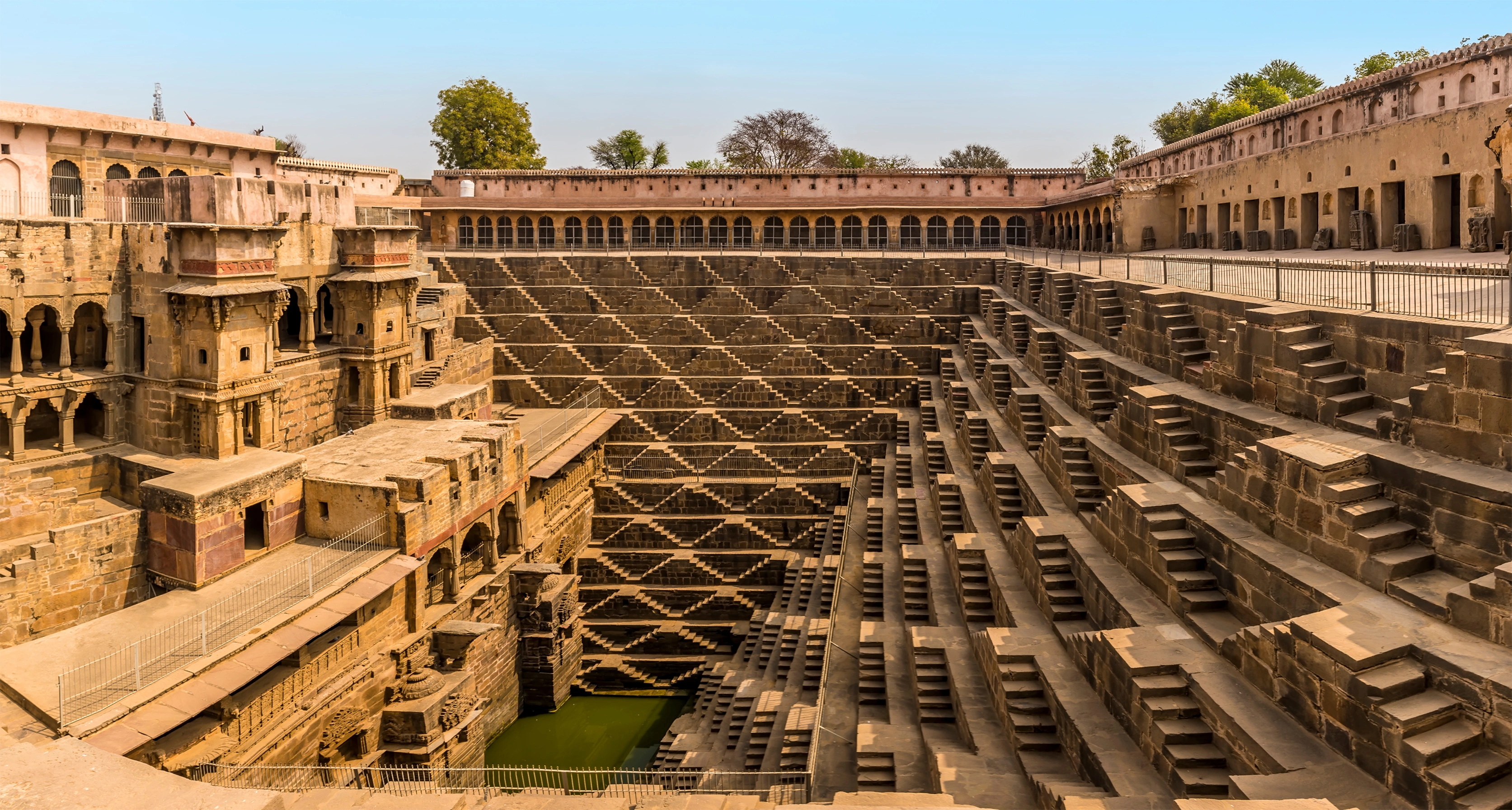
Visit Chand Baori Stepwell. En route to Jaipur, stop at the stunning Chand Baori Stepwell in the village of Abhaneri. This architectural marvel from the 10th century drops nearly 100 feet into the earth with more than 3,000 precisely aligned steps descending in symmetrical layers. Although access to the lower levels is now restricted, the sheer scale and intricacy of the structure remain mesmerizing.
Continue your journey toward Jaipur, a UNESCO World Heritage City known for its architecture, urban planning, and historic character. Upon arrival, you are assisted with your check-in at iconic palace-style resort set within an expansive walled estate, the Oberoi Rajvilas. Rajvilas unfolds across acres of beautifully landscaped gardens, where traditional Rajasthani architecture, reflection pools, and quiet pathways create a strong sense of space and privacy.
You are assisted with check-in and escorted to your room. The resorts views across vast manicured gardens make for a magical arrival. Beyond the accommodations, the estate includes extensive facilities—lush lawns, walking paths, tennis courts, and serene open spaces—inviting you to slow down and enjoy the surroundings after the journey.
The Rajputs of Rajasthan – Pride, Valor, and Enduring Legacy
You are now in the heartland of the Rajputs, a people whose tales of chivalry, honor, and grandeur rival those of any European court. Derived from the Sanskrit Rajaputra or "Son of a King," the Rajputs were the warrior aristocracy of North India, renowned for their fierce independence, code of honor, and battlefield heroics.
The Jaipur region was ruled for centuries by the Kachwaha Rajputs, who rose to prominence by founding Amer in the 10th century and later Jaipur in the 18th century. Rajput kingdoms often stood as bulwarks against invasions, resisting the advance of Islamic empires with valor and tenacity.
While many fell in heroic last stands—immortalized in stories of jauhar (ritual mass sacrifice by women of the royal family) and saka (final battle)—others, like the Kachwahas, chose strategic alliances with the Mughals. This allowed them to retain their dominions, expand their influence, and foster an extraordinary fusion of Rajput and Mughal art, architecture, and culture—a blend that defines much of Jaipur's visual and spiritual identity.
Though the power of the Rajput states eventually waned under colonial rule and post-independence reforms, their cultural influence remains immense. Rajput palaces, forts, and temples still command awe, and the people of Rajasthan continue to celebrate a vibrant heritage of color, music, dance, and craftsmanship. From the glittering mirrorwork of Amer Fort to the ceremonial grandeur of City Palace and the artistry preserved in textile and jewelry traditions, you'll encounter echoes of Rajput pride in every corner of Rajasthan. (Overnight – Oberoi Rajvilas)
March 16th, 2027: Jaipur. (UWHS)
Into the Heart of the Pink City You begin your day with a drive into the walled pink city of Jaipur, a UNESCO World Heritage City renowned for its 18th-century urban planning and vibrant Indo-Mughal architecture. Your first stop is the Swargasuli Tower, built in 1749 to commemorate a military victory. You have the option to climb the internal ramp of this seven-story minaret to the level of your choice for sweeping panoramic views of the Pink City, offering a preview of the palaces, temples, and bazaars you'll soon explore.
From the tower, you begin a stroll through history through the historic heart of Jaipur. Your walk will encompass three incredible attractions, each a few steps from the other.
Jantar Mantar (UWHS) Your walk leads you to the Jantar Mantar, a remarkable 18th-century astronomical observatory. This open-air complex features massive instruments designed to measure celestial phenomena with startling precision. The highlight is a massive stone sundial accurate to within two seconds, along with several other geometric tools used for tracking stars and planetary movements.
City Palace Immediately adjacent is the City Palace, an expansive complex blending Mughal and Rajput architecture. Though part of the palace remains the residence of Jaipur's royal family, much of it is open to the public and contains several museums. Your guide will lead you through galleries showcasing ancient royal garments, armory, miniature paintings, and ceremonial objects. Lavish courtyards, intricately carved gateways, and preserved royal chambers offer a glimpse into Jaipur's regal past.
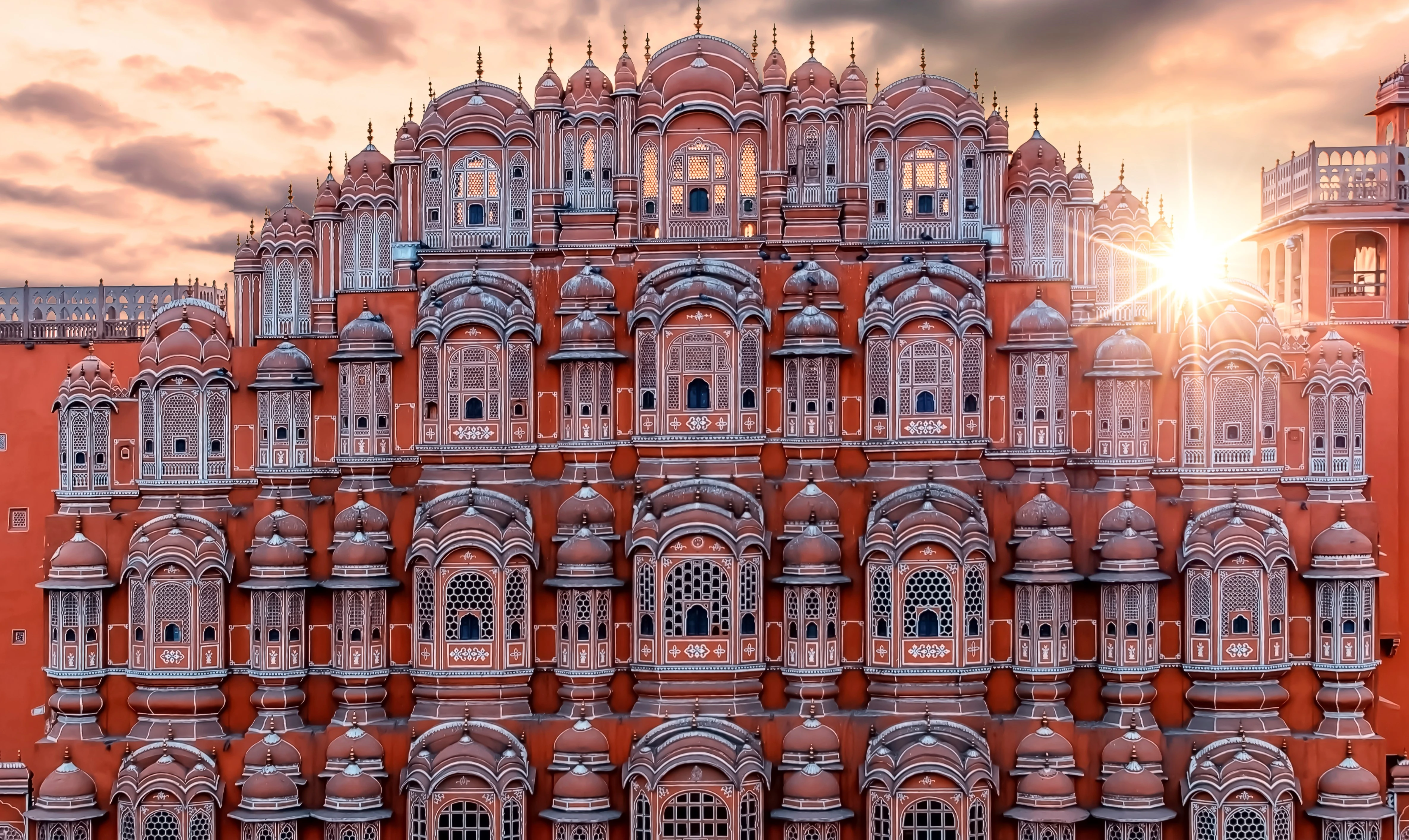
Hawa Mahal From the palace, it is a short walk to the Hawa Mahal, or Palace of the Winds, perhaps Jaipur's most photographed monument. Built in 1799, the five-story honeycomb-like façade allowed royal women to observe street life and processions unseen. You'll enter the structure and explore its interior ramps and balconies, which offer unique views of the bazaars below and the surrounding cityscape.
Lunch and Flexible Midafternoon Break for lunch at one of the many nearby restaurants. The nearby bazaars are among the most atmospheric in India—lively lanes where residents shop for spices, vegetables, textiles, jewelry, and religious items. The streets are a mix of permanent storefronts, curbside vendors, and narrow alleys leading to inner courtyards where generations of artisans still work. Afterward, you can explore the bazaars and absorb the amazing environment you're in, the shoppers bargaining, the wares that include anything that one could possibly need or want.
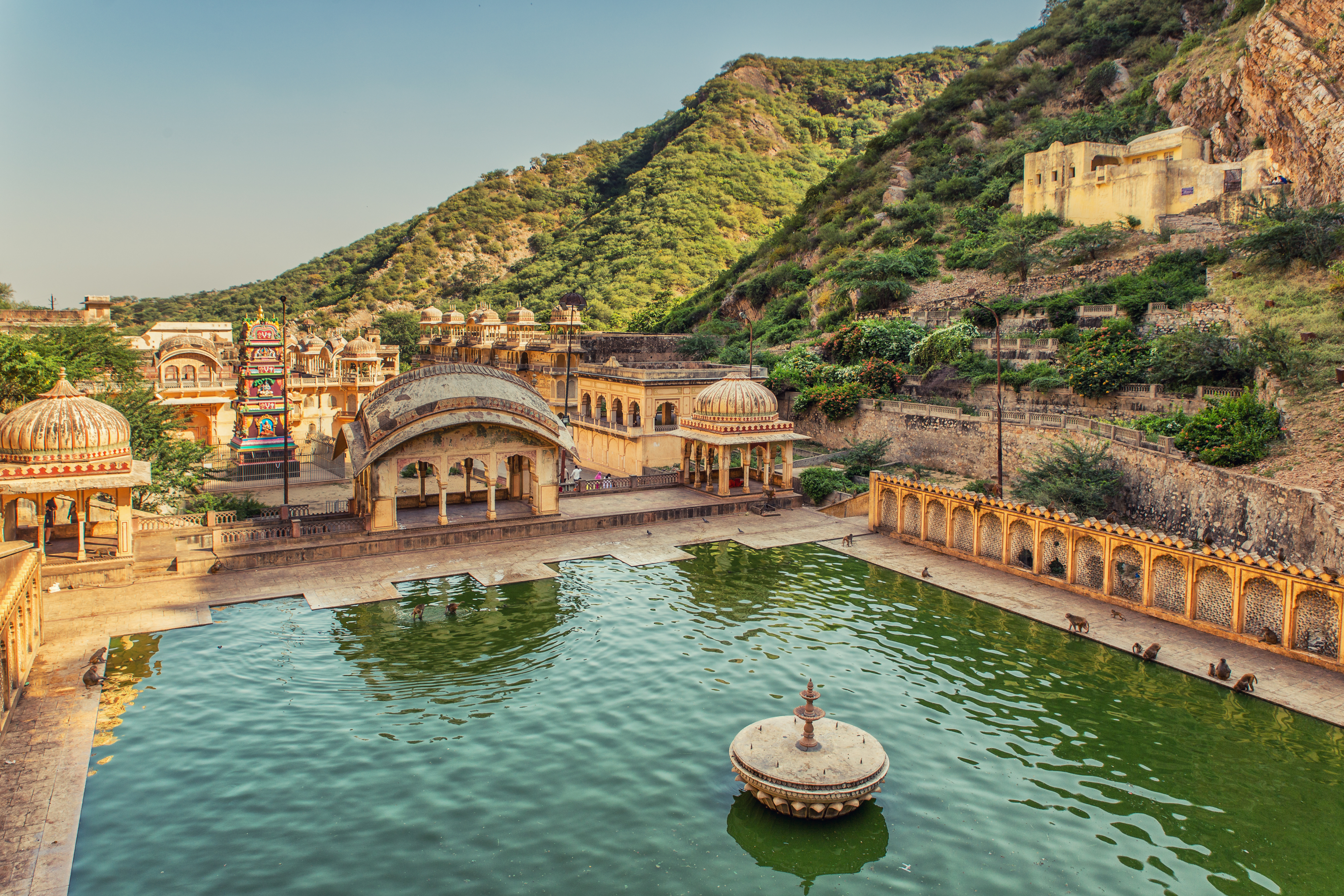
Galtaji Temple (Monkey Temple) Later in the afternoon, you drive out toward the Aravalli Hills to visit Galtaji, a revered Hindu pilgrimage site nestled in a rocky ravine. You are here for the fascinating cultural experience and locale. The 15th-century pink sandstone temple complex includes sacred kunds (water tanks) fed by natural springs and is surrounded by temples carved into the hills.
Known to tourists as the Monkey Temple, Galtaji is home to a large tribe of monkeys who freely roam the grounds and bathe in the ponds. You'll observe both pilgrims and monkeys interacting in this unusual and photogenic setting. Many monkeys bathe and swim in the central tank, leaping into the water from ledges and walls. They can be seen grooming one another, squabbling over food, or simply lounging on temple rooftops and terraces—exhibiting highly social and entertaining behaviors. Some climb the temple facades and perch on balconies, while younger monkeys play near the water's edge.
You can choose to visit a few of the key shrines within the complex, including the Balaji Temple, and observe pilgrims offering prayers, lighting lamps, and collecting spring water. The setting—blending religious devotion, natural beauty, and daily monkey activity—makes Galtaji one of the most unique and atmospheric temple sites in Rajasthan.
Albert Hall Museum On your way back to your hotel, you stop at the stunning structure of the Albert Hall Museum, built in 1887 in the Indo-Saracenic style. Surrounded by pigeons and civic activity, it is Jaipur's oldest museum and houses an impressive collection of regional crafts, metalwork, miniature paintings, and textiles.
You may choose to go inside, or simply walk around the spectacular structure and picturesque locale to admire its design and setting. Rudyard Kipling, upon visiting, called it "a rebuke to all other museums in India from Calcutta downwards." (Overnight – Oberoi Rajvilas)
March 17th, 2027: Jaipur.
Morning: Visit to a Meena Village in the hilly Amer Region - Your day begins with a short drive into the scenic outskirts north of Jaipur, where you will explore a traditional Meena village nestled in the Aravalli foothills. The Meenas are one of Rajasthan's oldest and most culturally distinct tribal groups, with a legacy that predates the Rajput kingdoms. Before the 11th century, much of this region was ruled by Meena chieftains, and their cultural imprint remains woven into the region's fabric.
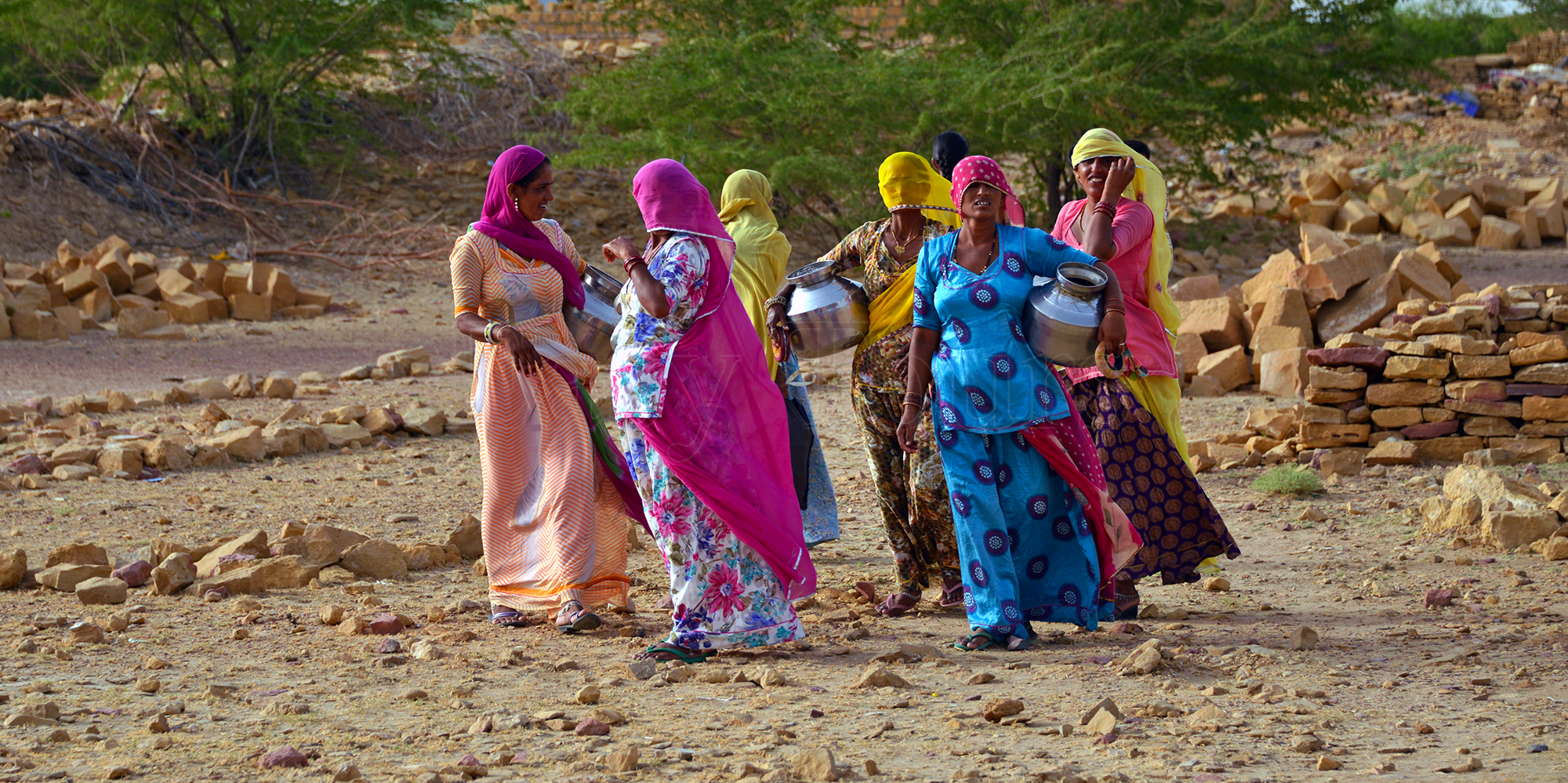
Today, the Meena community lives a life that bridges past and present. Villages display a blend of traditional mud homes decorated with floral and geometric motifs and more modern structures, reflecting both heritage and adaptation. During your cultural walk, you'll observe the rhythms of everyday life—women drawing water, elders working with grain, and children headed to school.
The Meenas maintain distinctive customs, including matriarchal inheritance traditions, vibrant attire, and tribal jewelry and tattoos, many of which have deep ritual meaning. Your guide will offer context and cultural insight throughout the walk, making this an authentic window into rural life just beyond Jaipur's rapidly growing edge.
Late Morning: Anokhi Museum of Hand Printing. A short drive brings you to the Anokhi Museum, located in a beautifully restored haveli in the historic Amer Region. Dedicated to preserving Rajasthan's famed art of hand-block-printing, the museum offers a curated yet hands-on exploration of this heritage craft.
Stroll through exhibits showing traditional motifs, tools, and dyeing techniques. Watch live demonstrations by master block printers and carvers in the open courtyard. With your guide's interpretation, this becomes not just a museum visit, but an immersive look at the enduring creativity and skill of Rajasthani artisans.
We recommend lunch at the Anokhi Café, which serves fresh, locally sourced fare in a tranquil garden setting.
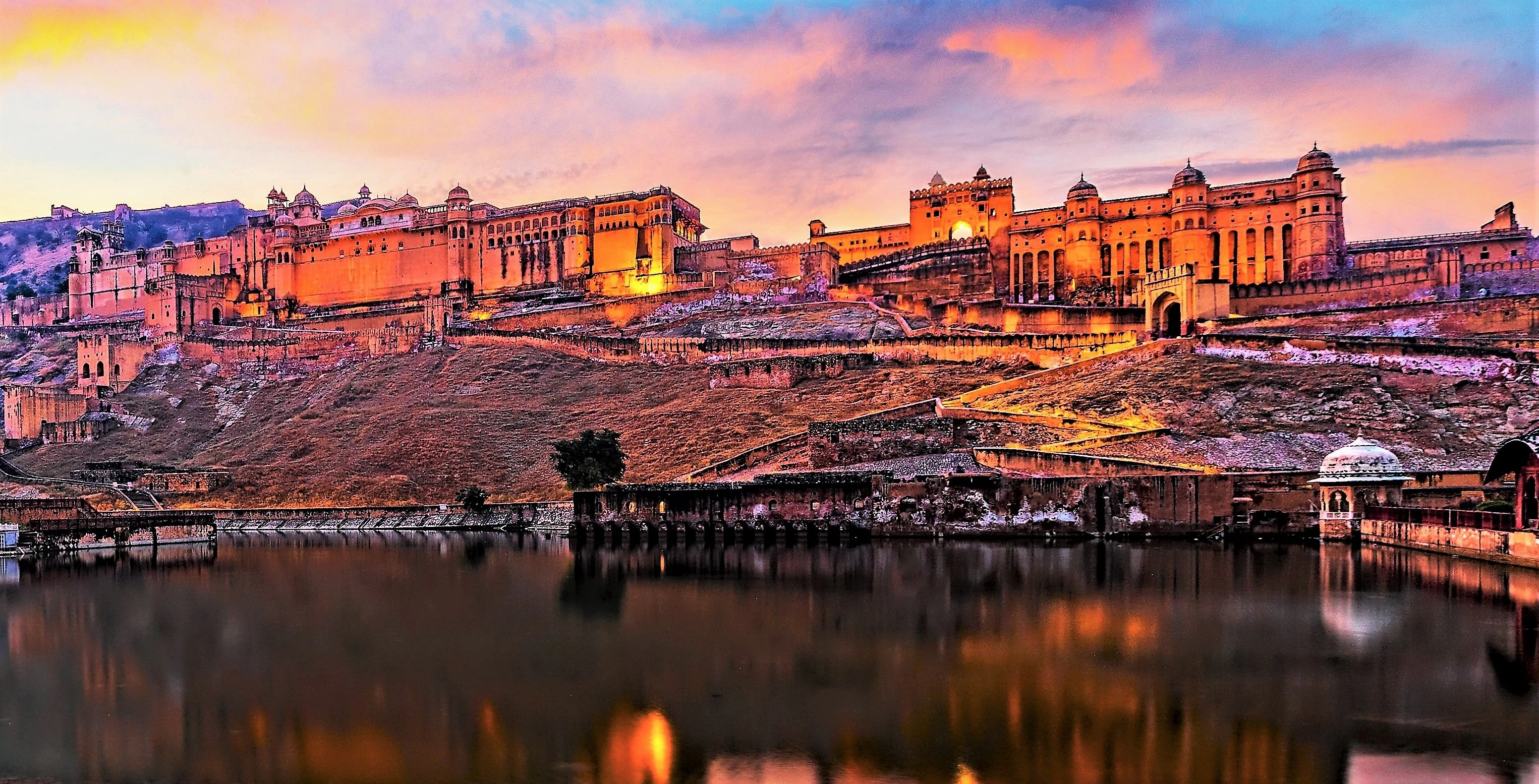
Amer Fort & Palace Complex. After lunch, you are driven nearby to the legendary Amer Fort. Built in 1592, Amer Fort served as the royal residence for the Kachwaha Rajputs. The sprawling complex blends Rajput military architecture with Mughal-inspired elegance, set dramatically above Maota Lake and the surrounding hills.
You will stop at the base of the hills for a view of the spectacular walled complex, before being driven up to the rear entrance. Easy Tours does not offer elephant-back rides (available at 9 am) and we recommend visiting in the afternoon, when the fort complex is quieter and the play of light on its ochre façades and inlaid marble halls is particularly beautiful.
Your guided exploration includes: • Jaleb Chowk and Ganesh Pol, where armies gathered and royalty passed through intricately painted gates • The Diwan-i-Aam, a public audience hall framed by scalloped arches and columns • The magical Sheesh Mahal (Mirror Palace), inlaid with thousands of tiny mirrored tiles that once glittered in candlelight • The Sukh Niwas, cooled by marble channels and perfumed breezes in summers past • And the Zenana Quarters, where the royal women lived in cloistered splendor behind latticed screens
As you walk the fort's shaded corridors and open terraces, your guide will explain the historical, artistic, and political narratives behind its creation. The views from the ramparts—of the curling battlements, Maota Lake below, and the rugged Aravallis beyond—are equally spectacular.
Late Afternoon: Optional Specialty Shopping
On the way back to your hotel, you may choose to stop and explore Jaipur's renowned artisan traditions. Jaipur is famed for fine jewelry, block-printed textiles, hand-knotted carpets, blue pottery, and more. Your guide can tailor the shopping to your interests, or you may simply take in the bustle of the pink city's bazaars as the day winds down. (Overnight – Oberoi Rajvilas)
March 18th, 2027: Jaipur – Narlai.
The next 2 nights are at a historic three-century old hunting lodge. It is a guest favorite stop, and you have the option to preselect the historic building with less conveniences, or a contemporary wing. For guests who only want luxury lodging, the 2 days in Narlai can be removed and you can fly directly from Jaipur to Udaipur.
Scenic Drive. Join your guide and chauffeur and you are now driven to historic Rawla Narlai, a 17th century Royal Hunting Lodge located right in the middle of a charming Rajasthani Village. Most of so-called rural tourism sites receive a constant stream of visitors and available experiences are at least partially staged. With almost 6000 colorfully attired residents, 16th Century Narlai is the genuine article, a large and fairly prosperous Rajasthani village inhabited by friendly villagers.
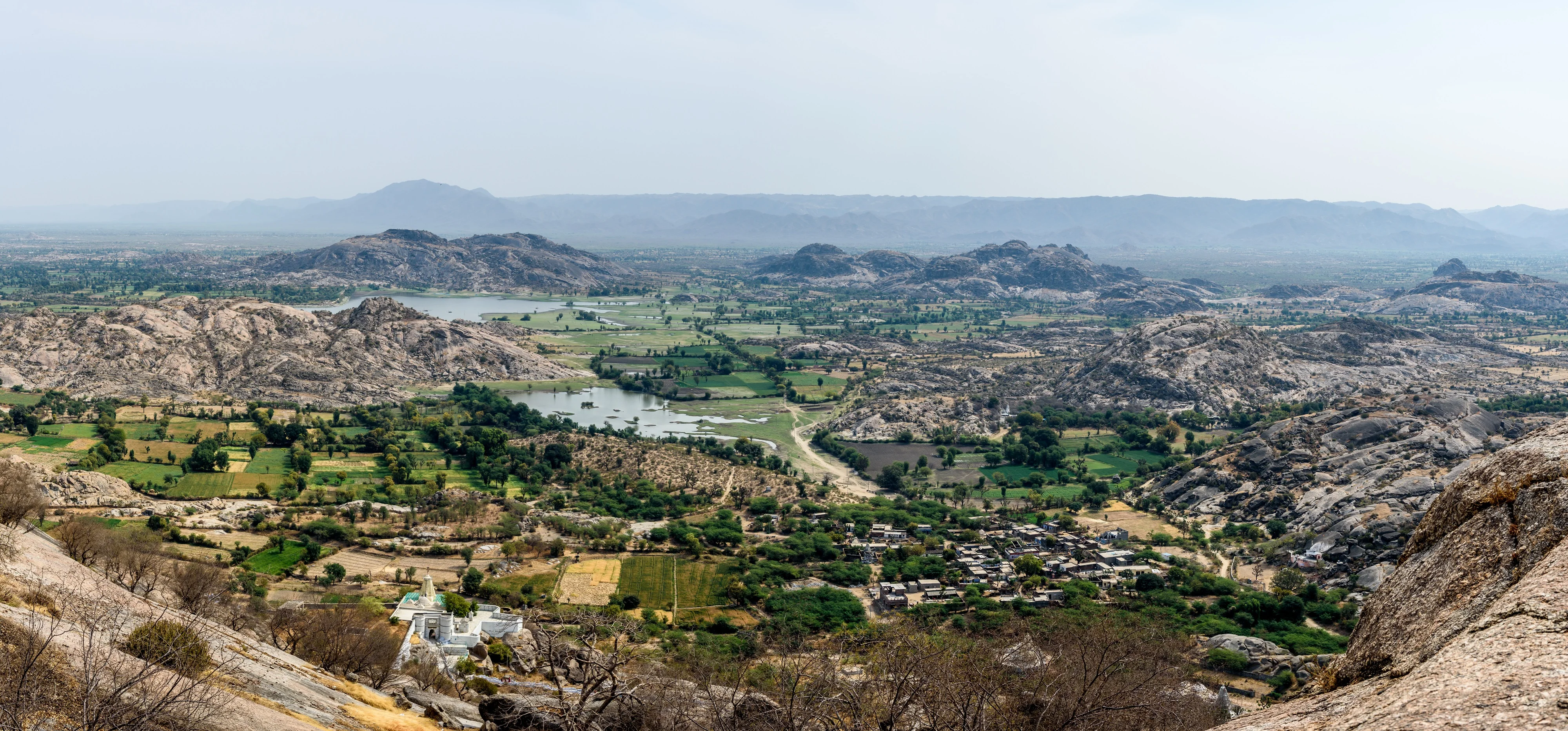
The journey from Jaipur takes you through the heart of rural Rajasthan, passing small villages, open farmland, and herds of camels and livestock that are part of daily life in this region. As you approach Narlai, the landscape becomes more rugged and picturesque, with granite hills rising dramatically from the plains.
Rawla Narlai. The ancient royal lodge has been meticulously restored, and calling it boutique would be a vast understatement. There are two wings – the original 17th Century hunting lodge and a more modern wing that was built about 25 years ago. The lodge itself is somewhat rustic in character, but it is widely praised for its outstanding hospitality, attentive service, and delightful cuisine.
You will arrive in the late afternoon and be assisted with your check-in. After settling into your upgraded room, you will have time to relax and enjoy the tranquil surroundings of the lodge. The property is set amidst quiet countryside, and the atmosphere here is markedly different from the larger cities you have experienced so far.
Near the lodge and visible from various vantage points is a massive granite boulder called Elephant Hill. This ancient volcanic hill has many caves carved into its facade and a historic small Hindu Temple at its peak.
The countryside around Narlai is also alive with birdlife. In the quiet early mornings and late afternoons the trees and fields around the village are filled with birdsong. Peacocks are frequently seen roaming through the farmland and village lanes, and the surrounding fields and rocky hills support a rich variety of resident bird species.
Ancient Stepwell Dinner Experience: After sunset you will be assisted in climbing aboard a traditional bullock cart (you can choose to be driven instead) and transported through the dark countryside to a charming 16th Century stepwell. The short journey itself becomes part of the experience as lanterns illuminate the rural lanes and the quiet village settles into the evening.
Your magical dinner will be at the stepwell, accompanied by live local folk music and accented by hundreds of oil lamps adorning the steps of the stepwell. You will enjoy a multi-course dinner with the oil lamps and countless stars creating a magical setting - this dinner is among our guests' most treasured memories in India. (Overnight – Rawla Narlai)
March 19th, 2027: Narlai.
Morning Leopard Safari. Early this morning you will board one of the lodge's jeeps with their naturalist, accompanied by your guide, and head into the surrounding countryside in search of leopards. Although this is not a national park, leopard sightings have been fairly common in the rocky hills and scrub forests around Narlai in recent years. The terrain here is rugged and beautiful, and the safari itself is an adventure as you traverse narrow tracks and remote landscapes. Besides leopards, the region is also home to hyenas, jackals, and antelope that inhabit the scrub forests and rocky outcrops surrounding the village.
The early morning hours are especially atmospheric. As the sun rises over the granite hills, the countryside comes alive with birdsong. Rajasthan supports a rich variety of native bird species, and in winter the region lies along a major migratory route. Many birds traveling south from far northern regions, including Northern Russia, pass through this landscape before returning north again in the spring.
After the safari you will return to the lodge to have a late breakfast.
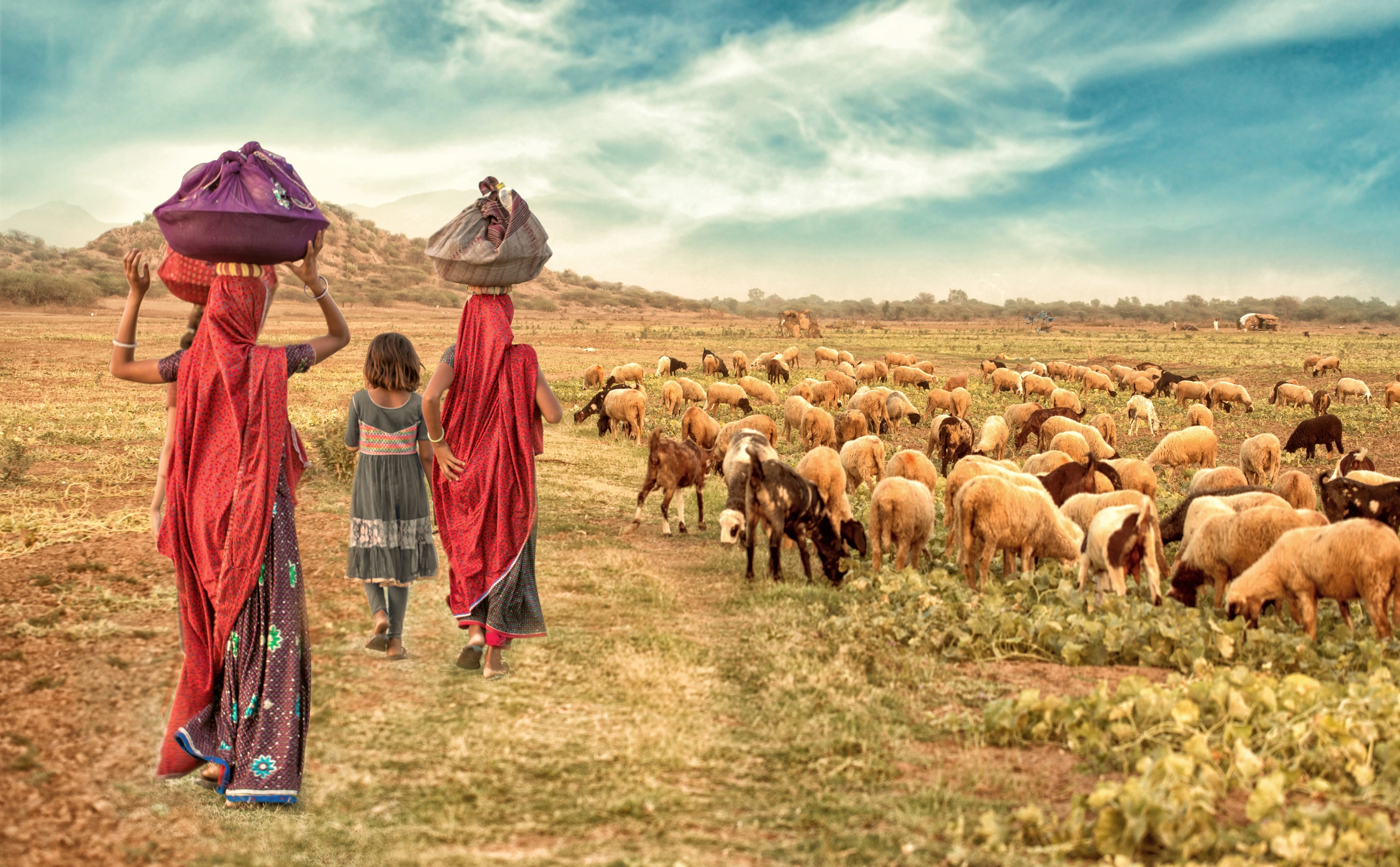
Guided Village Walk. Later in the morning you will enjoy an extended walk through the large village to get an introduction to the lives of the simple but proud Rajasthani villagers. There will be young boys and girls herding goats, sheep, and cows around the area, and many other experiences that are only found in rural Rajasthan. There will also be multiple opportunities to view various indigenous activities.
As you walk through the village with your guide, you may observe artisans practicing traditional crafts, farmers working their fields, and families going about their daily routines. If it is a weekday and school is in session, there may also be an opportunity to briefly visit the local school and observe village children during their classes. Your guide will facilitate conversations and interactions with villagers, offering insights into their traditions, livelihoods, and daily life.
After the village walk, you may return to the lodge with your guide to relax and enjoy its peaceful surroundings, or after a short break you can head back into the village with your guide to continue observing daily life.
The late afternoon and early evening are particularly charming times in Narlai. As the sun begins to set, shepherds and herders return with their goats, sheep, cows, and camels, moving through the village lanes in a lively procession that has taken place for generations. Families gather outside their homes, children play in the streets, and the village takes on a warm communal atmosphere as the day comes to a close.
Your guide will remain with you and can continue facilitating visits, conversations, and observations of village life before you return to the lodge for the evening. Guests who prefer a quieter pace may also choose to remain at the lodge and simply enjoy its tranquil setting and renowned hospitality. (Overnight – Rawla Narlai)
March 20th, 2027: Narlai – Udaipur.
Your guide is available from 9 am on for village excursions. Due to the next available experience’s timing, you will be assisted with your check out just before noon and then you will head nearby for a great stop on the way to Udaipur.
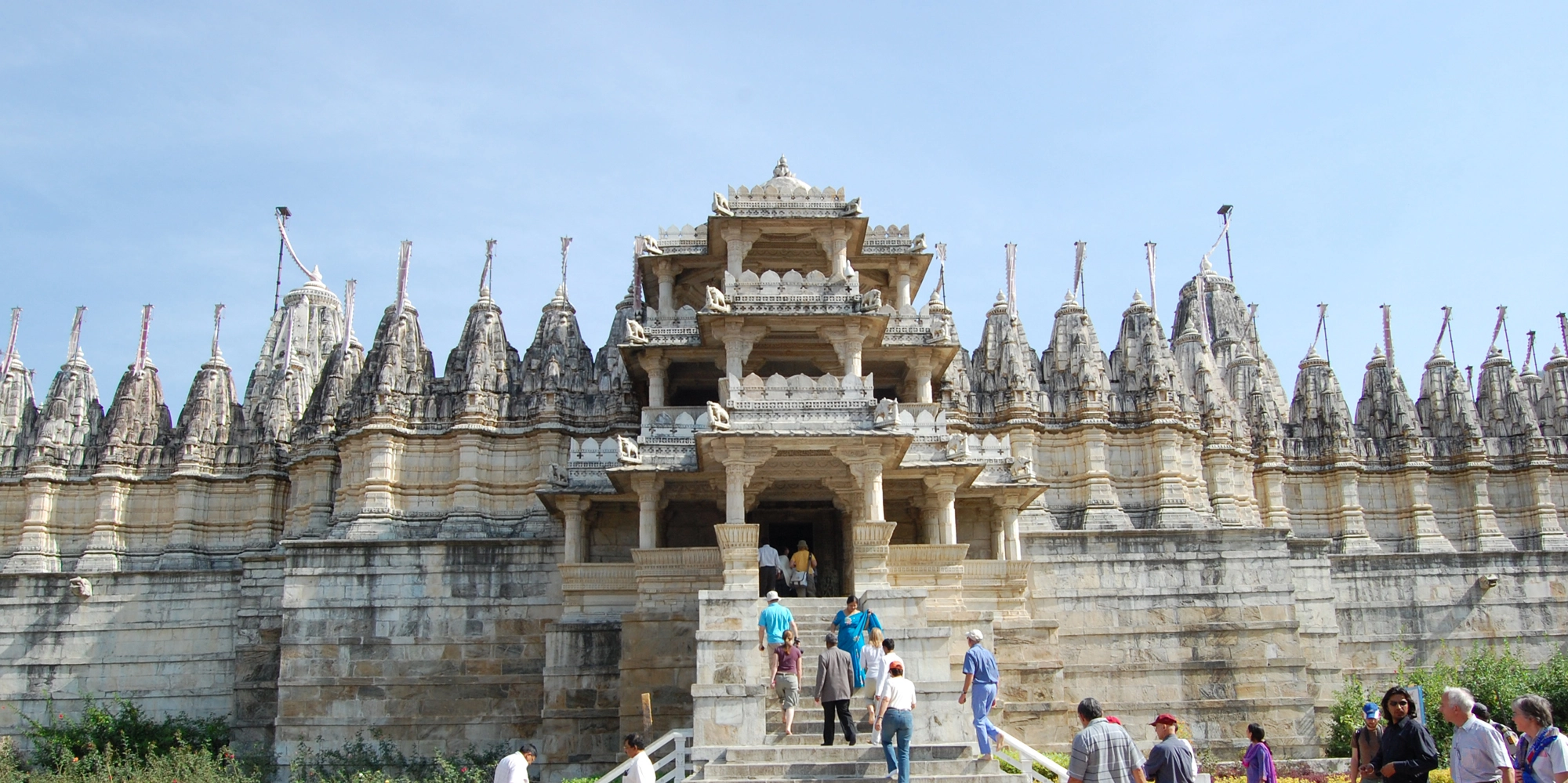
Ranakpur Jain Temple. A very short scenic drive from Narlai will bring you to one of India's lesser-known architectural marvels, the 15th Century Ranakpur Jain Temple, which is an active place of worship. The main temple's 29 halls are supported by 1444 massive yet intricately carved marble pillars, in which no two are of the same design. There is an abundance of intricate sculptures and friezes and the enormous scale and exquisite detail have to be experienced to be believed.
Gorgeous Drive. After this you will continue on with your journey to Udaipur. This is one of the most picturesque drives in all of India and as you go through the Aravalli hills there will be photo opportunities of village life and livestock, including camels. The rolling landscape and the charm of the rural countryside may make you ask for frequent stops during this 2 to 2.5-hour journey.
Arrive at magical Udaipur and you are driven to your spectacular lakefront resort where you are assisted with your check-in. In the last two decades the Oberoi Udaivilas has twice won 'best hotel in the world' award in the annual Travel & Leisure magazine's U.S. based readers survey for very good reasons. The architecture, gardens and other facilities and services are the best among all of the highly vaunted Oberoi Hotels.
Udaipur is a great place to take a break.
The Kingdom of Mewar claims to be the oldest surviving dynasty in the world, tracing its origins back to the 6th century. Over the centuries, Mewar became synonymous with Rajput honor, valor, and an unbroken lineage of rulers who resisted foreign domination. Udaipur was founded as the kingdom's new capital in 1559, and the House of Mewar's heritage lives on in countless tales of bravery and sacrifice. More than just a kingdom, Mewar is remembered as the spiritual heart of Rajput identity, where honor, courage, and resistance defined history.
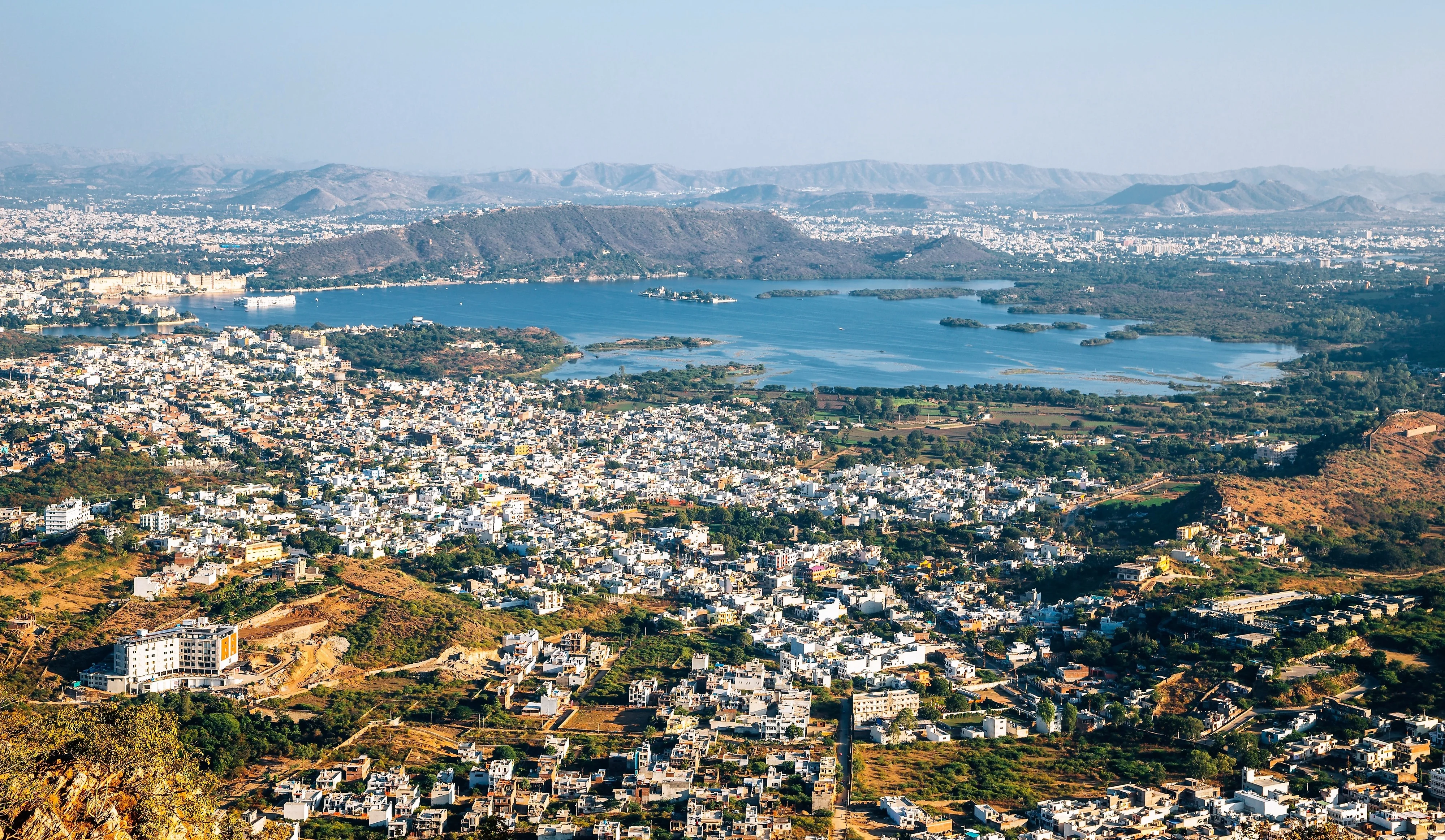
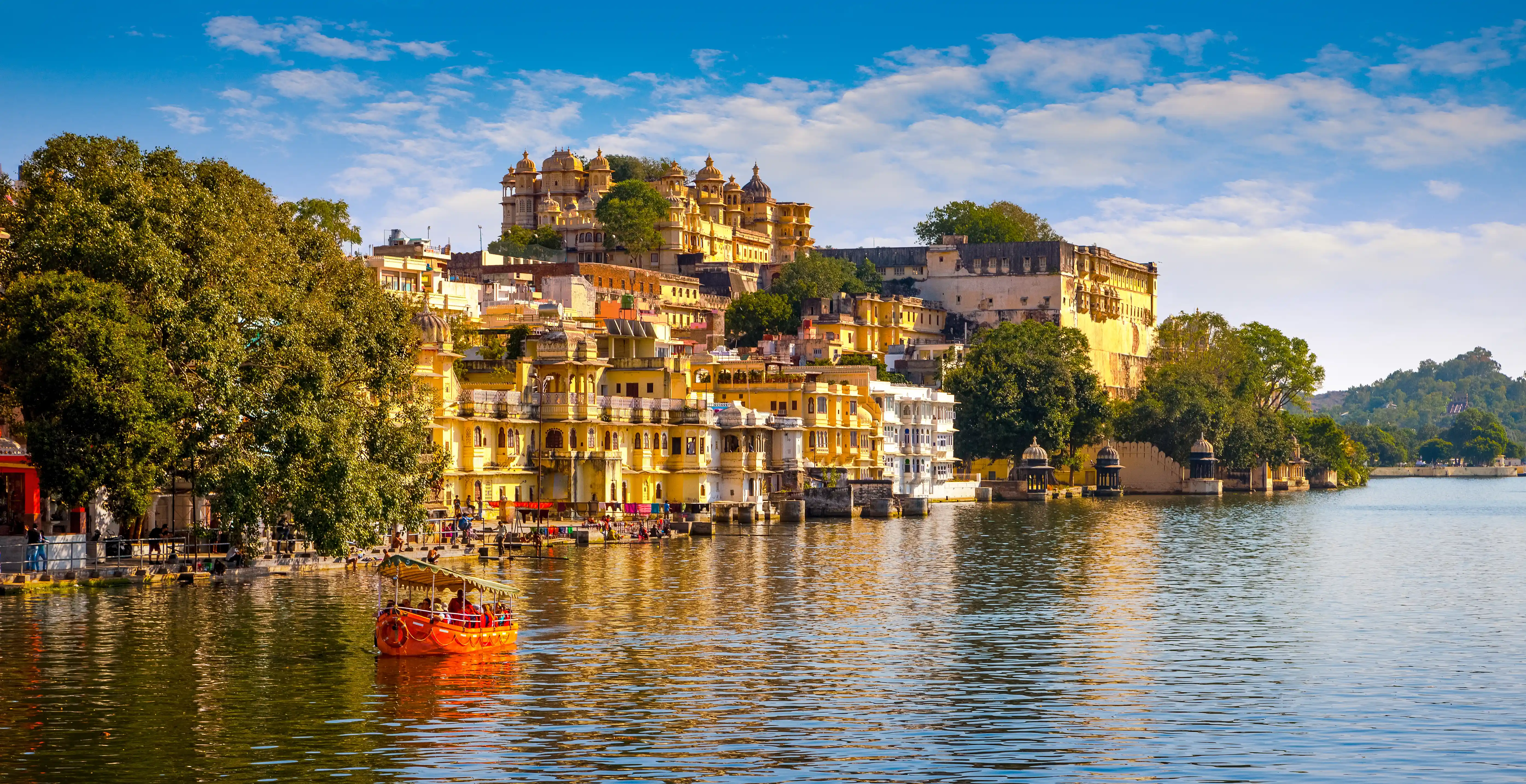
Sunset Cruise. In the late afternoon you head to your resort jetty where you're assisted in boarding an Oberoi boat for a private cruise on captivating Lake Pichola. As the boat leaves the jetty, the views open up to reveal the City Palace rising grandly above the shoreline — its white and golden façades glowing in the warm evening light.
Further out, you pass the Lake Palace and Jag Mandir Island, and as the sun dips behind the Aravalli Hills, the lake transforms into a canvas of soft pinks, oranges, and purples. The silhouettes of Udaipur's palaces and ghats glow against the twilight, offering magical photo opportunities. (Overnight – Oberoi Udaivilas)
March 21st, 2027: Udaipur.
Enjoy a slightly early breakfast this morning. The reason for this is that the City Palace Complex has an hour at the beginning of every morning where they charge a little more and thus get significantly fewer visitors. Your exploration of the vast complex will almost certainly take longer than an hour, but you will have done most parts that the later visitors will flock to. There are amazing views to be had from the entrance ramparts, especially of Lake Pichola, the Lake Palace, and Jag Mandir Island.
Udaipur's fabled City Palace Complex contains multiple old palaces and other structures. You will explore beautifully decorated rooms, massive ivory doors (a dark reminder of Indian royalty's passion for hunting), brightly colored stained-glass windows, expansive inlaid marble balconies, and the unique peacock courtyard.
Crystal Gallery. A highlight of the palace complex, you will enjoy a tour of the amazing Crystal Gallery which houses the world's largest collection of priceless crystal. Marvel at pieces like the complete bedroom furniture set in crystal and the gorgeous crystal fountains in the courtyards.
Old Town Udaipur. With its small-town atmosphere, laid back Udaipur is one of India's best places to explore on foot, and next up is an easy and delightful walk in the picturesque ancient part of the small city. Udaipur is world famous for its miniature paintings, and you have the option to stop at a gallery or two where accomplished local artists create Udaipur's incredible miniature paintings. Break for lunch at a time of your choice.
3-Wheeler Scooter Ride. In the mid-afternoon you will enjoy a slightly bumpy (there are no shock absorbers) three-wheeler scooter ride to your hotel for a short break.
Monsoon Palace Sunset. In the late afternoon you are driven to visit the Monsoon Palace, a small hilltop structure that offers amazing views of the picturesque city of Udaipur and its lakes and palaces. The journey up the hill takes you through a protected wildlife sanctuary and occasional small wildlife sightings can be experienced. After a few minutes exploring the historical structure, you will experience the spectacular view of Udaipur, set picturesquely amidst the Aravalli Range, and watch as the sun sets on the fairy tale landscape before you.
Return to the lake area and proceed for a cruise on captivating Lake Pichola in your boat to enjoy wonderful sunset views of Lake Pichola and magical Udaipur. Return to your resort after the cruise.
Evening: Holika Dahan Ceremony at City Palace. Your guide will pick you up from your hotel and accompany you to the City Palace complex where you will witness the ancient traditional Holika Dahan ceremony, or custom of lighting the Holi Pyre, on the night before Holi. The Royal Family of Mewar (Udaipur and the surrounding regions) performs this celebration with great pomp and ceremony. A grand procession led by the Royals arrives and then the ceremony begins. After the ritual prayers for this occasion, the King lights the pyre. The end of the event is a traditional dance by a local troupe, performed only at this one occasion every year.
Dinner is included at the City Palace after the ceremony. (Overnight – Oberoi Udaivilas)
March 22nd, 2027: Udaipur. Holi - The Festival of Colors
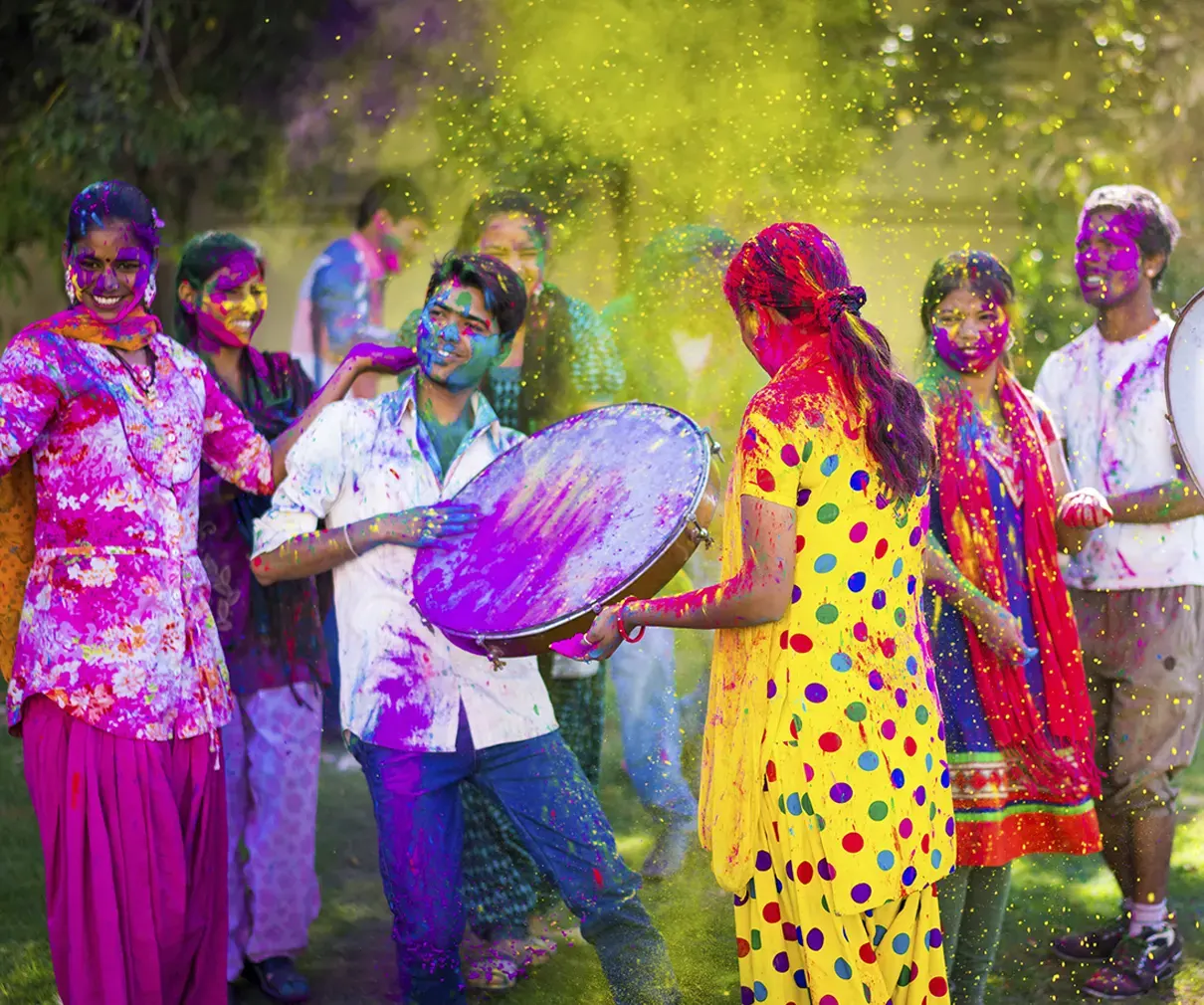
Morning: Holi Celebration. Today is Holi, the festival of colors, one of India's biggest festivals. We do not recommend celebrating Holi in almost all cities of India as this festival includes intoxicated youth who can get aggressive in the celebratory crowds. The upscale area (in the small city of Udaipur) where our guests celebrate is an exception and the celebration here is a lot of fun.
The locals take to the streets and everyone douses each other with powdered colors as well as colored water. You will walk through residential neighborhoods and small bazaars as you celebrate. Our guests are provided with traditional Indian clothing on the day before Holi and you are welcome to keep the colored clothing as a memory afterwards.
Return to your hotel after your celebration.
Afternoon at Leisure. You are at leisure to enjoy the facilities, available activities, and views at your hotel this afternoon. Enjoy the peaceful setting, relax by the pool, or simply take in the views from your room. (Overnight – Trident Udaipur)
March 23rd, 2027: Udaipur – Delhi – International Flight.
This morning is flexible and you can enjoy your lodging, or experience more of Udaipur with your guide and chauffeur driven vehicle. In the afternoon you are driven to the airport and assisted in boarding your flight to Delhi. Upon arrival at Delhi, you will self-transfer to the international terminal and check-in for your international flight. Additional services, including airport hotel stays, can be added based on your international flight departure.
Our Services End at Udaipur Airport.
Day
01
Delhi Arrival
Greeted at Delhi Airport upon Arrival Private Escorted Transfer to Hotel Assistance with Check-in
Day
02
Delhi – New Delhi
Qutab Minar –UNESCO World Heritage Site - 11th Century Tower Lutyens New Delhi Drive – Historic British Capital Humayun’s Tomb – UWHS - 16th Century Masterpiece in Design Lodi Gardens – Beautiful Garden with Scenic Ancient Tombs Lodi Art District – Spectacular Street Art of India & the World
Day
03
Delhi – Old Delhi
Shahjahanabad the Mughal Capital Red Fort – UWHS - 17th Century Massive Forted City Chandni Chowk – Massive Bazaar with Largest Spice Market E-Rickshaw Ride through Chandni Chowk Jama Masjid – Gorgeous Living Mosque – India’s Largest
Day
04
Delhi – Varanasi
Flight to Varanasi – India’s Holiest Living City Sarnath – Buddha’s First Sermon Site – Stupa & Ruins Optional Sarnath Museum – Ashokan Lion Capital & Sculptures Drive to Hotel & Assistance with Check-in
Day
05
Varanasi
Pre-Dawn Boat Ride on Ganga – Sunrise Ghats & Rituals Old City Walking Exploration through Narrow Lanes & Shrines Midday Break at Hotel Evening Ganga Aarti – Premium Reserved Seating near Dashashwamedh Ghat
Day
06
Varanasi – Khajuraho – Panna
Flight to Khajuraho Western Group Temples – UWHS – Exquisite Sculpture & Design Drive to Panna & Check-in at Jungle Lodge – All Meals Included
Day
07
Panna National Park
Morning Jeep Safari in Panna Tiger Reserve Excellent Tiger Sighting Possibilities with Healthy Population Common Wildlife – Nilgai, Sambar, Chital, Langurs, Jackals, Gharial Rich Birdlife – Hornbills, Kingfishers, Storks, Native & Migratory Species Afternoon Jeep Safari with Forest Naturalist
Day
08
Panna – Khajuraho – Agra (Vande Bharat)
Choice of Morning Safari or Ken River Cruise Return to Lodge and have Breakfast Leisure, Checkout at noon & Lunch Drive to Khajuraho Railway Station Board Vande Bharat Express – Premium Seating – Khajuraho to Agra Arrive Agra & Check-in to Taj View Room
Day
09
Agra
Sunrise Visit to Taj Mahal – UWHS – Less Crowded, Magical Light Guided Explanation of the symbolism and the Marble & Optical Illusions Return to Hotel for Breakfast & Break Agra Fort – UWHS – Palaces, Audience Halls & Shah Jahan’s View of Taj Itmad-ud-Daulah (Baby Taj) – Exquisite Marble & Inlay Sunset Return to Taj Mahal – Changing Colors & Atmosphere
Day
10
Agra – Jaipur
Drive from Agra toward Jaipur with stop at Stepwell Chand Baori Stepwell at Abhaneri – 1300 Years, 3500 Steps, 13 Levels Short Village Walk – glimpse of Rural Rajasthani Life Continue Drive to Jaipur & Check-in Introduction to Jaipur’s Rajput History, Pride & Culture
Day
11
Jaipur
Drive through Walled Pink City Hawa Mahal – Jaipur’s Iconic “Palace of Winds” Facade Jantar Mantar – UWHS – Stone Observatory – Accurate & Beautiful City Palace – Royal Residence, Museums & Courtyards Local Bazaars & Walled City Exploration
Day
12
Jaipur
Albert Hall Museum – Indo-Saracenic 19th Century Landmark Galtaji (Monkey Temple) – 15th Century Complex with Sacred Pools Amer Palace & Fort – UWHS – Hilltop Fortress & Palaces Optional Jaipur Shopping – Textiles, Jewelry, Handicrafts
Day
13
Jaipur – Narlai
Drive through Rural Rajasthan to Narlai. Check-in at Rawla Narlai – Heritage Boutique Property. Atmospheric Village Walk – Local Life of True India. Magical lamp lit Stepwell Dinner.
Day
14
Narlai
Morning Leopard Jeep Safari in Rural Surroundings. Atmospheric Village Walk – Local Life of True India
Day
15
Narlai – Udaipur
Drive through Aravalli Countryside to Udaipur. Ranakpur Temple – One of India’s Best Kept Secrets. Arrival in Udaipur & Check-in at Hotel. Lake Pichola Boat Ride with Spectacular Views.
Day
16
Udaipur
City Palace – Spectacular Display of Royal Living + Lake Pichola Views Lake Pichola Boat Ride with Spectacular Views Old City Walk – Temples, Havelis, Artisan & Bazaars Shops Evening Holika Dahan Ceremony Dinner Included
Day
17
Udaipur. Holi Festival
Celebration of Holi Festival Leisure at Hotel
Day
18
Udaipur – Delhi – International Flight
Flexible Morning for More Udaipur. Afternoon Flight To Delhi, Connect with International Flight Additional Services and/or Lodging in Delhi as Needed Board International Flight – End of Journey
Lodging
Destination
Lodging
Room Type
Delhi
The Leela Palace Delhi
Premier Room
Varanasi
Taj Nadesar Palace
Palace Room
Panna National Park
Taj Pashan Garh Lodge
Luxury Cottage
Agra
Oberoi Amarvilas
Premier Taj View Room
Jaipur
Oberoi Rajvilas
Premier Room
Narlai
Rawla Narlai
Luxury Grand Heritage Suite
Udaipur
Oberoi Udaivilas
Premier Room
Destination
Delhi
Lodging
The Leela Palace Delhi
Room Type
Premier Room
Destination
Varanasi
Lodging
Taj Nadesar Palace
Room Type
Palace Room
Destination
Panna National Park
Lodging
Taj Pashan Garh Lodge
Room Type
Luxury Cottage
Destination
Agra
Lodging
Oberoi Amarvilas
Room Type
Premier Taj View Room
Destination
Jaipur
Lodging
Oberoi Rajvilas
Room Type
Premier Room
Destination
Narlai
Lodging
Rawla Narlai
Room Type
Luxury Grand Heritage Suite
Destination
Udaipur
Lodging
Oberoi Udaivilas
Room Type
Premier Room
Inclusions
Included
Not Included
One of India’s Best Accompanying Guides in North India
International Travel
Services of your vehicle and an Easy Tours Facilitator for all transfers
Expenses of a personal nature like tips, laundry, telephone calls, etc.
Availability of an Easy Tours Representative at each destination
All alcoholic and premium non-alcoholic beverages
Easy Tours Exclusive: Sunrise and sunset cruises on the holy river Ganga
Meals other than those specified above
Easy Tours Exclusive: Sunrise and Sunset explorations of the Taj Mahal
Travel insurance, visa etc.
Easy Tours Exclusive: 3 Jeep Safaris at Panna National Park
Camera and Video Camera Fees
All 3 meals at Panna National Park
Holi Festival Special Traditional Ceremony and Dinner at City Palace in Udaipur
Daily breakfast except for Arrival Day (Meal Supplements Available)
Bottled water during your travel and sightseeing
All currently applicable taxes.
Included
One of India’s Best Accompanying Guides in North India
Services of your vehicle and an Easy Tours Facilitator for all transfers
Availability of an Easy Tours Representative at each destination
Easy Tours Exclusive: Sunrise and sunset cruises on the holy river Ganga
Easy Tours Exclusive: Sunrise and Sunset explorations of the Taj Mahal
Easy Tours Exclusive: 3 Jeep Safaris at Panna National Park
All 3 meals at Panna National Park
Holi Festival Special Traditional Ceremony and Dinner at City Palace in Udaipur
Daily breakfast except for Arrival Day (Meal Supplements Available)
Bottled water during your travel and sightseeing
All currently applicable taxes.
Not Included
International Travel
Expenses of a personal nature like tips, laundry, telephone calls, etc.
All alcoholic and premium non-alcoholic beverages
Meals other than those specified above
Travel insurance, visa etc.
Camera and Video Camera Fees
Pricing
Dates
Land Cost
On Tour Flights
Total Cost
Oct 1st to Dec 18th & Jan 8th to Apr 15th
$14,950 PP
$963 PP
$15,913 / per person
Apr 16th to Sep 30th
Prices are Significantly Lower, Quoted Upon Request
Dec 19th to Jan 7th
Prices are Significantly Higher, Quoted Upon Request
Date
Oct 1st to Dec 18th & Jan 8th to Apr 15th
Land Cost
$14,950 PP
On Tour Flights
$963 PP
Total
$15,913 / per person
Date
Apr 16th to Sep 30th
Price
Prices are Significantly Lower, Quoted Upon Request
Date
Dec 19th to Jan 7th
Price
Prices are Significantly Higher, Quoted Upon Request
March 6th, 2027: Delhi Arrival Greeting & Transfer to Hotel.
You are greeted in the arrival greeting area and ushered to your private vehicle. Most flights arrive either in the evening or at night, and we recommend that our guests consider arriving a day earlier as this allows you to recuperate from jetlag and serves as insurance against international flight delays and cancellations. An additional night's stay can be added at the time of reservation, including the option to add services for the afternoon.
You are driven through New Delhi's broad avenues to your hotel, long regarded as the city's finest address, and assisted with your check-in if it is 3 pm or later. The Oberoi's sense of calm is immediate—set beside a vast protected green belt anchored by the Delhi Golf Club, the air feels noticeably more open here than in most of the capital. Depending on your room's orientation, the views may open across uninterrupted canopy and fairways, and in the direction of the UNESCO World Heritage Site of Humayun's Tomb on the far side of the property.
The next day's plans are briefly discussed and you are at leisure until we pick you up in the morning of the next day. Tomorrow you can choose to stop for a secure ATM withdrawal, and/or have your guide assist during a shopping stop to pick up essentials. Welcome to India, home to incredible historical monuments, a plethora of natural wonders, and the world's most unique and colorful culture. (Overnight – Oberoi Delhi)
March 7th, 2027: Delhi. New Delhi - 100,000 Years in A Day
Morning: Qutab Minar (UWHS) Your day begins with a drive to the medieval world and the Qutab Minar, the 12th-century towering victory column that rises over 240 feet. The incredible sandstone tower was completed in 1199 and is not merely a monumental tower—it is a statement of power, the proclamation of a new era following centuries of Hindu rule. Your guide will help you decode the stunning Arabic inscriptions and Indo-Islamic motifs on the Minar's facade.
Surrounding the Minar are remnants of Quwwat-ul-Islam, the first mosque built in India after Islamic conquests. Constructed partly from reassembled elements of earlier Hindu and Jain temples—an architectural smorgasbord that somehow evocatively symbolizes transition and continuity. Visit the Ashokan Iron Pillar that was brought here centuries before the Minar, standing rust-free after 2300 years.
Mangar Bani – Echoes of Prehistory (100,000 Years Ago) Leaving the 12th Century behind, you drive on to Mangar Bani, an extraordinary archaeological treasure just discovered on the outskirts of Delhi. This forted valley is the largest Neolithic tool-making site in the Indian subcontinent, with artifacts dating back over 100,000 years —a staggering glimpse into the earliest chapters of human history.
Your guide will lead you through areas accessible under the regulations of state and federal archaeological authorities, as the access situation is dynamic and the archaeological work has not really begun as of summer 2025. Within the rugged terrain of the Aravalli Hills, prehistoric caves have revealed paintings dating back 20,000–40,000 years, offering a rare and profound window into early human imagination. The landscape itself is part of the story: Mangar Bani is surrounded by a sacred grove and borders a 700-year-old village.
Lotus Temple Your next stop in Delhi is the serene and iconic Lotus Temple, built in 1986. Shaped like a blooming lotus flower and set amidst 26 acres of manicured gardens, this Bahá'í House of Worship welcomes all faiths and beliefs—symbolizing the oneness of humanity and spiritual truth.
Constructed from gleaming white marble imported from Greece, the temple comprises 27 petal-like structures arranged in clusters of three to form nine entrances. Inside, the vast prayer hall is silent—no rituals, no sermons, only personal contemplation. The contrast with Delhi's older, more ornamented structures is striking, underscoring a spiritual modernism rooted in simplicity and inclusivity.
Optional Break: Lunch at a Local Eatery - Depending on your preferences, your guide can escort you to regional North Indian cuisine or international fare.
Humayun's Tomb (UWHS) Post lunch, you continue to Humayun's Tomb, a masterpiece of Mughal architecture and the inspiration for the Taj Mahal. Commissioned in 1565 by the Empress for her husband, Emperor Humayun, the structure is the first major garden-tomb on the Indian subcontinent and marks a revolutionary shift in architectural design.
Crafted from red sandstone and white marble, the monument rises symmetrically from a Persian-style Charbagh garden. Your guide will explain how this was not merely a mausoleum but a symbolic paradise, echoing Quranic visions of eternal life. The interplay of scale, geometry, and light creates a space that is both regal and serene—reflecting the Mughal empire's blend of Persian aesthetics and Indian craftsmanship.
Lodhi Art District – Delhi's Open-Air Contemporary Canvas Your journey through time concludes in Lodhi Art District, India's first public art district, where 21st-century creativity now colors the walls of a residential neighborhood built in the 1940s. Under the aegis of the St+art India Foundation, over 50 artists from around the world have transformed these buildings into a vibrant canvas of murals—blending Indian themes with global styles.
From evocative portraits of Indian women to abstract geometries, from social messages to surrealist scenes, this is where ancient heritage meets contemporary voice. Your guide will interpret key works and discuss how the area reflects Delhi's evolving cultural identity.
As you return to your hotel, consider the arc of 100,000 years you've just traversed—from prehistoric hunters carving tools in Mangar Bani, to medieval emperors shaping dynasties, to modern artists redefining public spaces. No city on Earth offers such a journey across time in a single day. (Overnight – Oberoi Delhi)
March 8th, 2027: Delhi. Shahjahanabad (Old Delhi)
Your day begins with a short drive to Shahjahanabad (named for its founder, Humayun's son Shah Jahan), where the skyline is suddenly punctuated by domes, minarets, and weathered havelis. This is true Old Delhi, founded in 1639 as the Mughal Empire's final great imperial capital. Unlike other ruins of past dynasties, Shahjahanabad remains a dense, vibrant urban world—layered with centuries of faith, food, trade, and memory.
The legendary Mughal Empire was our planet's greatest ruling dynasty during the 16th and 17th century – yeah, in India, not in Europe or China! Their control stretched over a vast region well beyond India, and you will experience many of their awe-inspiring creations. The Taj Mahal, Red Fort, and Agra Fort (these 3 are the creations of the dynasty's greatest builder, Shah Jahan) are just a few of their UNESCO World Heritage sites that you will experience.
North India, its cuisines, racial makeup, and a lot more, is heavily influenced by the Mughal's long rule. The result is an incredible fusion of cultures and styles in the cuisine, fine arts, architecture, social taboos, and a lot more.
Red Fort (UWHS) You begin your exploration at the imposing Red Fort, known in Shah Jahan's time as Qila-e-Mubarak—the Blessed Fort. Built between 1639 and 1648 from deep red sandstone, this sprawling complex was once the seat of the most powerful empire in the world.
Your guide will lead you through the ceremonial halls and private quarters of the Mughal emperors: the Diwan-i-Am, where emperors addressed their subjects; the Diwan-i-Khas, where ambassadors and nobility gathered under a ceiling once inlaid with silver and gold; and the once-thriving Rang Mahal or "Palace of Colors." The layout reflects the emperor's attempt to recreate paradise on earth, using Persian-inspired garden and water features.
Note: On Mondays, when the Red Fort is closed, your guide will instead drive you along its perimeter for exterior views and an overview of its architectural and historical significance.
Jama Masjid A very short distance away rises the colossal Jama Masjid, also built by Shah Jahan and completed in 1656. Climb the shallow stone steps to enter a vast courtyard that can hold over 25,000 worshippers. The mosque's red sandstone and white marble minarets dominate the skyline—a commanding expression of the emperor's desire to blend faith with beauty.
Your guide will explain the mosque's architectural innovations and religious symbolism. Unlike the formality of European cathedrals, the mosque pulses with daily life, prayer, and the soft hum of devotion.
E-Rickshaw Ride in Chandni Chowk From the mosque's gates you'll board an e-rickshaw and your guide will accompany you on a ride through the storied lanes of Chandni Chowk, the moonlit market built by Shah Jahan's daughter, Jahanara Begum. This street, once bisected by a canal reflecting moonlight, was the commercial heart of Mughal India.
The narrow lanes still bustle with life. Street vendors, spice sellers, jewelers, and bookbinders—all coexist in tightly packed shopfronts that have changed little in centuries.
Parathe Wali Gali You disembark at Parathe Wali Gali, a narrow alleyway (Gali) legendary for its stuffed, pan-fried breads (parathas) served with chutneys and pickles - some shops here have been run by the same families for over a century.
Your guide will point out the most iconic establishments, explain the regional variations of this beloved snack, but we strongly recommend against dining in this environment. Your hotel serves all sorts of parathas.
Naughara Lane Just steps away lies Naughara Gali, a quiet oasis hidden behind the commotion. This short, serene lane is lined with beautifully preserved 18th-century Jain havelis—each painted in pastel shades, with ornate doorways and decorative arches.
Khari Baoli – World's Largest Spice Market
Your exploration concludes with a guided exploration of Khari Baoli, the largest spice market on our planet, active since the 17th century. This is not a place for quiet—here, porters race up staircases with sacks of turmeric, masala, and dried fruit; wholesalers shout orders over ringing phones; and the air is thick with the pungent perfume of cardamom, fennel, cinnamon, and red chili.
Your guide will take you inside traditional spice shops, explain the origins and uses of key Indian spices, and help you understand how trade in these aromatic treasures once linked Delhi to distant corners of the world. This is more than a market—it's a living museum of commerce, cuisine, and empire.
After the final exhilarating walk through Old Delhi's labyrinth, your guide and driver will return you to your hotel. Though only a few hours have passed, you've touched the lifeblood of a city where the past is not distant—it is spoken, tasted, inhaled, and walked upon. (Overnight – Oberoi Delhi)
March 9th, 2027: Delhi - Varanasi.
Flight to Varanasi, a Journey to the Sacred. Your day begins with an assisted checkout from your hotel in Delhi in the morning. You are escorted to Delhi Airport for your early afternoon flight to Varanasi, the spiritual heart of India and one of the oldest continuously inhabited cities in the world. Upon arrival at Varanasi Airport, depending on your preference, there is the option to pause for a lunch break at a quality local restaurant.
Sarnath – Where the Wheel of Dharma First Turned A small detour on the way to your lodging brings you to the serene site of Sarnath, where Siddhartha Gautama, the Buddha, delivered his first sermon over 2,500 years ago—setting in motion the Wheel of Dharma and laying the foundations of Buddhism.
You will take a short walk through the main archaeological park, where ruins of ancient monasteries and temples stand in quiet reverence. The centerpiece is the towering Dhamek Stupa, originally built 2300 years ago by India's greatest emperor, Ashoka. Parts of the stupa were rebuilt in the 5th–6th century CE.
It marks the exact spot where the Buddha is said to have taught his first five disciples. Your guide will interpret the layers of history around you—Mauryan brickwork, Gupta-style carvings, and other attributes that continue to draw pilgrims from across the world.
Sarnath Museum (Optional) If you're interested, a visit to the small Sarnath Archaeological Museum, home of India's National Emblem takes a very short while. Its modest size belies the significance of its collection. Here you will find the exquisitely carved Ashokan Lion Capital, a 3rd-century BCE sculpture featuring four back-to-back lions—now immortalized as the national emblem of India. Your guide will explain the symbolism behind the lions, wheels, and base figures, and how Emperor Ashoka used such imagery to spread both imperial authority and Buddhist ideals. The Lion Capital is part of a small collection of invaluable artifacts from the region.
Late Afternoon: Hotel Check-in. As the sun begins to lower, you are driven into Varanasi and escorted to your palace accommodations set amidst landscaped gardens on the edge of the city's historic core. Originally built in the 19th century for the Maharaja of Varanasi, the palace is steeped in history and charm. Surrounded by 28 acres of lush gardens and mango orchards, the palace retains an atmosphere of quiet privilege that feels worlds away from the intensity of the ghats. You are assisted with check-in and shown to your spacious historical suite, where high ceilings, period details, and a sense of old-world residence define the experience.
You are provided with an overview of the early morning plans. A very special experience awaits at dawn—your Ganga cruise and exploration of Varanasi's sacred riverbanks and timeless rituals. (Overnight – Taj Nadesar Palace)
March 10th, 2027: Varanasi.
Morning: Sunrise on the Ganga, a Millennia-Old Ritual Along the Sacred River. Your day begins well before dawn with a hot beverage and light snack, followed by a drive to the Ganga. You'll arrive at the Ghats just before sunrise, one of the most powerful and timeless experiences in all of India.
Boarding your private boat, you begin a slow cruise along the holiest stretch of the Ganga, observing morning rituals that have taken place here for thousands of years. As the sun rises over the river, the Ghats come to life: • Devout Hindus greet the dawn, immersing themselves in the sacred river as an act of purification • Women in sarees step modestly into the water to perform ablutions • Sadhus and priests, waist-deep in the Ganga, pour holy water over themselves in prayer • Others sit in silent meditation or practice yoga, facing the rising sun
You will also pass Manikarnika Ghat, the main cremation ghat of Kashi (the original ancient Holy City). Here, open-air cremations take place around the clock. Though solemn, it is a site of spiritual liberation—many Hindus believe that being cremated here breaks the cycle of rebirth and grants the soul salvation (moksha). Those interested can choose to visit the Ghat.
Your guide will provide respectful interpretation throughout the cruise, offering insight into the meaning and context of what you see—rituals that are both personal and universal, unchanged across millennia. After disembarkation, you are driven back to your hotel for a relaxed breakfast. The rest of the morning is at leisure—time to freshen up, rest, or enjoy the hotel's facilities.
Afternoon: Drive to Ramnagar Fort via Banaras Hindu University - A Look at Varanasi's Royal Past and an Immersive Walk Along the Sacred River
Following a break and lunch at your hotel, your exploration begins with a drive through Varanasi's southern neighborhoods enroute to the far bank of the Ganga. On the way, you pass through the grounds of Banaras Hindu University (BHU)—India's most respected Hindu academic institution, established in 1916.
Your guide will briefly point out notable landmarks of the expansive campus, and there is the option to stop for a short walk if you're interested. The tree-lined roads and university buildings offer a contrasting atmosphere to the riverfront's dense spiritual landscape.
You then cross the Ganga on a fairly recently built bridge, heading to the opposite bank and leaving behind the intensity of Varanasi's core.
Ramnagar Fort – Modest Palace with a Scenic Setting Your destination is the 18th-century Ramnagar Fort, built from creamy Chunar sandstone as the official residence of the Kashi Naresh (King of Varanasi). While the fort itself is modest in architectural quality and preservation, it is notable for its position directly on the river and for still housing the current royal family.
Inside, a small museum contains an eclectic mix of royal memorabilia—vintage cars, weaponry, costumes, and ornate palanquins. The layout includes open courtyards, carved balconies, and a Durbar Hall used for ceremonial events. Sections such as the Hanuman temple and Veda Vyasa shrine add cultural context.
Your guide provides background on the former role of the Kashi Naresh and explains how this aging residence still features in local ceremonies. From the fort's upper levels, there are excellent views across the Ganga toward Varanasi's central ghats.
Walk Along the Ghats After returning across the Ganga by vehicle, you will disembark near the western bank, from where your guide escorts you on foot through a crowded bazaar that serves pilgrims visiting the river. The narrow lanes are filled with shops selling ritual items, sweets, flowers, brassware, and religious souvenirs.
Emerging from the bazaar, you begin a guided walk along the Ghats, where a broad range of Hindu rituals and ceremonies unfold in real time. While you will have seen the cremation ghats during your morning experience, this walk offers the chance to witness other personal and communal rituals up close: • Sons shaving their heads to honor a recently deceased parent • Newly married couples praying with a priest for blessings • Infant naming ceremonies, conducted by Brahmin priests • Pilgrims bathing in the Ganga for various purposes
Your guide provides interpretation of these events, helping you engage meaningfully with what might otherwise seem distant or unfamiliar.
Sunset Cruise and Ganga Aarti at Dashashwamedh Ghat Your riverside walk concludes at a ghat where you are assisted in boarding your private boat for a sunset cruise along the Ganga. The cruise offers excellent views of evening activity along the river and floats past several well-known ghats.
As dusk settles, your boat anchors near Dashashwamedh Ghat, the spiritual center of Varanasi. Here, priests perform the Ganga Aarti—an elaborate ritual of fire and prayer accompanied by chanting, bells, and rhythmic movement with large brass oil lamps.
From the boat, you have a clear and respectful view of the ceremony. You may also float your own diya (lamp) on the river as part of the offering—joining the many that drift across the water, creating a luminous scene. The boat stays long enough for you to take in the full ceremony, after which you disembark at a quieter ghat and are driven back to your hotel. (Overnight – Taj Nadesar Palace)
March 11th, 2027: Varanasi – Khajuraho/Panna.
Mid-Morning Transfer to Varanasi Airport.
After a relaxed breakfast and assisted checkout, you are driven to Varanasi Airport in the mid-morning for your early afternoon flight to Khajuraho.
Arrival at Khajuraho – Lunch Break.
Upon arrival at Khajuraho Airport, you are greeted by your Guide and driven to a quality local restaurant for a relaxed lunch before beginning your exploration. The countryside around Khajuraho is peaceful and scenic, offering a welcome change of pace after Varanasi's intensity.
Khajuraho Western Group of Temples (UWHS).
After lunch, you proceed to the Western Group of Temples, the finest and best-preserved of Khajuraho's UNESCO World Heritage monuments. Built between the 10th and 11th centuries by the Chandela dynasty, these temples represent a pinnacle of North Indian temple architecture—harmonious proportions, deeply expressive carvings, and extraordinary craftsmanship.
Your guided exploration includes: • Lakshmana Temple – one of the earliest and most complete temples in Khajuraho, dedicated to Vishnu; its base friezes depict warriors, hunters, elephants, palace scenes, and everyday life in astonishing detail. • Kandariya Mahadeva Temple – the tallest and most celebrated of the temples, with more than 800 sculptures carved with breathtaking precision; it represents the Chandela style at full maturity. • Devi Jagadambi Temple – known for its refined carvings and serene inner sanctum dedicated to the Goddess.
Your guide will explain Khajuraho's famed sculptural program—celestial beings, musicians, dancers, mythic protectors, and narrative panels illustrating the rhythms of life, devotion, and human experience. A small portion of this artwork—about five percent—is composed of extremely explicit depictions of sexual practices. These are presented within the wider context of medieval Indian philosophy, where erotic imagery symbolized fertility, cosmic creation, and the integration of worldly and spiritual life.
Drive to Panna & Check-In at Oberoi Rajgarh Palace.
After the temples, you will drive to the nearby hills surrounding Panna National Park, arriving for check-in at The Oberoi Rajgarh Palace—a newly restored 350-year-old Bundela-era palace that has only just reopened after an extensive, meticulous renovation.
Arrival here feels like a clean change of pace: the approach gives way to calm courtyards, arches, and an unmistakable sense of heritage that has been brought back to life with Oberoi polish and restraint. You are assisted with check-in and escorted to your upgraded Premier room with a private garden, giving you a quiet, personal outdoor space to decompress after the day's touring—perfect for a short pause, a shower, and a slow return to yourself before the evening. (Overnight – Oberoi Rajgarh Palace)
March 12th, 2027: Panna National Park.
Morning Jeep Safari.
After an early tea or coffee, you are escorted to your waiting jeep for your morning safari in Panna National Park. One of central India's most beautiful reserves, Panna is known for its dramatic gorges, teak forests, and the Ken River, which supports a remarkable range of wildlife.
Tiger sightings in Panna are really good due to the healthy and growing population, and your chances are very high as our guests experience three safaris during their stay here. Many guests get multiple sightings. But a safari into the park is a fascinating experience even when you don't come across tigers. Other sightings commonly include nilgai antelope (the largest bovine in the world), sambar and chital deer, wild boar, langur monkeys, jackals, and a wide variety of birdlife, including both native and migratory species such as bar-headed geese, painted storks, crested serpent eagles, Indian vultures, kingfishers, and several magnificent species of hornbill.
Your safari will be accompanied by a Forest Department–assigned naturalist, and we maneuver to secure the better naturalists.
After the safari concludes, you return to the lodge for a late breakfast and time at leisure to enjoy the peaceful forest setting.
Lunch & Afternoon Jeep Safari.
A fresh lunch is served at your palace, and after lunch you will be heading for your second safari of the day. The early afternoon timing often brings a different pattern of wildlife activity, and predators begin to stir as the heat starts to ease. You will explore a different zone of the park, taking in new landscapes, riverine stretches, and vantage points, with your naturalist interpreting animal behavior, movement, and calls.
After the safari, you return to your lodge as the day winds down. Dinner is served, followed by another tranquil night in the forest. (Overnight – Oberoi Rajgarh Palace)
March 13th, 2027: Panna – Khajuraho – Agra.
Morning Safari or Guided Ken River Cruise.
After an early tea or coffee, you will enjoy a safari into the park this morning, or, at the time of journey reservation, you have the option to substitute the safari with a private guided cruise on the Ken River. The cruise offers excellent opportunities for birdlife viewing and the chance to spot wildlife along the riverbanks, including the endangered Gharial. Both experiences provide a rewarding and peaceful conclusion to your stay in this remarkable wilderness.
Return to the lodge for breakfast, followed by time to freshen up and complete your checkout.
Lunch at the Palace.
Lunch is served at the palace before your departure.
Transfer to Khajuraho Railway Station – Vande Bharat Express to Agra.
After lunch you are driven to Khajuraho Railway Station, where you are assisted in boarding Indian Railways pride and joy, the Vande Bharat Express. This modern, comfortable train operates between Khajuraho and Agra six days a week, except Mondays. (If your travel date falls on a Monday, an alternative routing will be arranged.)
Train through Indian Countryside. The train departs Khajuraho at 2:50 pm and arrives at Agra at 8:55 pm. Traveling on the Vande Bharat Express is comfortable and relaxing as the coaches feature wide, cushioned seats with good legroom and recline options. Large panoramic windows line both sides of the coach, giving you clear views of the countryside as the train moves through farmlands, small towns, rivers, and stretches of open landscape. It is a pleasant way to watch daily life unfold beyond the cities.
You are escorted to your premium seats and your baggage is ported and stored appropriately. Each wide seat has a tray table and conveniences like charging outlets, and refreshments are served - we recommend just the packaged water/drinks and snacks. The smooth motion of the train encourages you to relax and take in the scenery.
Arrival in Agra.
Upon arrival at Agra Railway Station, porters will collect your luggage and direct you to follow them to the exit. Your luggage is ported for the drive to The Oberoi Amarvilas—one of the world's most iconic luxury hotels, set just moments from the Taj Mahal. You are assisted with check-in and escorted to your room, where the design is intentionally calm and understated so the focus stays where it belongs: on the Taj. From your private balcony, the view opens directly to the monument, luminous in the evening light—an unforgettable first look that is worlds away from the bustle of the station and the city. (Overnight – Oberoi Amarvilas)
March 14th, 2027: Agra.
Sunrise & Sunset at the Taj Mahal, Agra Fort, and Itmad-ud-Daulah
Please note: This day cannot be a Friday, as the Taj Mahal is closed on Fridays.
Sunrise at the Taj Mahal (UWHS)
Begin your day with a guided sunrise visit to the Taj Mahal, when the monument is bathed in soft golden light and the grounds are quiet. For most first-time visitors, walking through the red sandstone gateway and seeing the Taj framed in the early morning stillness is unforgettable.
Your Easy Tours guide will explain the symbolism and engineering that was completed in 1653 by more than twenty thousand artisans working over years. The structure uses white Makrana marble inlaid with semi-precious stones—including lapis lazuli, carnelian, malachite, jasper, and turquoise—using the pietra dura technique that reached its zenith under the Mughals.
The monument's perfect symmetry is intentional: four identical facades, minarets angled outward to protect the main tomb during an earthquake, and a carefully calibrated central dome that rises 240 feet. Your guide will point out the optical illusions used by the builders—Arabic calligraphy that appears uniform due to increasing text size at higher levels, and the slightly taller outer arches that frame the central iwan to enhance its proportions.
The long reflecting pools were designed to mirror the marble structure at key times of day, and sunrise is among the most striking moments to see this effect. After this remarkable experience, you return to your hotel for breakfast and time to freshen up.
Agra Fort (UWHS)
Late in the morning you will proceed for your exploration of the Agra Fort, a sprawling complex of palaces, halls, and courtyards built by the Mughal emperors. Your guide will walk you through the Diwan-i-Am, the Diwan-i-Khas, royal living quarters, and the pathways connecting these areas, sharing dramatic stories of royal life and succession. From one of the secluded terraces, you will take in a memorable view of the Taj Mahal from the very chambers where Shah Jahan spent his final years.
Itmad-ud-Daulah (The Baby Taj)
You then continue to Itmad-ud-Daulah, located across the Yamuna River. This exquisite white marble tomb is often seen as an architectural precursor to the Taj Mahal. Its delicate inlay work, refined lattice screens, and meticulously carved surfaces make it one of Agra's most beautiful monuments. Your guide will point out design elements here that later matured into the grand aesthetic of the Taj.
Sunset at the Taj Mahal (UWHS)
In the late afternoon, you proceed again to the Taj Mahal for your sunset visit. As the sun descends, the monument takes on warm golden and pink hues, shifting subtly as the light softens. You will have time to view these changing colors from different vantage points—across the reflecting pools, near the marble terraces, and through intricately carved jali screens.
Inside the mausoleum, you'll view the finely carved cenotaphs and the actual tomb chamber below, while your guide shares the story of Shah Jahan and Mumtaz Mahal, whose love and loss gave rise to this masterpiece. (Overnight – Oberoi Amarvilas)
March 15th, 2027: Agra – Jaipur.
After breakfast and assisted checkout, you begin your journey toward Jaipur.
Visit Chand Baori Stepwell. En route to Jaipur, stop at the stunning Chand Baori Stepwell in the village of Abhaneri. This architectural marvel from the 10th century drops nearly 100 feet into the earth with more than 3,000 precisely aligned steps descending in symmetrical layers. Although access to the lower levels is now restricted, the sheer scale and intricacy of the structure remain mesmerizing.
Continue your journey toward Jaipur, a UNESCO World Heritage City known for its architecture, urban planning, and historic character. Upon arrival, you are assisted with your check-in at iconic palace-style resort set within an expansive walled estate, the Oberoi Rajvilas. Rajvilas unfolds across acres of beautifully landscaped gardens, where traditional Rajasthani architecture, reflection pools, and quiet pathways create a strong sense of space and privacy.
You are assisted with check-in and escorted to your room. The resorts views across vast manicured gardens make for a magical arrival. Beyond the accommodations, the estate includes extensive facilities—lush lawns, walking paths, tennis courts, and serene open spaces—inviting you to slow down and enjoy the surroundings after the journey.
The Rajputs of Rajasthan – Pride, Valor, and Enduring Legacy
You are now in the heartland of the Rajputs, a people whose tales of chivalry, honor, and grandeur rival those of any European court. Derived from the Sanskrit Rajaputra or "Son of a King," the Rajputs were the warrior aristocracy of North India, renowned for their fierce independence, code of honor, and battlefield heroics.
The Jaipur region was ruled for centuries by the Kachwaha Rajputs, who rose to prominence by founding Amer in the 10th century and later Jaipur in the 18th century. Rajput kingdoms often stood as bulwarks against invasions, resisting the advance of Islamic empires with valor and tenacity.
While many fell in heroic last stands—immortalized in stories of jauhar (ritual mass sacrifice by women of the royal family) and saka (final battle)—others, like the Kachwahas, chose strategic alliances with the Mughals. This allowed them to retain their dominions, expand their influence, and foster an extraordinary fusion of Rajput and Mughal art, architecture, and culture—a blend that defines much of Jaipur's visual and spiritual identity.
Though the power of the Rajput states eventually waned under colonial rule and post-independence reforms, their cultural influence remains immense. Rajput palaces, forts, and temples still command awe, and the people of Rajasthan continue to celebrate a vibrant heritage of color, music, dance, and craftsmanship. From the glittering mirrorwork of Amer Fort to the ceremonial grandeur of City Palace and the artistry preserved in textile and jewelry traditions, you'll encounter echoes of Rajput pride in every corner of Rajasthan. (Overnight – Oberoi Rajvilas)
March 16th, 2027: Jaipur. (UWHS)
Into the Heart of the Pink City You begin your day with a drive into the walled pink city of Jaipur, a UNESCO World Heritage City renowned for its 18th-century urban planning and vibrant Indo-Mughal architecture.
Your first stop is the Swargasuli Tower, built in 1749 to commemorate a military victory. You have the option to climb the internal ramp of this seven-story minaret to the level of your choice for sweeping panoramic views of the Pink City, offering a preview of the palaces, temples, and bazaars you'll soon explore.
From the tower, you begin a stroll through history through the historic heart of Jaipur. Your walk will encompass three incredible attractions, each a few steps from the other.
Jantar Mantar (UWHS) Your walk leads you to the Jantar Mantar, a remarkable 18th-century astronomical observatory. This open-air complex features massive instruments designed to measure celestial phenomena with startling precision. The highlight is a massive stone sundial accurate to within two seconds, along with several other geometric tools used for tracking stars and planetary movements.
City Palace Immediately adjacent is the City Palace, an expansive complex blending Mughal and Rajput architecture. Though part of the palace remains the residence of Jaipur's royal family, much of it is open to the public and contains several museums. Your guide will lead you through galleries showcasing ancient royal garments, armory, miniature paintings, and ceremonial objects. Lavish courtyards, intricately carved gateways, and preserved royal chambers offer a glimpse into Jaipur's regal past.
Hawa Mahal From the palace, it is a short walk to the Hawa Mahal, or Palace of the Winds, perhaps Jaipur's most photographed monument. Built in 1799, the five-story honeycomb-like façade allowed royal women to observe street life and processions unseen. You'll enter the structure and explore its interior ramps and balconies, which offer unique views of the bazaars below and the surrounding cityscape.
Lunch and Flexible Midafternoon Break for lunch at one of the many nearby restaurants. The nearby bazaars are among the most atmospheric in India—lively lanes where residents shop for spices, vegetables, textiles, jewelry, and religious items. The streets are a mix of permanent storefronts, curbside vendors, and narrow alleys leading to inner courtyards where generations of artisans still work. Afterward, you can explore the bazaars and absorb the amazing environment you're in, the shoppers bargaining, the wares that include anything that one could possibly need or want.
Galtaji Temple (Monkey Temple) Later in the afternoon, you drive out toward the Aravalli Hills to visit Galtaji, a revered Hindu pilgrimage site nestled in a rocky ravine. You are here for the fascinating cultural experience and locale. The 15th-century pink sandstone temple complex includes sacred kunds (water tanks) fed by natural springs and is surrounded by temples carved into the hills.
Known to tourists as the Monkey Temple, Galtaji is home to a large tribe of monkeys who freely roam the grounds and bathe in the ponds. You'll observe both pilgrims and monkeys interacting in this unusual and photogenic setting. Many monkeys bathe and swim in the central tank, leaping into the water from ledges and walls. They can be seen grooming one another, squabbling over food, or simply lounging on temple rooftops and terraces—exhibiting highly social and entertaining behaviors. Some climb the temple facades and perch on balconies, while younger monkeys play near the water's edge.
You can choose to visit a few of the key shrines within the complex, including the Balaji Temple, and observe pilgrims offering prayers, lighting lamps, and collecting spring water. The setting—blending religious devotion, natural beauty, and daily monkey activity—makes Galtaji one of the most unique and atmospheric temple sites in Rajasthan.
Albert Hall Museum On your way back to your hotel, you stop at the stunning structure of the Albert Hall Museum, built in 1887 in the Indo-Saracenic style. Surrounded by pigeons and civic activity, it is Jaipur's oldest museum and houses an impressive collection of regional crafts, metalwork, miniature paintings, and textiles.
You may choose to go inside, or simply walk around the spectacular structure and picturesque locale to admire its design and setting. Rudyard Kipling, upon visiting, called it "a rebuke to all other museums in India from Calcutta downwards." (Overnight – Oberoi Rajvilas)
March 17th, 2027: Jaipur.
Morning: Visit to a Meena Village in the hilly Amer Region - Your day begins with a short drive into the scenic outskirts north of Jaipur, where you will explore a traditional Meena village nestled in the Aravalli foothills. The Meenas are one of Rajasthan's oldest and most culturally distinct tribal groups, with a legacy that predates the Rajput kingdoms. Before the 11th century, much of this region was ruled by Meena chieftains, and their cultural imprint remains woven into the region's fabric.
Today, the Meena community lives a life that bridges past and present. Villages display a blend of traditional mud homes decorated with floral and geometric motifs and more modern structures, reflecting both heritage and adaptation. During your cultural walk, you'll observe the rhythms of everyday life—women drawing water, elders working with grain, and children headed to school.
The Meenas maintain distinctive customs, including matriarchal inheritance traditions, vibrant attire, and tribal jewelry and tattoos, many of which have deep ritual meaning. Your guide will offer context and cultural insight throughout the walk, making this an authentic window into rural life just beyond Jaipur's rapidly growing edge.
Late Morning: Anokhi Museum of Hand Printing. A short drive brings you to the Anokhi Museum, located in a beautifully restored haveli in the historic Amer Region. Dedicated to preserving Rajasthan's famed art of hand-block-printing, the museum offers a curated yet hands-on exploration of this heritage craft.
Stroll through exhibits showing traditional motifs, tools, and dyeing techniques. Watch live demonstrations by master block printers and carvers in the open courtyard. With your guide's interpretation, this becomes not just a museum visit, but an immersive look at the enduring creativity and skill of Rajasthani artisans.
We recommend lunch at the Anokhi Café, which serves fresh, locally sourced fare in a tranquil garden setting.
Amer Fort & Palace Complex. After lunch, you are driven nearby to the legendary Amer Fort. Built in 1592, Amer Fort served as the royal residence for the Kachwaha Rajputs. The sprawling complex blends Rajput military architecture with Mughal-inspired elegance, set dramatically above Maota Lake and the surrounding hills.
You will stop at the base of the hills for a view of the spectacular walled complex, before being driven up to the rear entrance. Easy Tours does not offer elephant-back rides (available at 9 am) and we recommend visiting in the afternoon, when the fort complex is quieter and the play of light on its ochre façades and inlaid marble halls is particularly beautiful.
Your guided exploration includes: • Jaleb Chowk and Ganesh Pol, where armies gathered and royalty passed through intricately painted gates • The Diwan-i-Aam, a public audience hall framed by scalloped arches and columns • The magical Sheesh Mahal (Mirror Palace), inlaid with thousands of tiny mirrored tiles that once glittered in candlelight • The Sukh Niwas, cooled by marble channels and perfumed breezes in summers past • And the Zenana Quarters, where the royal women lived in cloistered splendor behind latticed screens
As you walk the fort's shaded corridors and open terraces, your guide will explain the historical, artistic, and political narratives behind its creation. The views from the ramparts—of the curling battlements, Maota Lake below, and the rugged Aravallis beyond—are equally spectacular.
Late Afternoon: Optional Specialty Shopping
On the way back to your hotel, you may choose to stop and explore Jaipur's renowned artisan traditions. Jaipur is famed for fine jewelry, block-printed textiles, hand-knotted carpets, blue pottery, and more. Your guide can tailor the shopping to your interests, or you may simply take in the bustle of the pink city's bazaars as the day winds down. (Overnight – Oberoi Rajvilas)
March 18th, 2027: Jaipur – Narlai.
The next 2 nights are at a historic three-century old hunting lodge. It is a guest favorite stop, and you have the option to preselect the historic building with less conveniences, or a contemporary wing. For guests who only want luxury lodging, the 2 days in Narlai can be removed and you can fly directly from Jaipur to Udaipur.
Scenic Drive. Join your guide and chauffeur and you are now driven to historic Rawla Narlai, a 17th century Royal Hunting Lodge located right in the middle of a charming Rajasthani Village. Most of so-called rural tourism sites receive a constant stream of visitors and available experiences are at least partially staged. With almost 6000 colorfully attired residents, 16th Century Narlai is the genuine article, a large and fairly prosperous Rajasthani village inhabited by friendly villagers.
The journey from Jaipur takes you through the heart of rural Rajasthan, passing small villages, open farmland, and herds of camels and livestock that are part of daily life in this region. As you approach Narlai, the landscape becomes more rugged and picturesque, with granite hills rising dramatically from the plains.
Rawla Narlai. The ancient royal lodge has been meticulously restored, and calling it boutique would be a vast understatement. There are two wings – the original 17th Century hunting lodge and a more modern wing that was built about 25 years ago. The lodge itself is somewhat rustic in character, but it is widely praised for its outstanding hospitality, attentive service, and delightful cuisine.
You will arrive in the late afternoon and be assisted with your check-in. After settling into your room, you will have time to relax and enjoy the tranquil surroundings of the lodge. The property is set amidst quiet countryside, and the atmosphere here is markedly different from the larger cities you have experienced so far.
Near the lodge and visible from various vantage points is a massive granite boulder called Elephant Hill. This ancient volcanic hill has many caves carved into its facade and a historic small Hindu Temple at its peak.
The countryside around Narlai is also alive with birdlife. In the quiet early mornings and late afternoons the trees and fields around the village are filled with birdsong. Peacocks are frequently seen roaming through the farmland and village lanes, and the surrounding fields and rocky hills support a rich variety of resident bird species.
Ancient Stepwell Dinner Experience: After sunset you will be assisted in climbing aboard a traditional bullock cart (you can choose to be driven instead) and transported through the dark countryside to a charming 16th Century stepwell. The short journey itself becomes part of the experience as lanterns illuminate the rural lanes and the quiet village settles into the evening.
Your magical dinner will be at the stepwell, accompanied by live local folk music and accented by hundreds of oil lamps adorning the steps of the stepwell. You will enjoy a multi-course dinner with the oil lamps and countless stars creating a magical setting - this dinner is among our guests' most treasured memories in India. (Overnight – Rawla Narlai)
March 19th, 2027: Narlai
Morning Leopard Safari. Early this morning you will board one of the lodge's jeeps with their naturalist, accompanied by your guide, and head into the surrounding countryside in search of leopards. Although this is not a national park, leopard sightings have been fairly common in the rocky hills and scrub forests around Narlai in recent years. The terrain here is rugged and beautiful, and the safari itself is an adventure as you traverse narrow tracks and remote landscapes. Besides leopards, the region is also home to hyenas, jackals, and antelope that inhabit the scrub forests and rocky outcrops surrounding the village.
The early morning hours are especially atmospheric. As the sun rises over the granite hills, the countryside comes alive with birdsong. Rajasthan supports a rich variety of native bird species, and in winter the region lies along a major migratory route. Many birds traveling south from far northern regions, including Northern Russia, pass through this landscape before returning north again in the spring.
After the safari you will return to the lodge to have a late breakfast.
Guided Village Walk. Later in the morning you will enjoy an extended walk through the large village to get an introduction to the lives of the simple but proud Rajasthani villagers. There will be young boys and girls herding goats, sheep, and cows around the area, and many other experiences that are only found in rural Rajasthan. There will also be multiple opportunities to view various indigenous activities.
As you walk through the village with your guide, you may observe artisans practicing traditional crafts, farmers working their fields, and families going about their daily routines. If it is a weekday and school is in session, there may also be an opportunity to briefly visit the local school and observe village children during their classes. Your guide will facilitate conversations and interactions with villagers, offering insights into their traditions, livelihoods, and daily life.
After the village walk, you may return to the lodge with your guide to relax and enjoy its peaceful surroundings, or after a short break you can head back into the village with your guide to continue observing daily life.
The late afternoon and early evening are particularly charming times in Narlai. As the sun begins to set, shepherds and herders return with their goats, sheep, cows, and camels, moving through the village lanes in a lively procession that has taken place for generations. Families gather outside their homes, children play in the streets, and the village takes on a warm communal atmosphere as the day comes to a close.
Your guide will remain with you and can continue facilitating visits, conversations, and observations of village life before you return to the lodge for the evening. Guests who prefer a quieter pace may also choose to remain at the lodge and simply enjoy its tranquil setting and renowned hospitality. (Overnight – Rawla Narlai)
March 20th, 2027: Narlai – Udaipur.
Your guide is available from 9 am on for village excursions. Due to the next available experience’s timing, you will be assisted with your check out just before noon and then you will head nearby for a great stop on the way to Udaipur.
Ranakpur Jain Temple. A very short scenic drive from Narlai will bring you to one of India's lesser-known architectural marvels, the 15th Century Ranakpur Jain Temple, which is an active place of worship. The main temple's 29 halls are supported by 1444 massive yet intricately carved marble pillars, in which no two are of the same design. There is an abundance of intricate sculptures and friezes and the enormous scale and exquisite detail have to be experienced to be believed.
Gorgeous Drive. After this you will continue on with your journey to Udaipur. This is one of the most picturesque drives in all of India and as you go through the Aravalli hills there will be photo opportunities of village life and livestock, including camels. The rolling landscape and the charm of the rural countryside may make you ask for frequent stops during this 2 to 2.5-hour journey.
Arrive at magical Udaipur and you are driven to your spectacular lakefront resort where you are assisted with your check-in. In the last two decades the Oberoi Udaivilas has twice won 'best hotel in the world' award in the annual Travel & Leisure magazine's U.S. based readers survey for very good reasons. The architecture, gardens and other facilities and services are the best among all of the highly vaunted Oberoi Hotels.
Udaipur is a great place to take a break.
The Kingdom of Mewar claims to be the oldest surviving dynasty in the world, tracing its origins back to the 6th century. Over the centuries, Mewar became synonymous with Rajput honor, valor, and an unbroken lineage of rulers who resisted foreign domination. Udaipur was founded as the kingdom's new capital in 1559, and the House of Mewar's heritage lives on in countless tales of bravery and sacrifice. More than just a kingdom, Mewar is remembered as the spiritual heart of Rajput identity, where honor, courage, and resistance defined history.
Sunset Cruise. In the late afternoon you head to your resort jetty where you're assisted in boarding an Oberoi boat for a private cruise on captivating Lake Pichola. As the boat leaves the jetty, the views open up to reveal the City Palace rising grandly above the shoreline — its white and golden façades glowing in the warm evening light.
Further out, you pass the Lake Palace and Jag Mandir Island, and as the sun dips behind the Aravalli Hills, the lake transforms into a canvas of soft pinks, oranges, and purples. The silhouettes of Udaipur's palaces and ghats glow against the twilight, offering magical photo opportunities. (Overnight – Oberoi Udaivilas)
March 21st, 2027: Udaipur.
Enjoy a slightly early breakfast this morning. The reason for this is that the City Palace Complex has an hour at the beginning of every morning where they charge a little more and thus get significantly fewer visitors. Your exploration of the vast complex will almost certainly take longer than an hour, but you will have done most parts that the later visitors will flock to. There are amazing views to be had from the entrance ramparts, especially of Lake Pichola, the Lake Palace, and Jag Mandir Island.
Udaipur's fabled City Palace Complex contains multiple old palaces and other structures. You will explore beautifully decorated rooms, massive ivory doors (a dark reminder of Indian royalty's passion for hunting), brightly colored stained-glass windows, expansive inlaid marble balconies, and the unique peacock courtyard.
Crystal Gallery. A highlight of the palace complex, you will enjoy a tour of the amazing Crystal Gallery which houses the world's largest collection of priceless crystal. Marvel at pieces like the complete bedroom furniture set in crystal and the gorgeous crystal fountains in the courtyards.
Old Town Udaipur. With its small-town atmosphere, laid back Udaipur is one of India's best places to explore on foot, and next up is an easy and delightful walk in the picturesque ancient part of the small city. Udaipur is world famous for its miniature paintings, and you have the option to stop at a gallery or two where accomplished local artists create Udaipur's incredible miniature paintings. Break for lunch at a time of your choice.
3-Wheeler Scooter Ride. In the mid-afternoon you will enjoy a slightly bumpy (there are no shock absorbers) three-wheeler scooter ride to your hotel for a short break.
Monsoon Palace Sunset. In the late afternoon you are driven to visit the Monsoon Palace, a small hilltop structure that offers amazing views of the picturesque city of Udaipur and its lakes and palaces. The journey up the hill takes you through a protected wildlife sanctuary and occasional small wildlife sightings can be experienced. After a few minutes exploring the historical structure, you will experience the spectacular view of Udaipur, set picturesquely amidst the Aravalli Range, and watch as the sun sets on the fairy tale landscape before you.
Return to the lake area and proceed for a cruise on captivating Lake Pichola in an Oberoi boat to enjoy wonderful sunset views of Lake Pichola and magical Udaipur. Return to your resort after the cruise.
Evening: Holika Dahan Ceremony at City Palace. Your guide will pick you up from your hotel and accompany you to the City Palace complex where you will witness the ancient traditional Holika Dahan ceremony, or custom of lighting the Holi Pyre, on the night before Holi. The Royal Family of Mewar (Udaipur and the surrounding regions) performs this celebration with great pomp and ceremony. A grand procession led by the Royals arrives and then the ceremony begins. After the ritual prayers for this occasion, the King lights the pyre. The end of the event is a traditional dance by a local troupe, performed only at this one occasion every year.
Dinner is included at the City Palace after the ceremony. (Overnight – Oberoi Udaivilas)
March 22nd, 2027: Udaipur. Holi - The Festival of Colors
Morning: Holi Celebration. Today is Holi, the festival of colors, one of India's biggest festivals. We do not recommend celebrating Holi in almost all cities of India as this festival includes intoxicated youth who can get aggressive in the celebratory crowds. The upscale area (in the small city of Udaipur) where our guests celebrate is an exception and the celebration here is a lot of fun.
The locals take to the streets and everyone douses each other with powdered colors as well as colored water. You will walk through residential neighborhoods and small bazaars as you celebrate. Our guests are provided with traditional Indian clothing on the day before Holi and you are welcome to keep the colored clothing as a memory afterwards.
Return to your resort after your celebration.
Afternoon at Leisure. You are at leisure to enjoy the extensive facilities, available activities, and views at your amazing luxury resort this afternoon. Enjoy the peaceful setting, relax by the pool, indulge in spa treatments, or simply take in the stunning views of Lake Pichola from your room or the resort's beautifully landscaped grounds. (Overnight – Oberoi Udaivilas)
March 23rd, 2027: Udaipur – Delhi – International Flight.
This morning is flexible and you can enjoy your lodging, or experience more of Udaipur with your guide and chauffeur driven vehicle. In the afternoon you are driven to the airport and assisted in boarding your flight to Delhi. Upon arrival at Delhi, you will self-transfer to the international terminal and check-in for your international flight. Additional services, including airport hotel stays, can be added based on your international flight departure.
Our Services End at Udaipur Airport.
Day
01
Delhi Arrival
Greeted at Delhi Airport upon Arrival Private Escorted Transfer to Hotel Assistance with Check-in
Day
02
Delhi – New Delhi
Qutab Minar –UNESCO World Heritage Site - 11th Century Tower Lutyens New Delhi Drive – Historic British Capital Humayun’s Tomb – UWHS - 16th Century Masterpiece in Design Lodi Gardens – Beautiful Garden with Scenic Ancient Tombs Lodi Art District – Spectacular Street Art of India & the World
Day
03
Delhi – Old Delhi
Shahjahanabad the Mughal Capital Red Fort – UWHS - 17th Century Massive Forted City Chandni Chowk – Massive Bazaar with Largest Spice Market E-Rickshaw Ride through Chandni Chowk Jama Masjid – Gorgeous Living Mosque – India’s Largest
Day
04
Delhi – Varanasi
Flight to Varanasi – India’s Holiest Living City Sarnath – Buddha’s First Sermon Site – Stupa & Ruins Optional Sarnath Museum – Ashokan Lion Capital & Sculptures Drive to Hotel & Assistance with Check-in
Day
05
Varanasi
Pre-Dawn Boat Ride on Ganga – Sunrise Ghats & Rituals Old City Walking Exploration through Narrow Lanes & Shrines Midday Break at Hotel Evening Ganga Aarti – Premium Reserved Seating near Dashashwamedh Ghat
Day
06
Varanasi – Khajuraho – Panna
Flight to Khajuraho Western Group Temples – UWHS – Exquisite Sculpture & Design Drive to Panna & Check-in at Jungle Lodge – All Meals Included
Day
07
Panna National Park
Morning Jeep Safari in Panna Tiger Reserve Excellent Tiger Sighting Possibilities with Healthy Population Common Wildlife – Nilgai, Sambar, Chital, Langurs, Jackals, Gharial Rich Birdlife – Hornbills, Kingfishers, Storks, Native & Migratory Species Afternoon Jeep Safari with Forest Naturalist
Day
08
Panna – Khajuraho – Agra (Vande Bharat)
Choice of Morning Safari or Ken River Cruise Return to Lodge and have Breakfast Leisure, Checkout at noon & Lunch Drive to Khajuraho Railway Station Board Vande Bharat Express – Premium Seating – Khajuraho to Agra Arrive Agra & Check-in to Taj View Room
Day
09
Agra
Sunrise Visit to Taj Mahal – UWHS – Less Crowded, Magical Light Guided Explanation of the symbolism and the Marble & Optical Illusions Return to Hotel for Breakfast & Break Agra Fort – UWHS – Palaces, Audience Halls & Shah Jahan’s View of Taj Itmad-ud-Daulah (Baby Taj) – Exquisite Marble & Inlay Sunset Return to Taj Mahal – Changing Colors & Atmosphere
Day
10
Agra – Jaipur
Drive from Agra toward Jaipur with stop at Stepwell Chand Baori Stepwell at Abhaneri – 1300 Years, 3500 Steps, 13 Levels Short Village Walk – glimpse of Rural Rajasthani Life Continue Drive to Jaipur & Check-in Introduction to Jaipur’s Rajput History, Pride & Culture
Day
11
Jaipur
Drive through Walled Pink City Hawa Mahal – Jaipur’s Iconic “Palace of Winds” Facade Jantar Mantar – UWHS – Stone Observatory – Accurate & Beautiful City Palace – Royal Residence, Museums & Courtyards Local Bazaars & Walled City Exploration
Day
12
Jaipur
Albert Hall Museum – Indo-Saracenic 19th Century Landmark Galtaji (Monkey Temple) – 15th Century Complex with Sacred Pools Amer Palace & Fort – UWHS – Hilltop Fortress & Palaces Optional Jaipur Shopping – Textiles, Jewelry, Handicrafts
Day
13
Jaipur – Narlai
Drive through Rural Rajasthan to Narlai Check-in at Rawla Narlai – Heritage Boutique Property Magical lamp lit Stepwell Dinner
Day
14
Narlai
Morning Leopard Jeep Safari in Rural Surroundings. Atmospheric Village Walk – Local Life of True India
Day
15
Narlai – Udaipur
Drive through Aravalli Countryside to Udaipur Ranakpur Temple – One of India’s Best Kept Secrets Arrival in Udaipur & Check-in at Hotel Lake Pichola Boat Ride with Spectacular Views
Day
16
Udaipur
City Palace – Spectacular Display of Royal Living + Lake Pichola Views Old City Walk – Temples, Havelis, Artisan & Bazaars Shops Evening Holika Dahan Ceremony Dinner Included
Day
17
Udaipur. Holi Festival
Celebration of Holi Festival Leisure at Hotel
Day
18
Udaipur – Delhi – International Flight
Flexible Morning for More Udaipur. Afternoon Flight To Delhi, Connect with International Flight Additional Services and/or Lodging in Delhi as Needed Board International Flight – End of Journey
Lodging
Destination
Lodging
Room Type
Delhi
Oberoi Delhi
Premier Room
Varanasi
Taj Nadesar Palace
Historical Suite
Khajuraho/Panna
Oberoi Rajgarh Palace
Premier Room with Private Garden
Agra
Oberoi Amarvilas
Premier Balcony Taj View Room
Jaipur
Oberoi Rajvilas
Premier Room
Narlai
Rawla Narlai
Narlai Suite
Udaipur
Oberoi Udaivilas
Premier Room
Destination
Delhi
Lodging
Oberoi Delhi
Room Type
Premier Room
Destination
Varanasi
Lodging
Taj Nadesar Palace
Room Type
Historical Suite
Destination
Khajuraho/Panna
Lodging
Oberoi Rajgarh Palace
Room Type
Premier Room with Private Garden
Destination
Agra
Lodging
Oberoi Amarvilas
Room Type
Premier Balcony Taj View Room
Destination
Jaipur
Lodging
Oberoi Rajvilas
Room Type
Premier Room
Destination
Narlai
Lodging
Rawla Narlai
Room Type
Narlai Suite
Destination
Udaipur
Lodging
Oberoi Udaivilas
Room Type
Premier Room
Inclusions
Included
Not Included
One of India’s Best Accompanying Guides throughout
International Travel
3 Private Jeep Safaris at Panna National Park
Expenses of a personal nature like tips, laundry, telephone calls, etc.
All safari related costs at Panna, including park entry, naturalists, vehicle fees etc.
All alcoholic and non-alcoholic premium beverages during included meals
Sunrise and sunset boat cruises on the holy river in Varanasi
Meals other than those specified above
Sunrise and Sunset visits to the Taj Mahal
Travel insurance, visa etc.
E-Rickshaw Ride in Old Delhi
Camera and Video Camera Fees
Three Wheeler scooter ride through the streets of Udaipur
All 3 Meals at Oberoi Rajgarh Palace at Panna
Special Stepwell Dinner Experience at your Royal Hunting Lodge at Narlai
Holi Festival Special Traditional Ceremony and Dinner at City Palace in Udaipur
Daily breakfast at all the hotels except for Arrival Day
Lunches/Dinners include regular hotel bottled water
Hotel check-in is at 3pm and checkout is at noon for almost all the hotels
All transfers and sightseeing by personal upscale vehicle
Complimentary Wi-Fi in all vehicles, except for remote regions
All currently applicable taxes.
Included
One of India’s Best Accompanying Guides throughout
3 Private Jeep Safaris at Panna National Park
All safari related costs at Panna, including park entry, naturalists, vehicle fees etc.
Sunrise and sunset boat cruises on the holy river in Varanasi
Sunrise and Sunset visits to the Taj Mahal
E-Rickshaw Ride in Old Delhi
Three Wheeler scooter ride through the streets of Udaipur
All 3 Meals at Oberoi Rajgarh Palace at Panna
Special Stepwell Dinner Experience at your Royal Hunting Lodge at Narlai
Holi Festival Special Traditional Ceremony and Dinner at City Palace in Udaipur
Daily breakfast at all the hotels except for Arrival Day
Lunches/Dinners include regular hotel bottled water
Hotel check-in is at 3pm and checkout is at noon for almost all the hotels
All transfers and sightseeing by personal upscale vehicle
Complimentary Wi-Fi in all vehicles, except for remote regions
All currently applicable taxes.
Not Included
International Travel
Expenses of a personal nature like tips, laundry, telephone calls, etc.
All alcoholic and non-alcoholic premium beverages during included meals
Meals other than those specified above
Travel insurance, visa etc.
Camera and Video Camera Fees
Pricing
Dates
Land Cost
On Tour Flights
Total Cost
Oct 1st to Dec 18th & Jan 8th to Apr 15th
$16,950 PP
$963 PP
$17,913 / per person
Apr 16th to Sep 30th
Prices are Significantly Lower, Quoted Upon Request
Dec 19th to Jan 7th
Prices are Significantly Higher, Quoted Upon Request
Date
Oct 1st to Dec 18th & Jan 8th to Apr 15th
Land Cost
$16,950 PP
On Tour Flights
$963 PP
Total
$17,913 / per person
Date
Apr 16th to Sep 30th
Price
Prices are Significantly Lower, Quoted Upon Request
Date
Dec 19th to Jan 7th
Price
Prices are Significantly Higher, Quoted Upon Request
Early Reservation Notice
Reservations cannot be made for dates within 3 months. Your enquiry form will open instead.
Like this Journey? Save it to My Journey
Save Journey
You need an account to save this journey. Do you want to create one now?