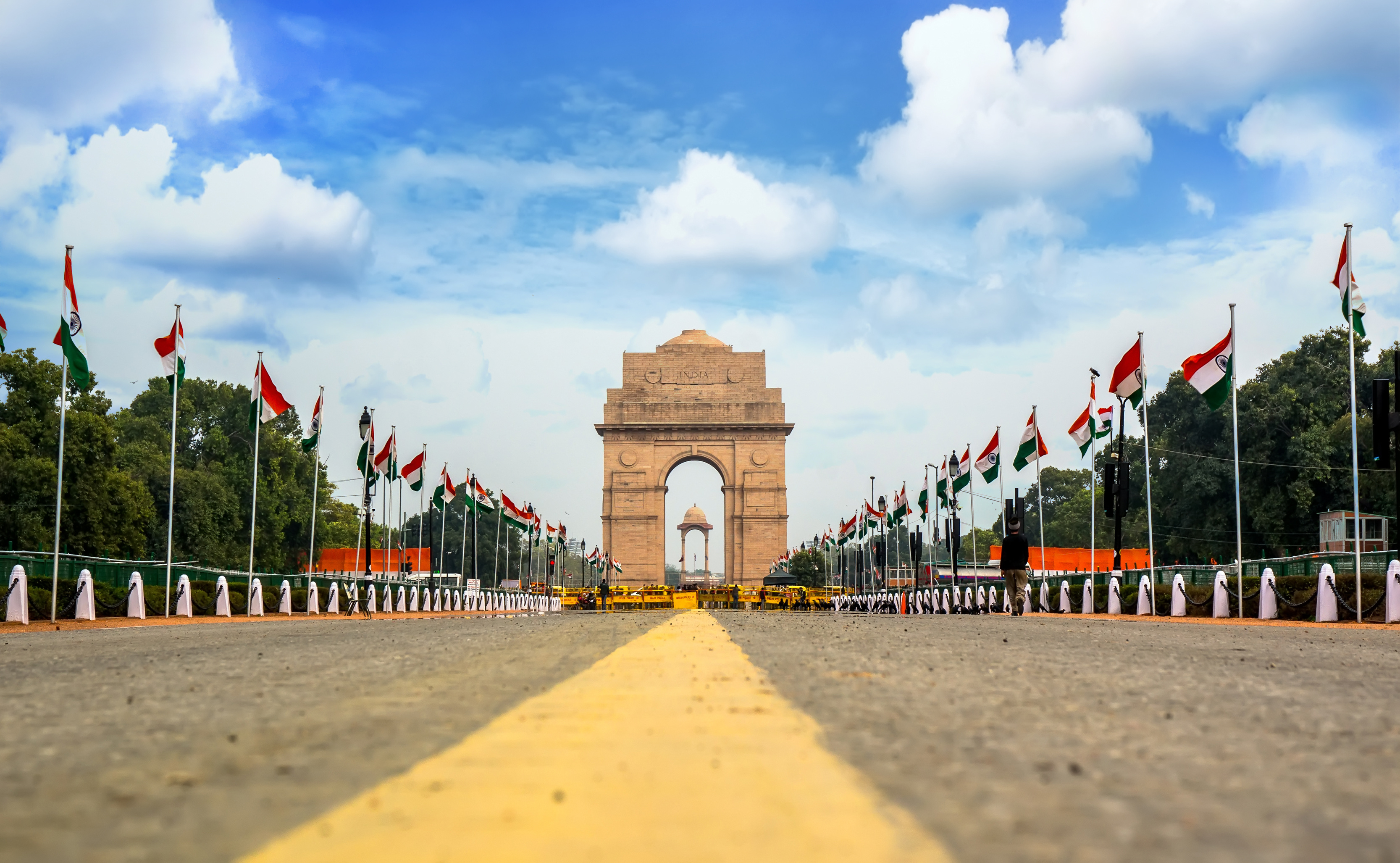
Day 1: Delhi Arrival – Greeting & Transfer to Hotel
You are greeted in the arrival area and ushered to your private vehicle. Most international flights arrive in the evening or at night, and we recommend arriving a day earlier to recuperate from jetlag and safeguard against flight delays. An additional night can be added at the time of reservation.
You are driven to the Pullman Aerocity and assisted with your check-in if it is 3 pm or later. The next day’s plans are briefly reviewed, and you are at leisure for the remainder of the day. (Overnight – Pullman Aerocity)
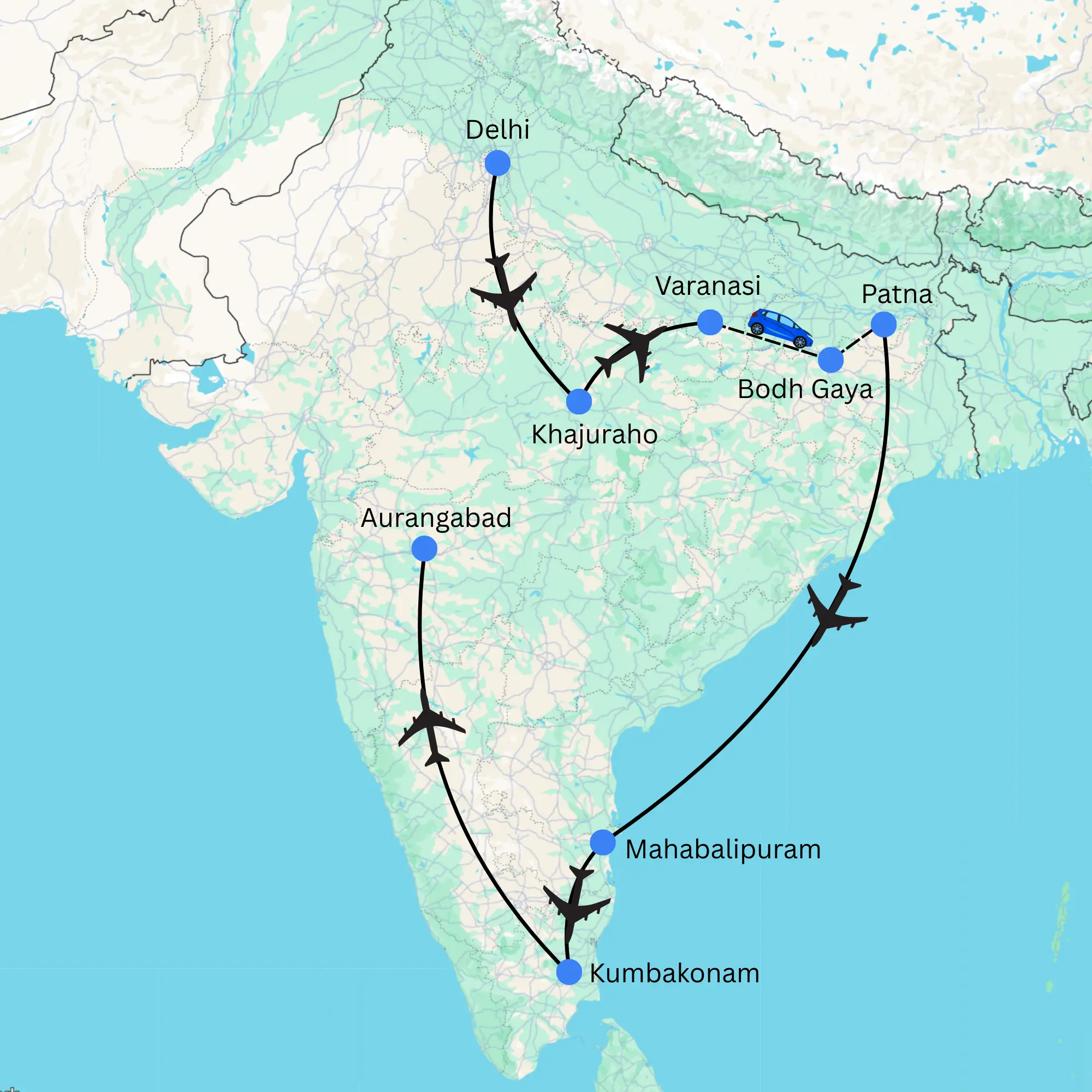
Day 2: Delhi – Khajuraho
After breakfast and checkout, you are driven to Delhi Airport and assisted with check-in for your flight to Khajuraho, home to some of the greatest masterpieces of early medieval North Indian temple architecture.
Upon arrival at Khajuraho Airport, you are greeted and driven to your upscale hotel, where you are assisted with check-in and have a short break for lunch and refreshment.
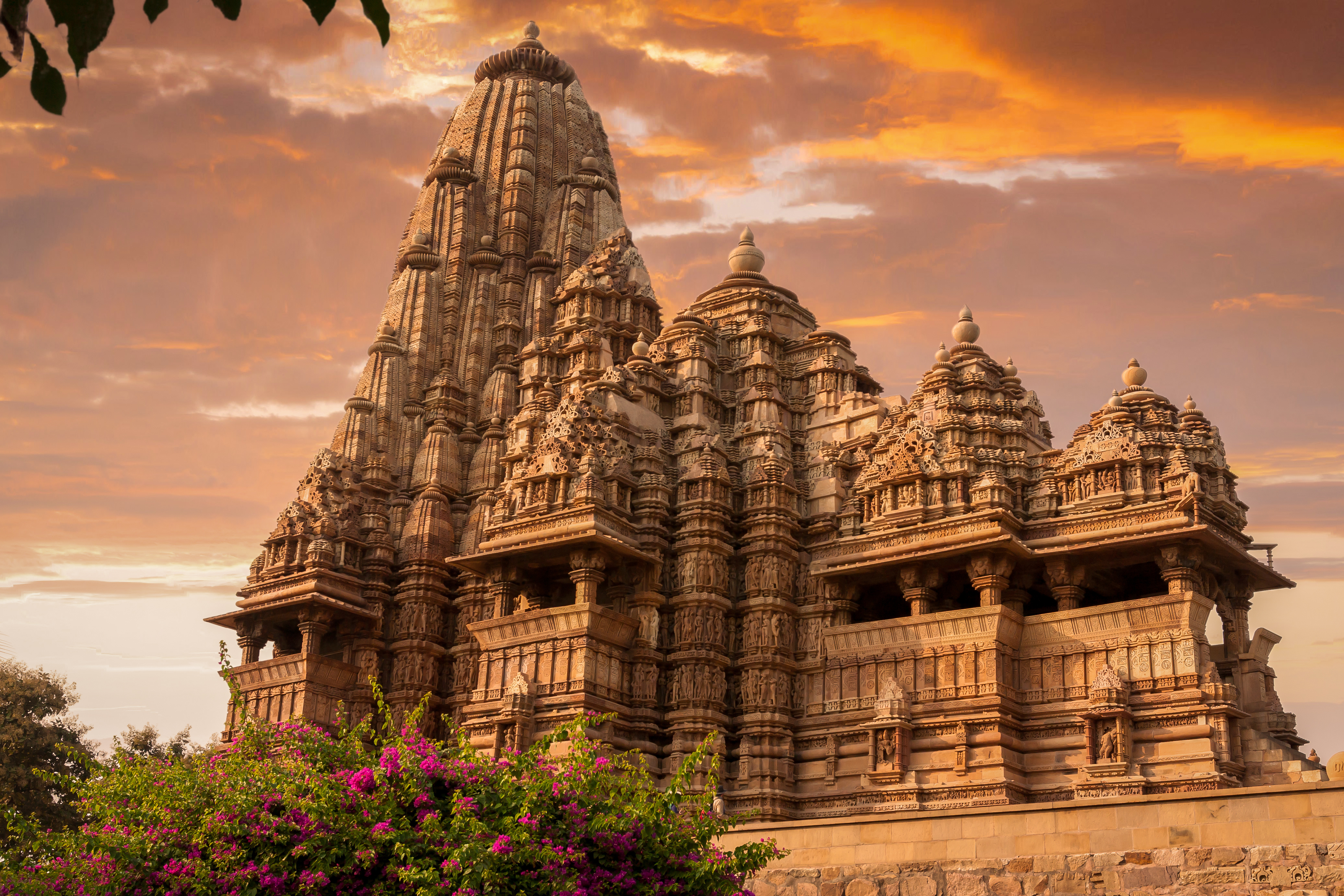
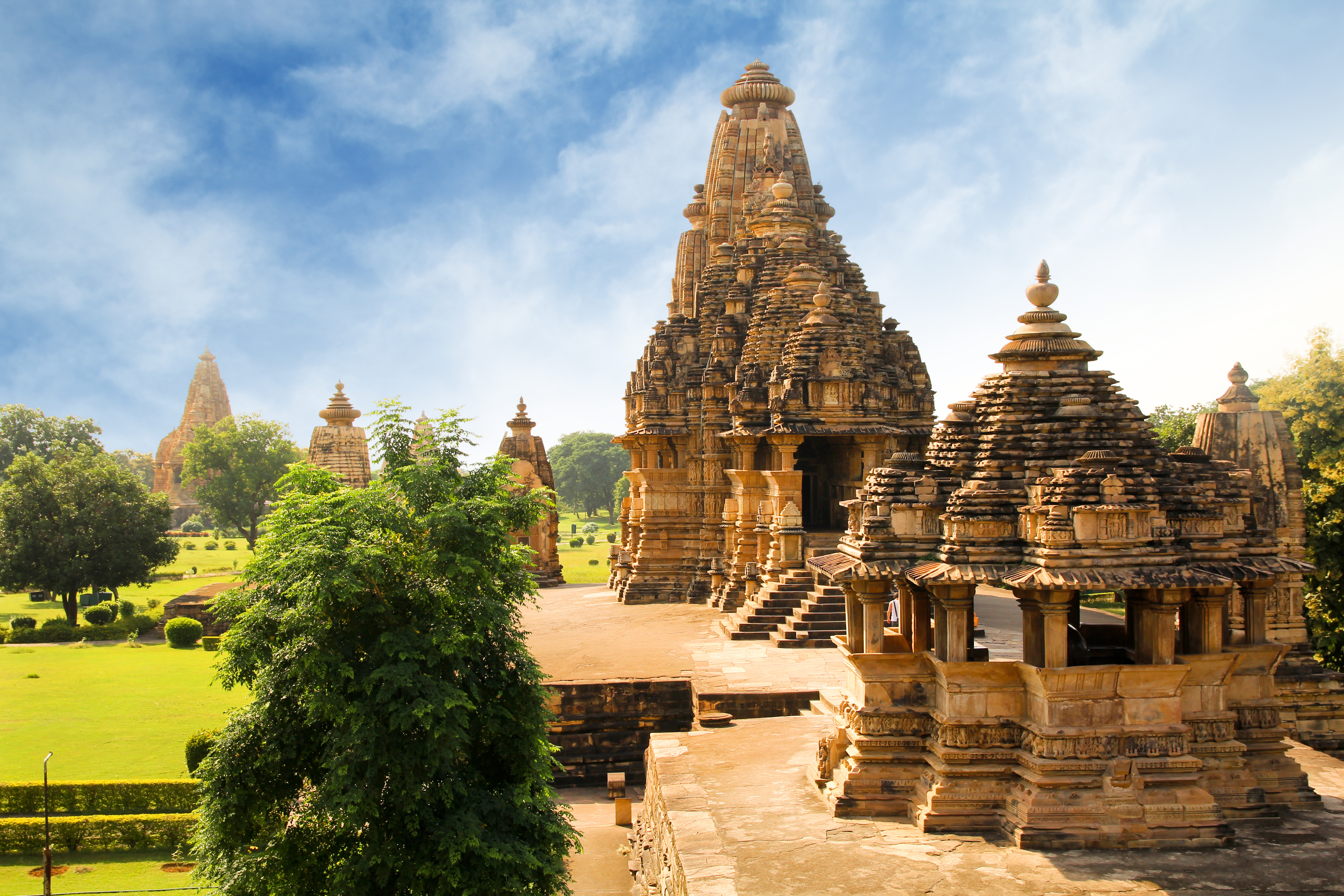
Western Group of Temples (UNESCO World Heritage Site)
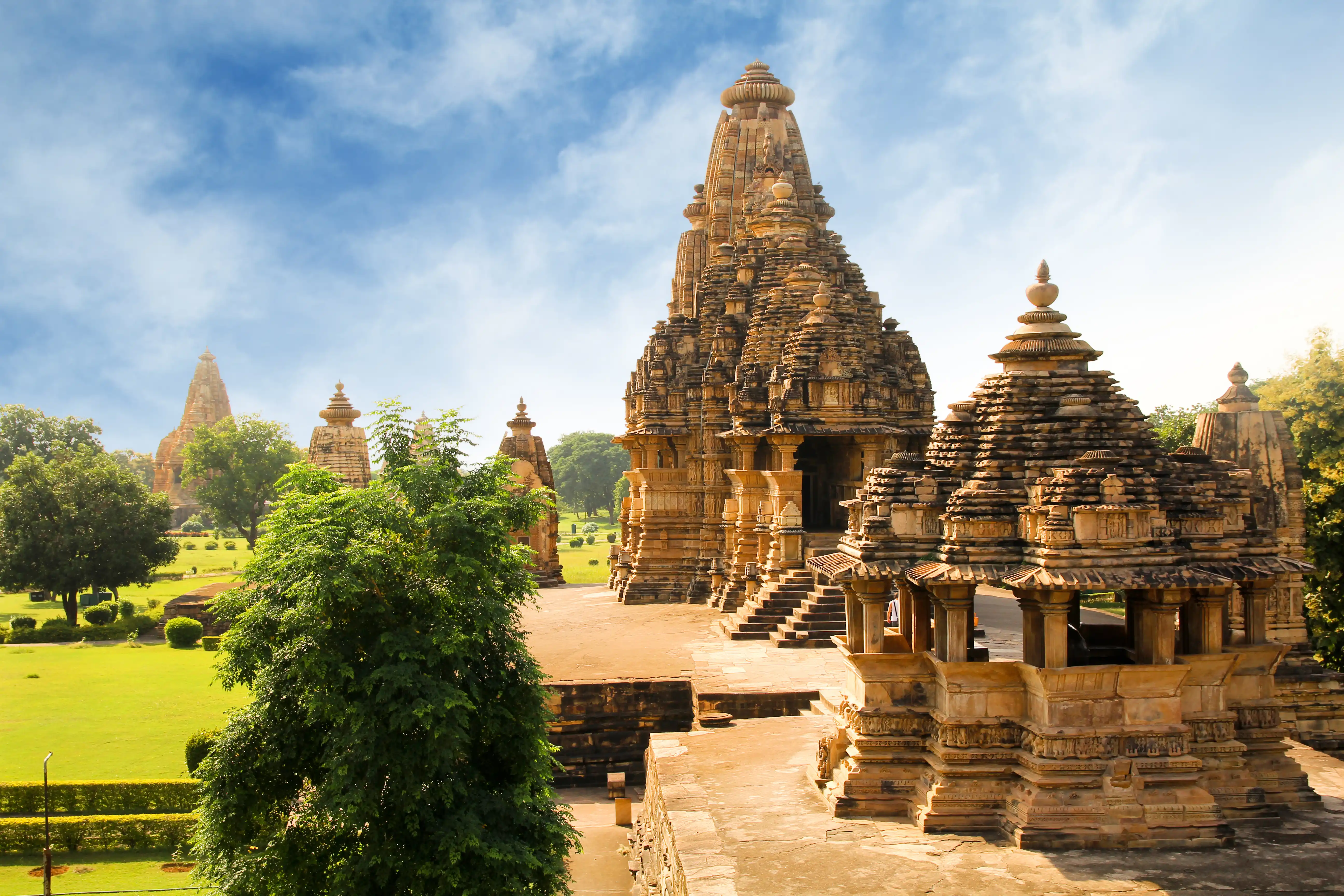
In the afternoon, your exploration begins with the Western Group, the artistic heart of Khajuraho. These exquisitely carved temples, built between the 10th and 11th centuries under the Chandela rulers, represent the highest achievements of the Nagara style of temple architecture.
Highlights include:
Kandariya Mahadeva Temple – Often regarded as the finest temple in the group, with a soaring shikhara and an extraordinary profusion of sculpture.
Lakshmana Temple – A major early monument at Khajuraho, richly carved and carefully proportioned, offering a complete program of narrative and devotional sculpture.
Other Western Group shrines that reveal the evolution of temple design, sculpture, and iconography during the Chandela era.
Your guide will help you interpret the architectural form, the layered sculptural registers, and the historical context of the Chandela kingdom, setting the stage for your journey through India’s ancient and early medieval monuments. (Overnight – Lalit Temple View Hotel)
Day 3: Khajuraho – Varanasi
After breakfast and checkout, the first part of this morning in Khajuraho is flexible, allowing you to explore according to your interests and your guide’s recommendations. Khajuraho offers one of India’s most remarkable concentrations of early medieval temple architecture, and this unstructured time lets you experience more of the complex at your own pace.
Eastern & Jain Temples You may visit the beautifully preserved Jain temples and selected Eastern Group shrines, which offer a quieter atmosphere and finely detailed sculpture. These temples provide a different perspective on the artistry and religious landscape of the Chandela period.
Revisit the Western Group If you wish, you may also return to the Western Group temples explored the previous afternoon. Many travelers appreciate a second visit to their favorites.
Your guide will shape the morning around what you want—whether that means extended time at specific shrines, quieter photographic opportunities, or a more relaxed pace before your flight. In the late morning you are driven to Khajuraho Airport and assisted with check-in for your early afternoon flight to Varanasi.
Varanasi Arrival Upon arrival at Varanasi Airport, you are greeted in the arrival area and ushered to your private vehicle. You are then driven into the city and assisted with check-in at your upscale hotel, set amidst landscaped gardens on the edge of Varanasi’s historic core. Your guide reviews the arrangements for the following morning’s sunrise cruise and Ganga experience. (Overnight – Taj Ganges Varanasi)
Day 4: Varanasi
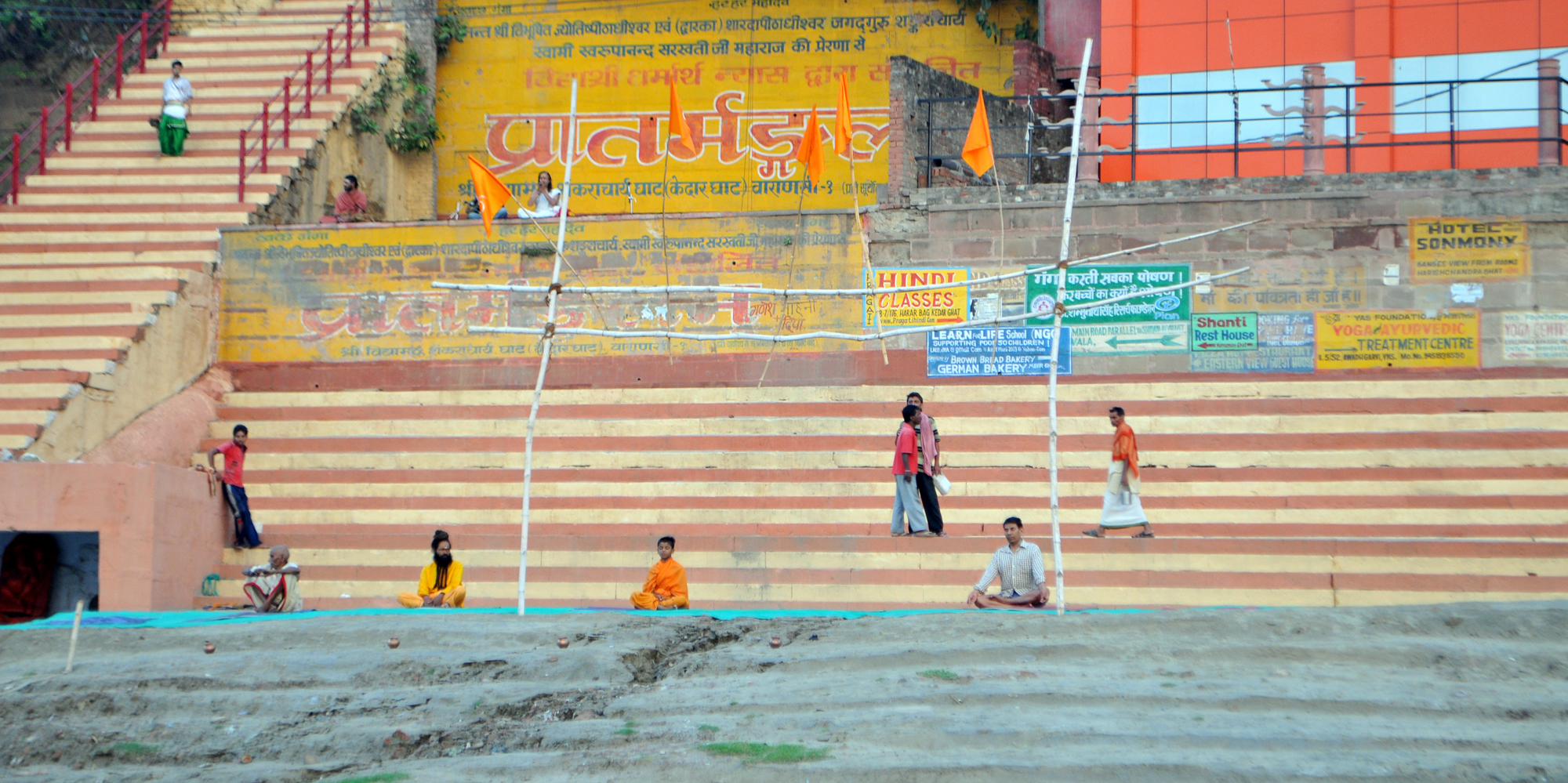
Sunrise Cruise Your day begins well before dawn with a hot beverage and light snack, followed by a drive to the Ganga. You’ll arrive at the Ghats just before sunrise, one of the most powerful and timeless experiences in all of India.
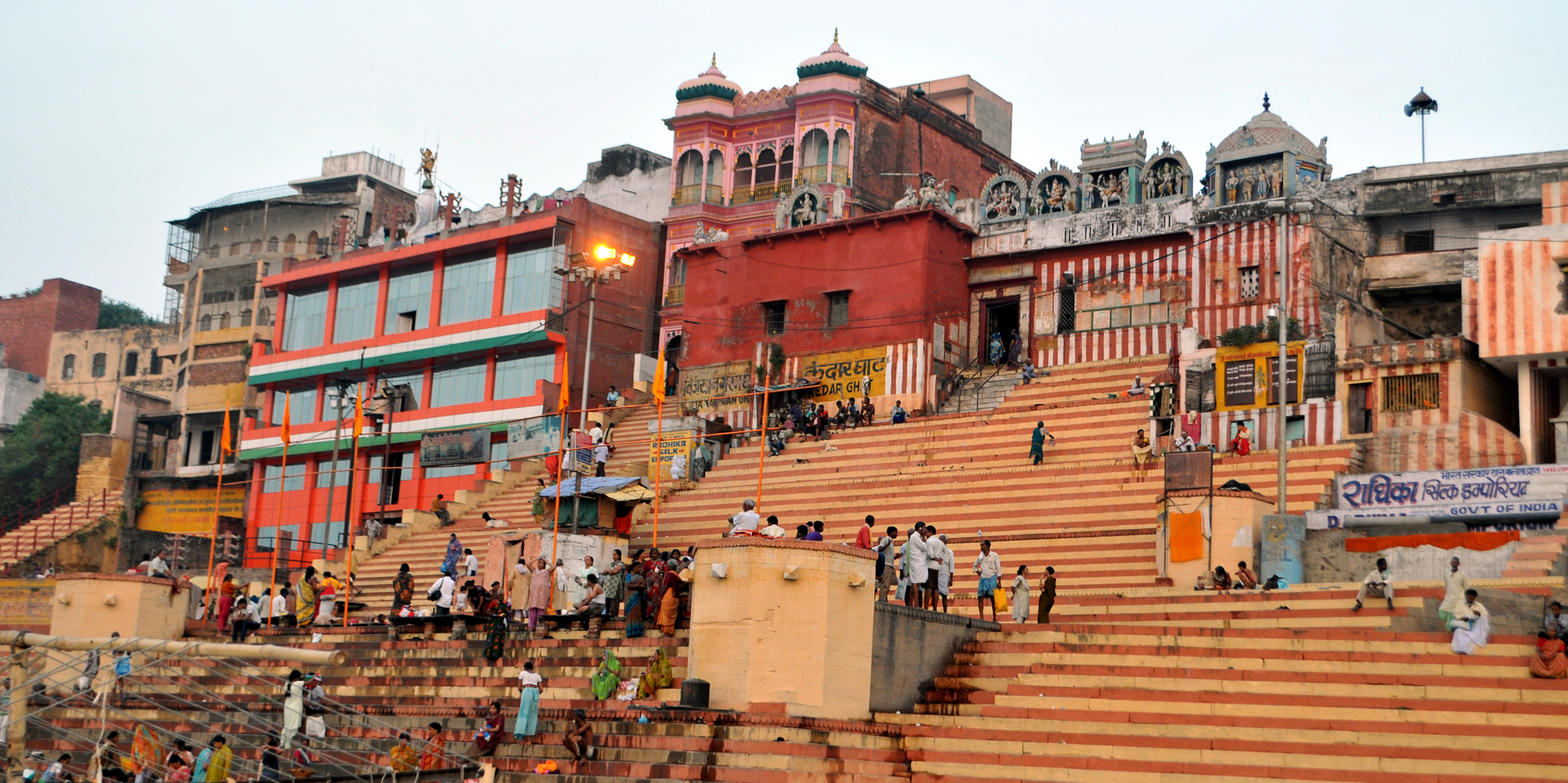
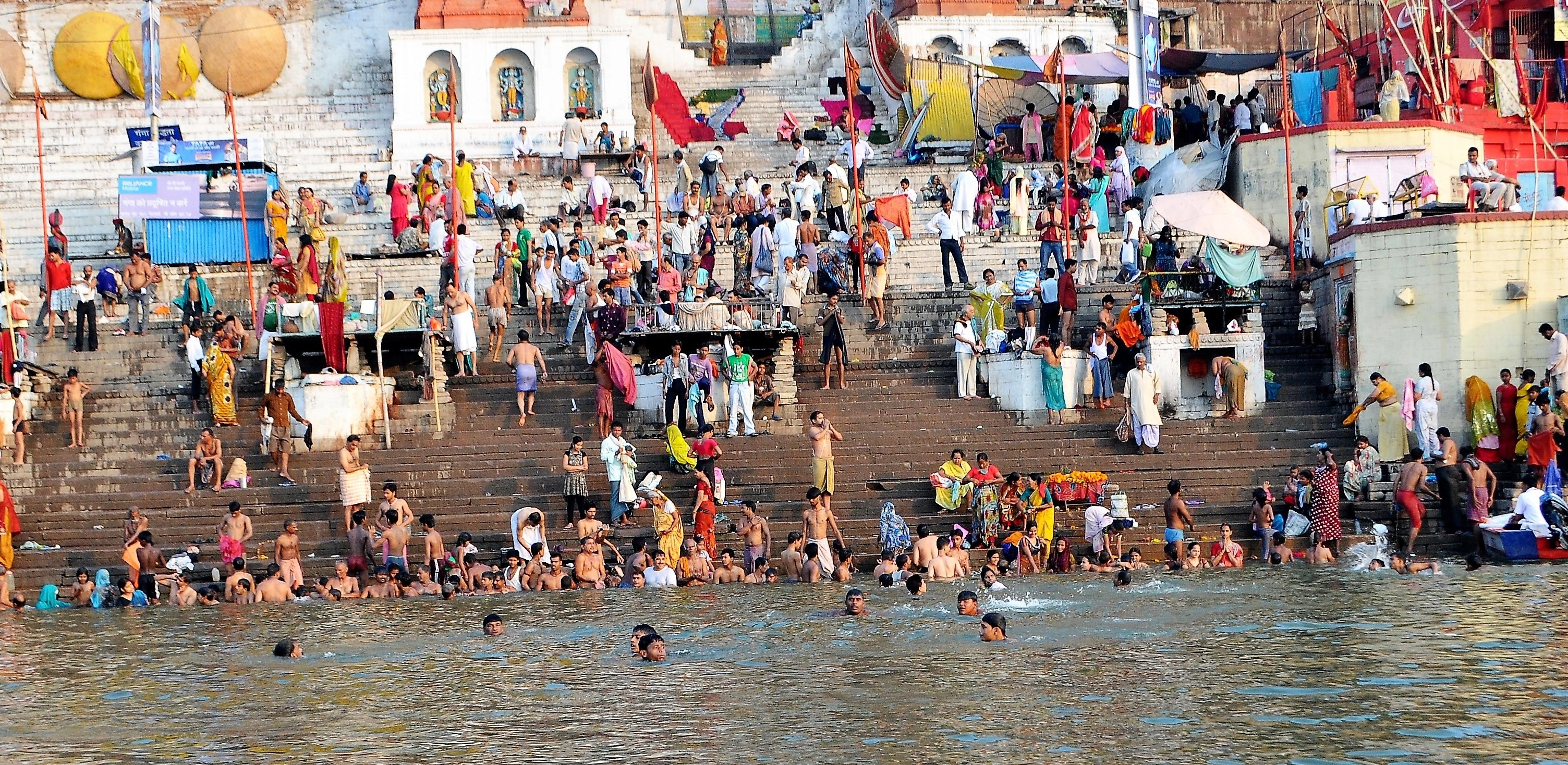
Boarding your private boat, you begin a slow cruise along theholiest stretch of the Ganga, observing morning rituals that have taken place here for thousands of years. As the sun rises over the river, the Ghats come to life:
Devout Hindus greet the dawn, immersing themselves in the sacred river as an act of purification
Women in sarees step modestly into the water to perform ablutions
Sadhus and priests, waist-deep in the Ganga, pour holy water over themselves in prayer
Others sit insilent meditation or practice yoga, facing the rising sun
You will also pass Manikarnika Ghat, the main cremation ghat of Kashi (the original ancient Holy City). Here, open-air cremations take place around the clock. Though solemn, it is a site of spiritual liberation—many Hindus believe that being cremated here breaks the cycle of rebirth and grants the soul salvation (moksha). Those interested can choose to visit the Ghat.
Your guide will provide respectful interpretation throughout the cruise, offering insight into the meaning and context of what you see—rituals that are both personal and universal, unchanged across millennia. After disembarkation, you are driven back to your hotel for a relaxed breakfast. The rest of the morning is at leisure—time to freshen up, rest, or enjoy the hotel’s facilities.
Afternoon: Drive to Ramnagar Fort via Banaras Hindu University Following lunch at your hotel, your exploration begins with a drive through Varanasi’s southern neighborhoods en route to the far bank of the Ganga. You pass the grounds of Banaras Hindu University (BHU), India’s leading Hindu academic center, and optionally pause for a short walk depending on your interests. You then cross the river to reach Ramnagar Fort, the 18th-century riverside residence of the Kashi Naresh. The fort’s carved balconies, courtyards, and small museum provide historical continuity with centuries of royal patronage in Kashi.
After visiting the fort, you return to the western bank of the Ganga.
Evening on the Ghats You are driven to a very interesting ghat at the edge of the main ghat span, where you begin a long, unhurried walk along the riverfront. Your guide leads you gradually into the succession of Kashi’s historic ghats, allowing you to absorb the setting at a natural pace.
As you walk northward, your guide explains how kings, nobles, and wealthy patrons have been building along the Ganga for five millennia, creating the river-facing palaces and stone embankments that dominate the riverfront today. Structures such as the palace of Raja Man Singh, the grand Darbhanga Palace, and Chet Singh’s riverside fort are pointed out as examples of the most recent layers in this long-standing tradition of royal presence on the Ganga.
At the same time, you witness the many late-afternoon activities that have remained remarkably unchanged over thousands of years — people gathering water, pilgrims arriving with purpose, bathers making quiet offerings, priests preparing for evening rituals, and families spending time along the steps. Your guide explains how these timeless rhythms reflect the continuity of daily life on a riverfront that has been active since antiquity.
As the sun begins to descend, you continue walking until you reach the ghat where your private boat and crew are waiting. You are assisted aboard, and the boat begins a sunset journey on the river, moving gently along the water and offering a wide, glowing view of the palaces and ghats you have just explored. The warm light of the setting sun reveals the forms and colors of the riverfront in a way that is both atmospheric and unhurried. Your boat returns you directly to the ghat where your vehicle and chauffeur are waiting, and you are driven back to your hotel. (Overnight – Taj Ganges, Varanasi)
Day 5: Varanasi – Bodh Gaya
After breakfast and assisted checkout, you drive out of Varanasi toward the quiet site of Sarnath, where Siddhartha Gautama, the Buddha, delivered his first sermon—setting in motion the Wheel of Dharma and laying the foundations of Buddhism.
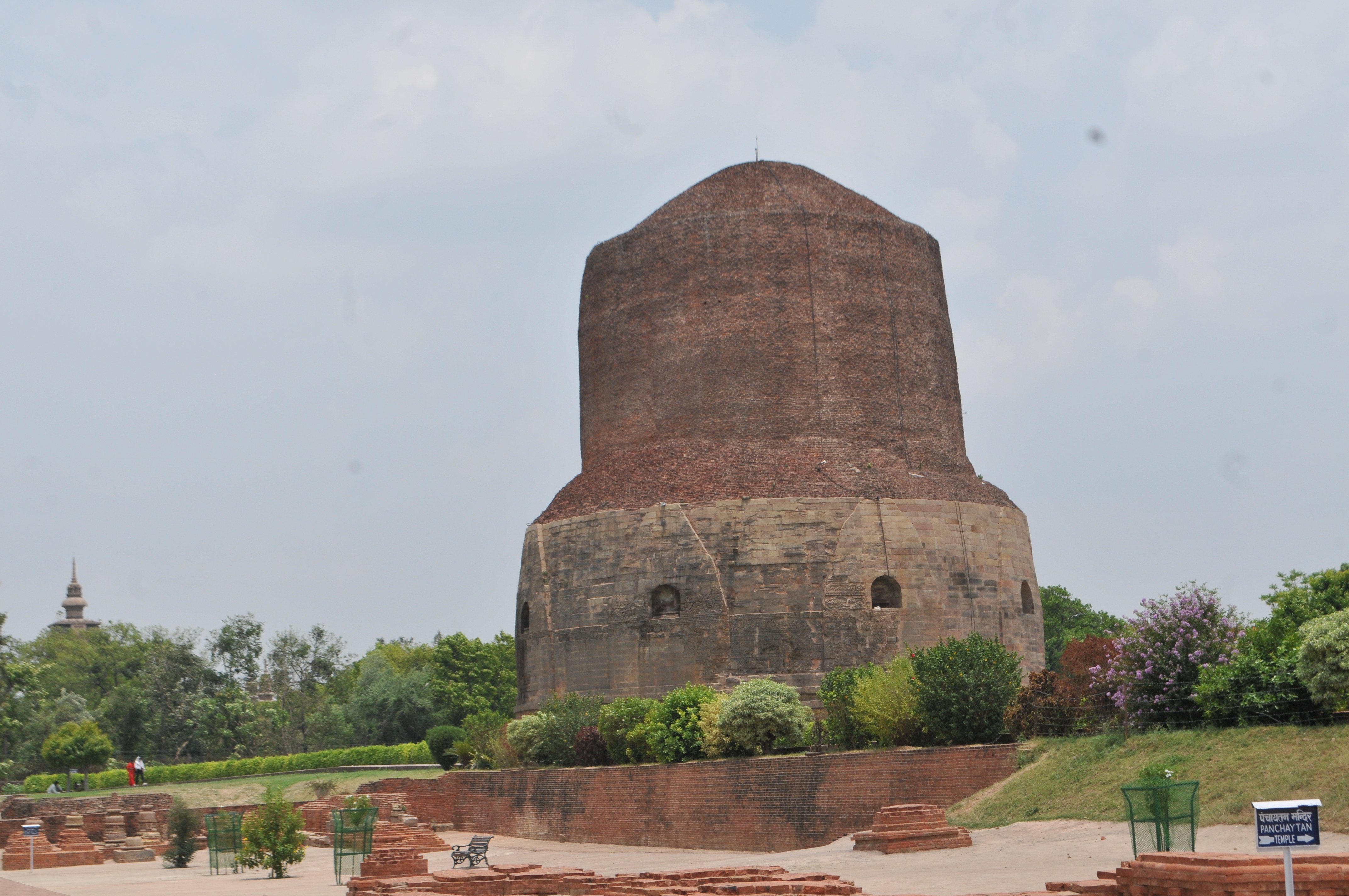
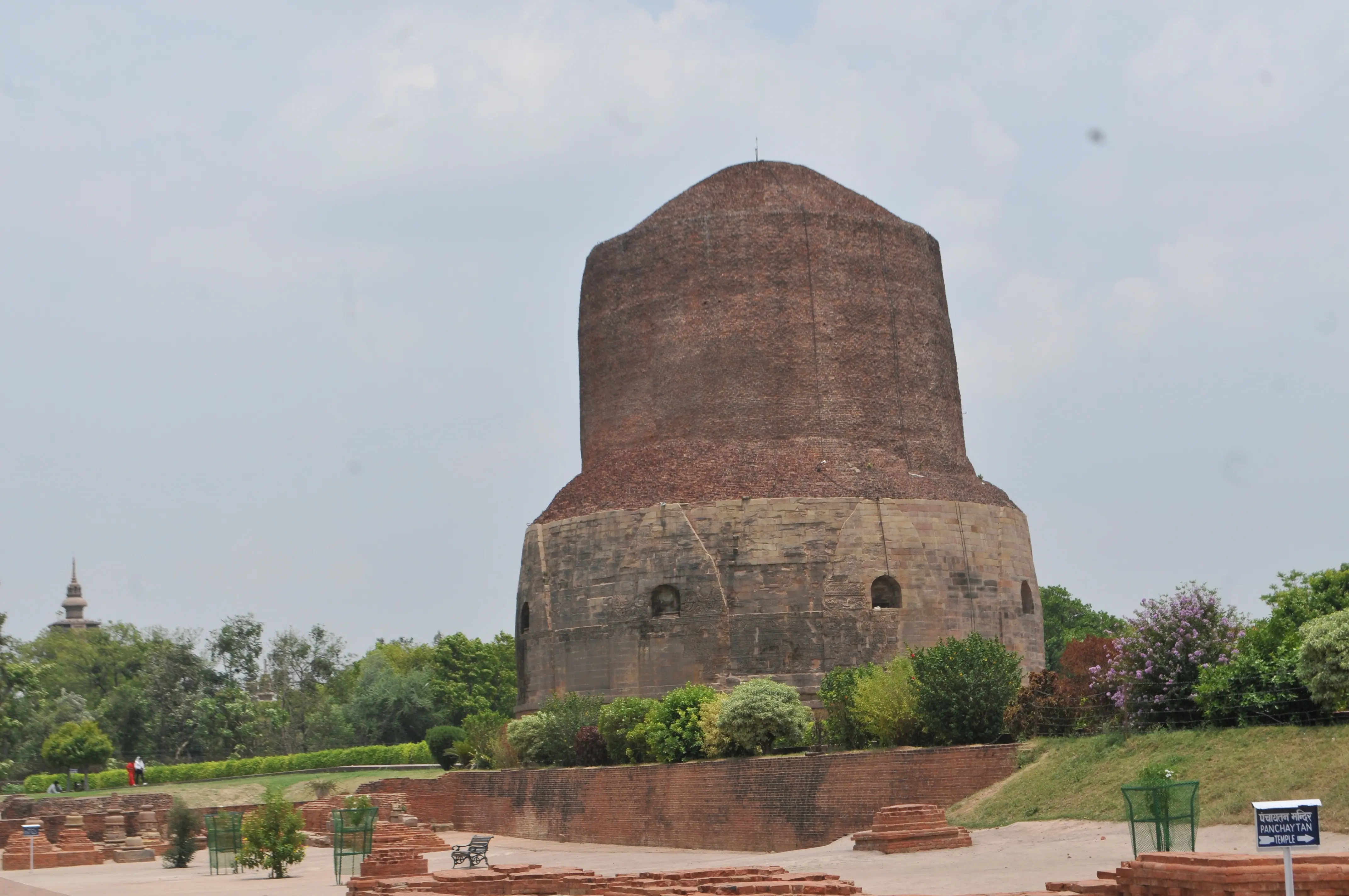
Sarnath – Where the Wheel of Dharma First Turned Enjoy a walk through the main archaeological park, where ruins of ancient monasteries and temples stand in quiet reverence. The centerpiece is the towering Dhamek Stupa, originally built over 2,300 years ago by Ashoka and later enlarged in the 5th–6th century CE. It marks the exact spot where the Buddha is said to have taught his first five disciples. Your guide will interpret the layers of history around you—Mauryan brickwork, Gupta-style carvings, and the long continuity of pilgrimage at this site.
You also visit the Sarnath Archaeological Museum, home of India’s National Emblem. Its modest size belies the significance of its collection. Here you will find the exquisitely carved Ashokan Lion Capital, a 3rd-century BCE sculpture featuring four back-to-back lions—now immortalized as the national emblem of India. Your guide will explain the symbolism behind the lions, wheels, and base figures, and how Emperor Ashoka used such imagery to spread both imperial authority and Buddhist ideals.
After your visit, you rejoin your chauffeur and drive through rural countryside that has changed, yet still evokes the landscapes of early Buddhist texts, on your way to Bodh Gaya, the most important pilgrimage center in Buddhism. There is a break for lunch either along the route or after you arrive, depending on timing. Upon arrival, you check in to your hotel and then proceed to the Bodhgaya Archaeological Museum.
Your guide introduces the site’s chronology through its collection of railings, sculptures, inscriptions, and architectural fragments spanning more than two millennia. You learn how Emperor Ashoka visited Bodhgaya in the 3rd century BCE and commissioned an early shrine marking the place of enlightenment. Centuries later, during the Gupta period (5th–6th century CE), this shrine was reconstructed and enlarged in the architectural style that forms the basis of the present Mahabodhi Temple. Additional contributions from subsequent eras illustrate how Bodhgaya continued to develop as a major center of learning and pilgrimage. (Overnight – Hyatt Place Bodh Gaya)
Day 6: Bodh Gaya
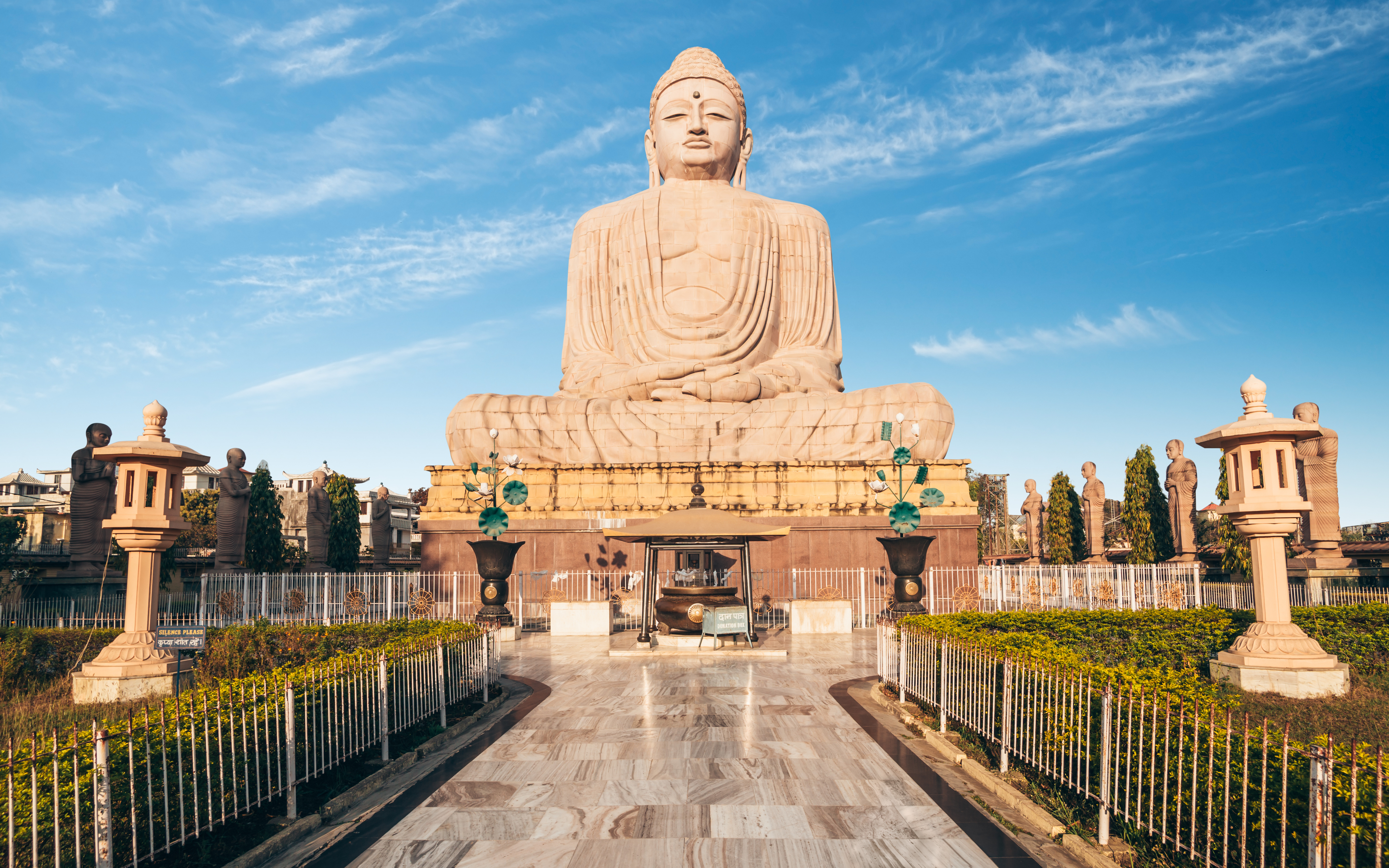
After breakfast, you begin the day at the Mahabodhi Temple, the monumental centerpiece of Bodhgaya and one of the most significant surviving examples of early Indian sacred architecture. The temple’s soaring shikhara, covered with geometric reliefs and niche shrines, exemplifies a design that influenced religious architecture across eastern India for centuries. As you walk the surrounding paths and examine the subsidiary shrines, your guide explains how additions and restorations from different periods have created a layered architectural landscape representing contributions from across Asia.
Adjacent to the temple stands the revered Bodhi Tree, a direct descendant of the ancient pipal tree associated with the Buddha’s enlightenment. The tree has been regenerated multiple times over the centuries, each time using cuttings from its predecessor to preserve continuity with the original lineage. The stone railing and platform surrounding the tree contain structural and sculptural details added at various points in the site’s long history. The combination of the living tree, the monumental shrine, and the surrounding devotional structures reflects the unique continuity of Bodhgaya as both a historical and contemporary center of Buddhist culture.
You then walk to Muchalinda Lake, located directly beside the temple complex. The lake illustrates how water features were integrated into monastic and settlement environments in this region and provides a quiet vantage point for observing the landscape that shaped early life here.
Next, you visit the Phalgu (Niranjana) River, the geographic feature that influenced settlement patterns, agriculture, and ritual activity long before Bodhgaya became associated with the Buddha. Your guide explains how the river contributed to Gaya’s development as an enduring cultural center with traditions that evolved over many centuries.
Lunch is flexible today, and your guide will suggest options based on your preferences. In the afternoon, you visit two of Bodhgaya’s most distinctive international monasteries, which highlight the site’s global significance:
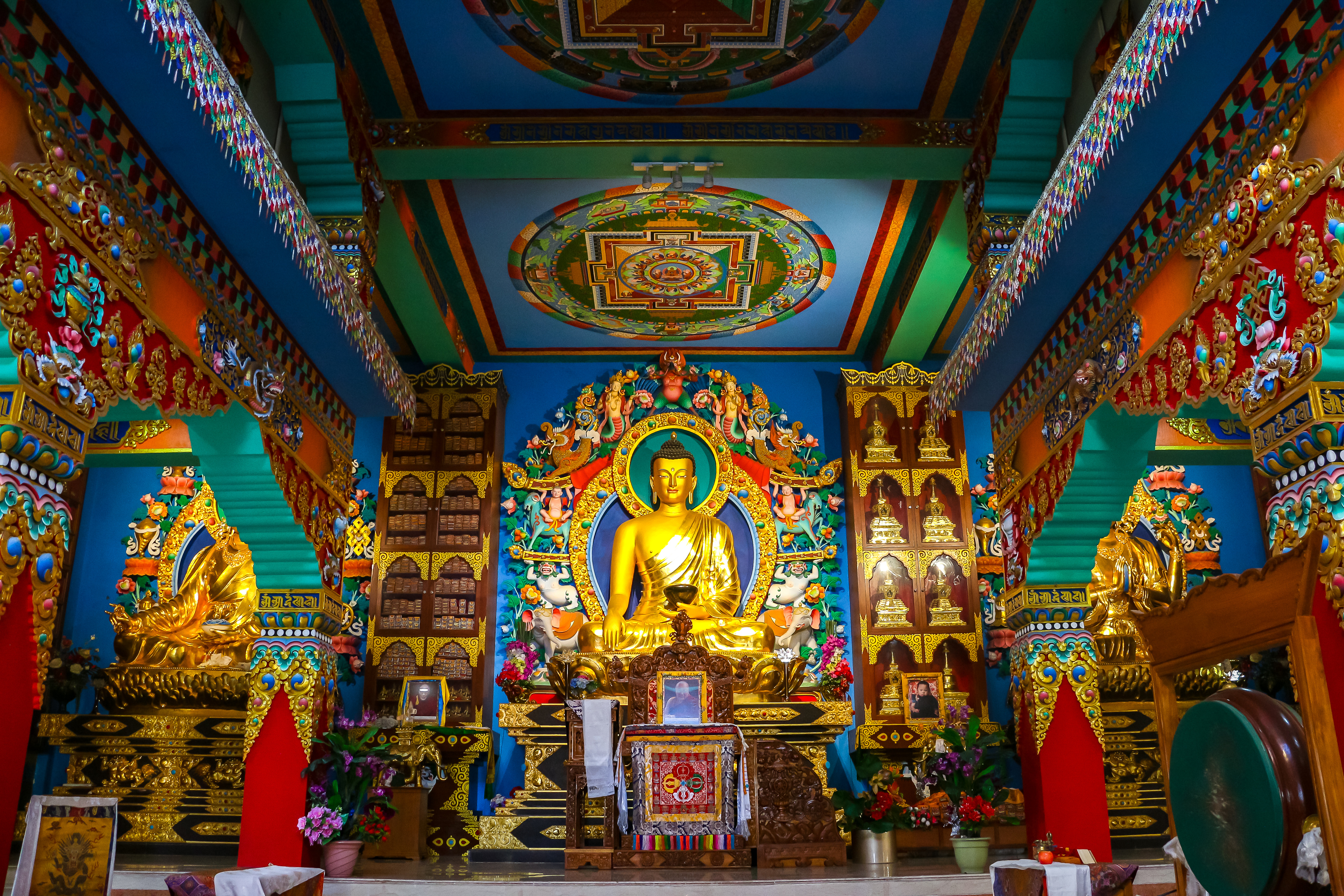
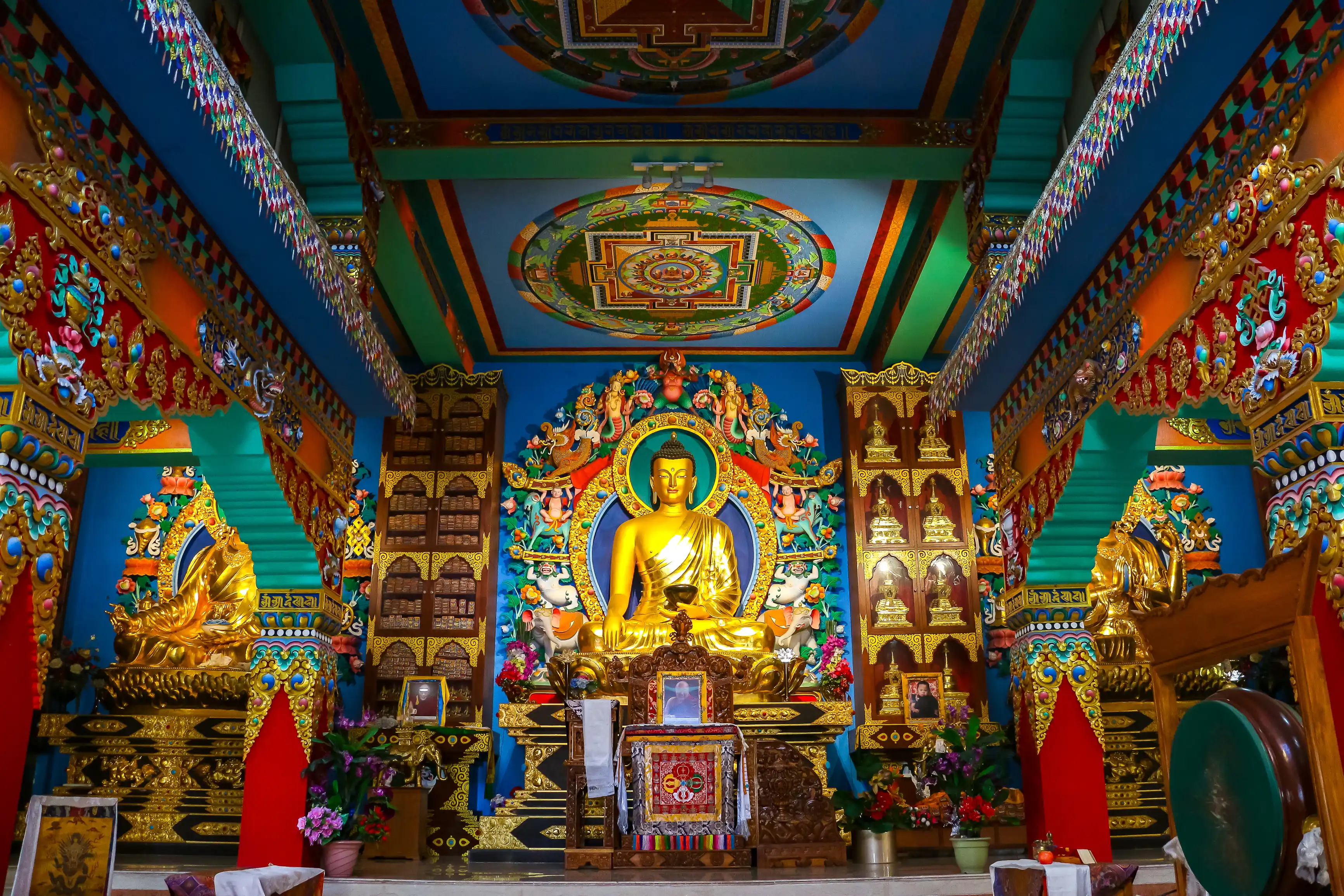
Bhutanese Monastery Featuring characteristic Himalayan architectural elements such as carved woodwork and vivid painted motifs, the Bhutanese monastery represents Bhutan’s long-standing monastic ties to Bodhgaya and its role in supporting scholarship and restoration efforts.
Thai Monastery Built in classical Thai style with tiered roofs and ornate gilded décor, this monastery reflects the contributions of the Thai kingdom and the Theravada tradition to Bodhgaya.
You may continue visiting additional monasteries or return to your hotel afterward. (Overnight – Hyatt Place Bodh Gaya)
Day 7: Bodh Gaya – Patna
After breakfast, you are assisted with your checkout and then you drive through rural Bihar to Rajgir, one of India’s oldest continuously referenced capitals.
Rajgir – Early Magadhan Capital (6th–5th Century BCE)
Your visit includes several important early-historic sites:
Vulture’s Peak – A hilltop location associated with early Buddhist teachings. It offers panoramic views of the surrounding valley and is one of the most frequently mentioned sites in early Buddhist texts.
Cyclopean Walls – Massive dry-stone defensive walls, built in the 6th century BCE, once encircled the ancient city. They are among the oldest surviving examples of large-scale stone fortification in India.
Ajatashatru’s Fort – Identified portions of an early fortified enclosure attributed to the ruler Ajatashatru, reflecting the political consolidation of Magadha before the Mauryan Empire.
There is a break for lunch.
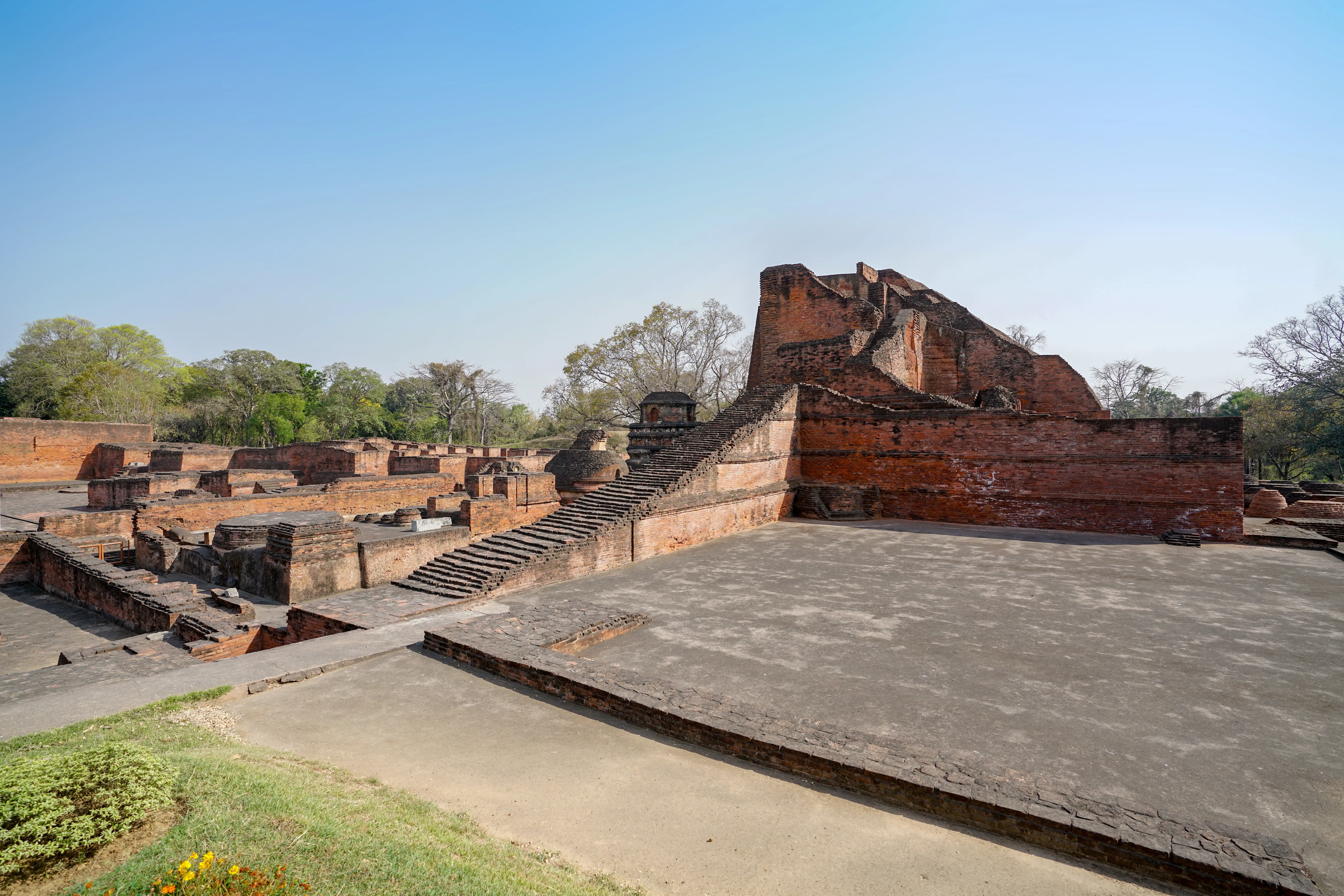
Nalanda – The Great Monastic University (5th–12th Century CE)
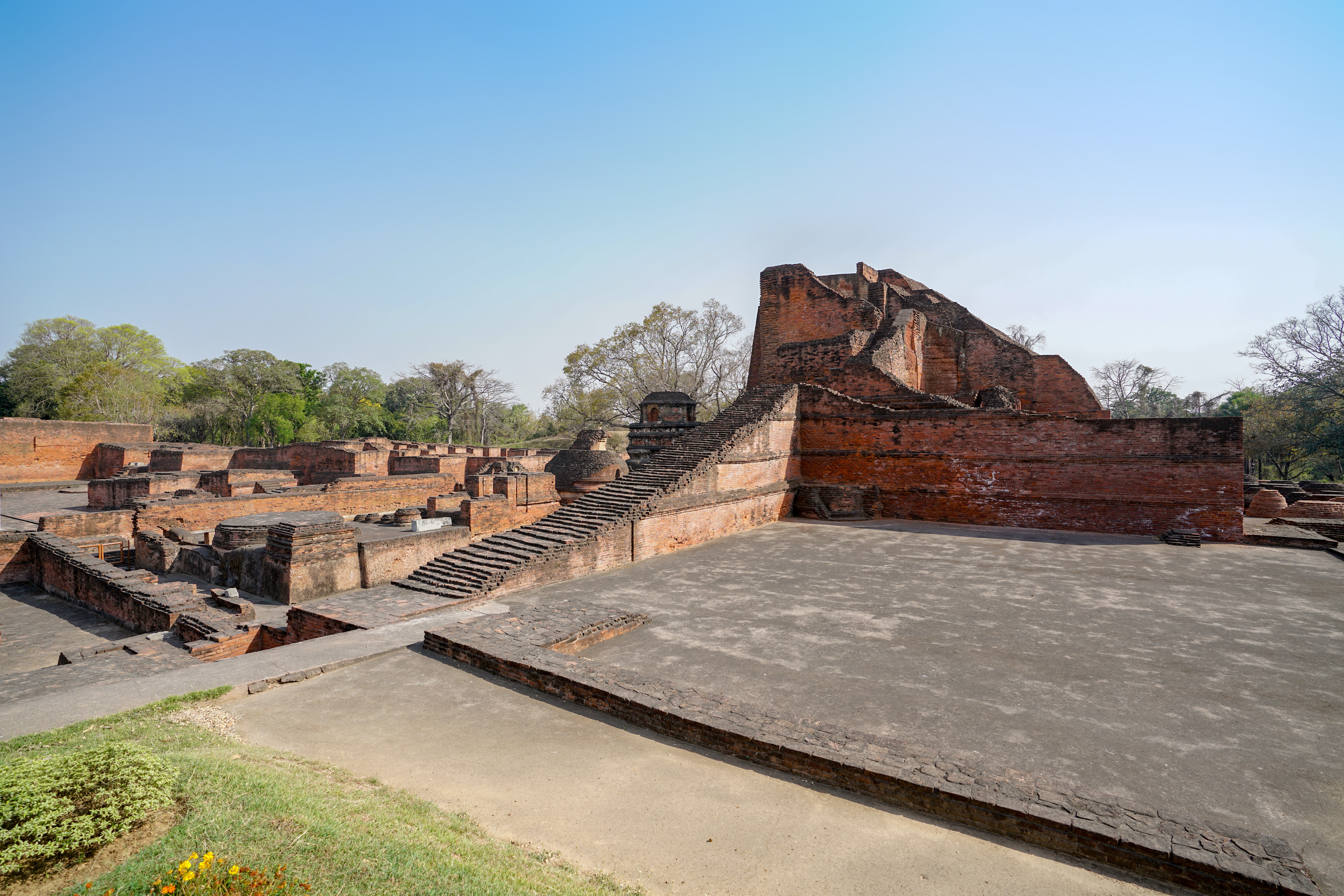
You continue to Nalanda, which flourished as the world’s preeminent Buddhist academic center for centuries. You walk through:
Viharas – Long monastic living quarters arranged around central courts.
Chaityas and Temples – Including Temple 3, with its distinctive stepped pyramidal form, representing the architectural development of the Gupta era.
Lecture and Meditation Halls – Foundations showing the organized layout of the university, which once housed thousands of monks and scholars from across Asia.
You then visit the Nalanda Archaeological Museum, whose displays of bronzes, stucco fragments, seals, terracotta plaques, and carved stone pieces deepen your understanding of the university’s intellectual and artistic life.
Afterward, you are driven onward to Patna and assisted with check-in at your hotel. (Overnight – Taj City Centre, Patna)
Day 8: Patna – Vaishali Excursion
After breakfast, you travel by road to one of the most important early-historic and Buddhist sites in the region.
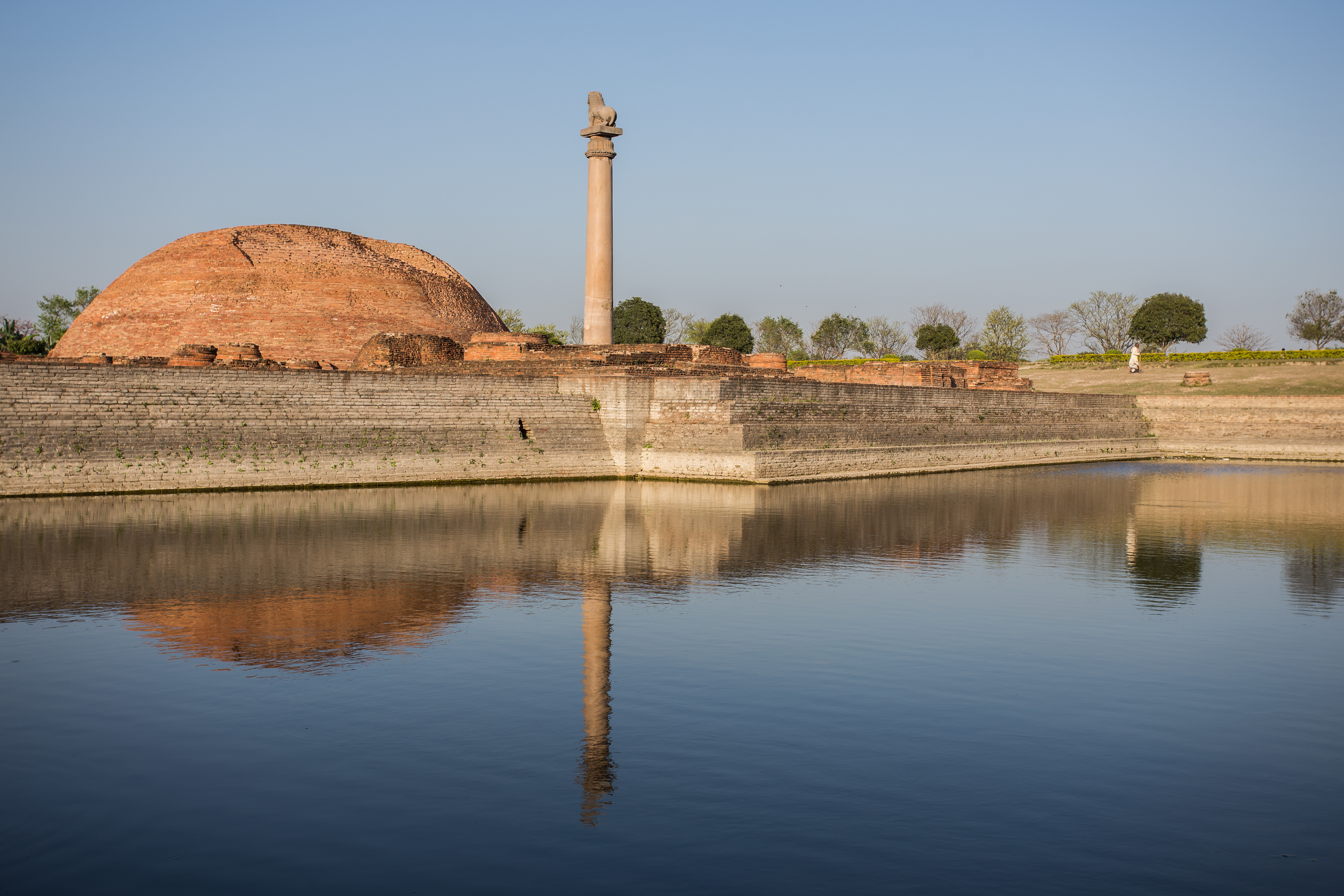
Vaishali – Ashokan Pillar & Sacred Buddhist Sites You drive out to Vaishali, an ancient Licchavi republic and major center of Buddhism during the Buddha’s lifetime. At Kolhua, you see one of the best-preserved Ashokan pillars in India, notable for its single lion capital and mirror-like Mauryan polish. Unlike many pillars that survive only in fragments, this one remains fully erect, much as it stood more than 2,200 years ago.
Nearby are the Kolhua Stupa, associated with the Buddha’s last sermon, and the remains of monastic structures and ancient brick constructions linked with early Buddhist communities. The rural atmosphere and open landscape offer a vivid sense of the early Buddhist sacred geography, more expansive than what can be seen within the modern city.
After your visit, you return toward Patna, with a break for lunch en route or in the city.
Patna Museum – Treasures of Mauryan and Gupta Era Art In the afternoon, you visit the Patna Museum, whose collection includes some of the greatest early sculptures from the region. Highlights include the celebrated Didarganj Yakshi (3rd century BCE), famous for its flawless Mauryan polish and elegant form, as well as stone and bronze Buddhist images, terracotta panels, relic caskets, and other objects spanning from the Mauryan through the Gupta periods.
After your museum visit, you are driven back to your hotel. (Overnight – Taj City Centre, Patna)
Day 8: Patna – Vaishali Excursion
After breakfast, you travel by road to one of the most important early-historic and Buddhist sites in the region.
Vaishali – Ashokan Pillar & Sacred Buddhist Sites
You drive out to Vaishali, an ancient Licchavi republic and major center of Buddhism during the Buddha’s lifetime. At Kolhua, you see one of the best-preserved Ashokan pillars in India, notable for its single lion capital and mirror-like Mauryan polish. Unlike many pillars that survive only in fragments, this one remains fully erect, much as it stood more than 2,200 years ago.
Nearby are the Kolhua Stupa, associated with the Buddha’s last sermon, and the remains of monastic structures and ancient brick constructions linked with early Buddhist communities. The rural atmosphere and open landscape offer a vivid sense of the early Buddhist sacred geography, more expansive than what can be seen within the modern city.
After your visit, you return toward Patna, with a break for lunch en route or in the city.
Patna Museum – Treasures of Mauryan and Gupta Era Art In the afternoon, you visit the Patna Museum, whose collection includes some of the greatest early sculptures from the region. Highlights include the celebrated Didarganj Yakshi (3rd century BCE), famous for its flawless Mauryan polish and elegant form, as well as stone and bronze Buddhist images, terracotta panels, relic caskets, and other objects spanning from the Mauryan through the Gupta periods.
After your museum visit, you are driven back to your hotel. (Overnight – Taj City Centre, Patna)
Day 9: Patna – Chennai – Mahabalipuram
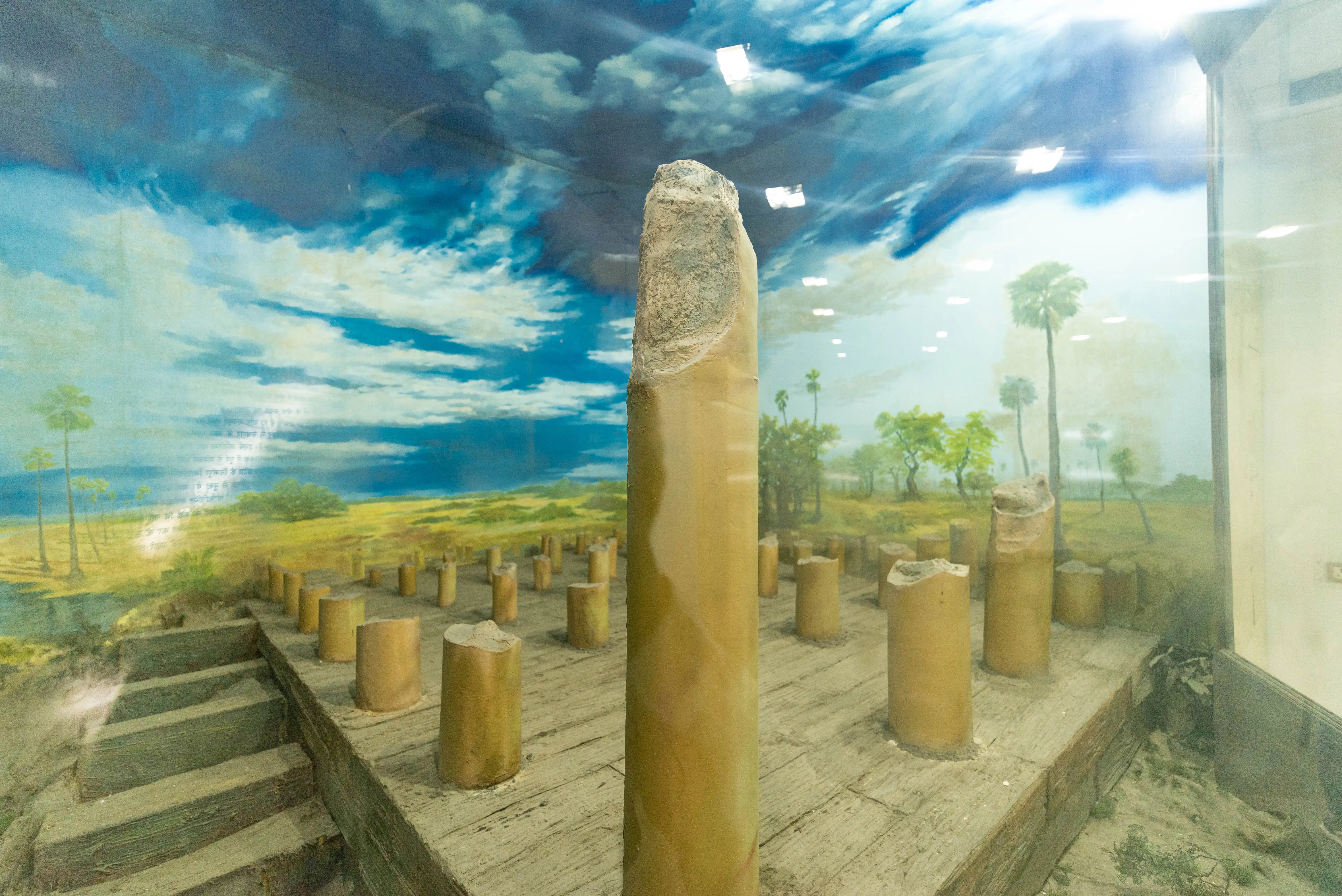
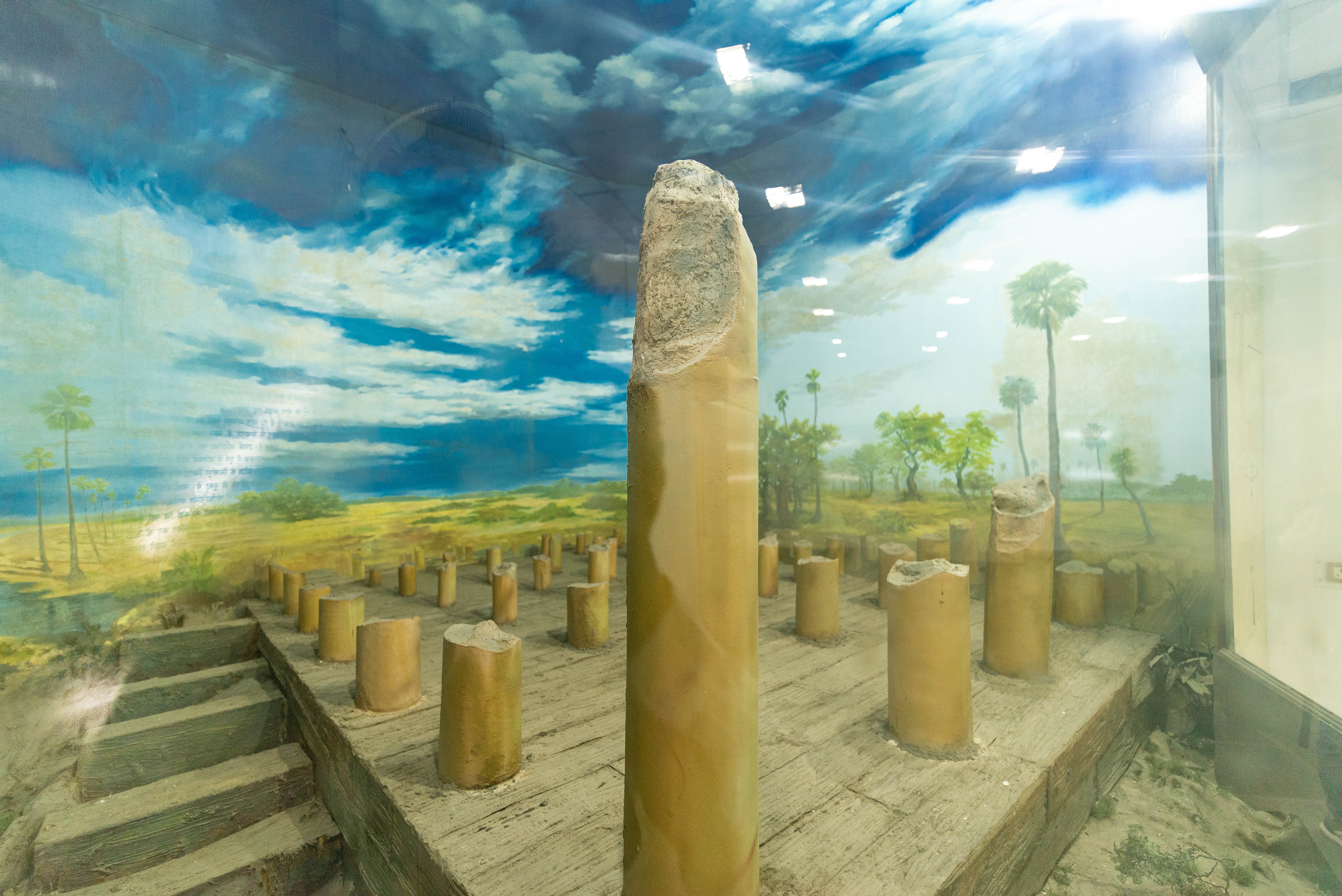
Kumhrar – Archaeological Remains of Pataliputra Start any time before noon this morning and, after checkout, you begin with a visit to Kumhrar, an excavated area linked with ancient Pataliputra, the early capital of Magadha and later the Mauryan Empire. The site includes the remains traditionally associated with the 80-pillared hall, offering a sense of the scale and layout of the early imperial city. Your guide summarizes the significance of these discoveries and how they connect to the political and cultural developments of the region during the Mauryan period.
You walk through the landscaped grounds and view the excavated sections, gaining a clearer understanding of how ancient Pataliputra extended across what is now modern Patna.
Golghar – Colonial-Era Granary You then continue to Golghar, a large beehive-shaped granary built in 1786 after the Bengal famine. The structure’s massive curving form and thick brick walls illustrate an important example of late-18th-century public works. Your guide explains the purpose behind its construction and its place within colonial-era Patna. The surrounding garden provides an easy opportunity to view the granary and its exterior details.
A break for lunch can be facilitated during the course of this sightseeing.
Flight to Chennai, Drive to Mahabaliuram. Later in the afternoon, you are driven to Patna Airport and assisted with check-in for your flight to Chennai.the afternoon you are driven to Patna Airport and assisted with check-in for your flight to Chennai Your bags are checked through.
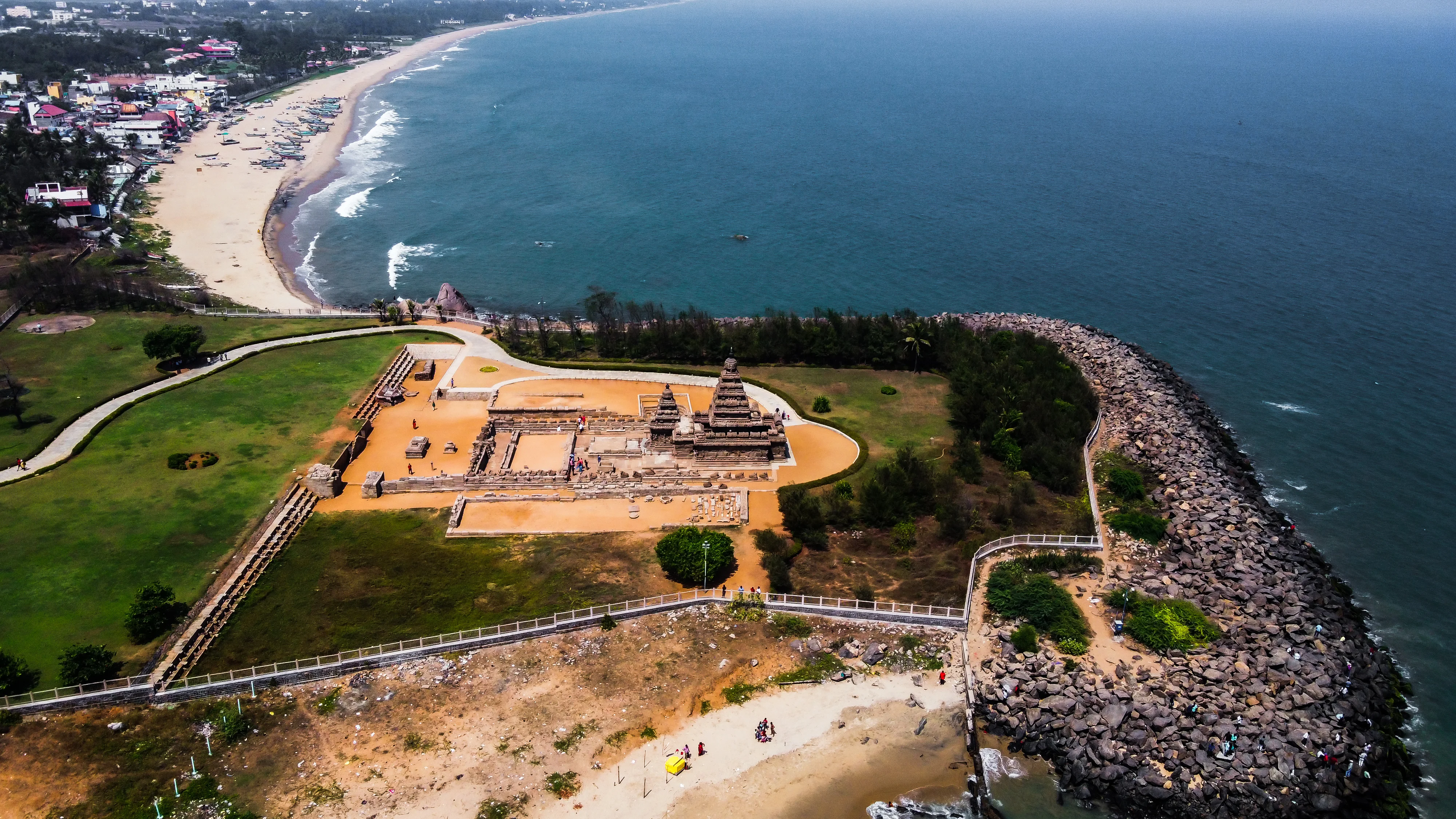
Upon arrival in Chennai, you are greeted and driven along the scenic East Coast Road to Mahabalipuram. This laid-back coastal town south of Chennai is world famous for its 7th–8th century Pallava monuments and its long, sandy beach.
Your lodging is the closest upscale resort near the ancient sites of Mahabalipuram, and your hotel’s beach has a great view of the 8th-century UNESCO World Heritage Site Shore Temple, as well as the fishing village activities between you and the temple. You are assisted with check-in. (Overnight – Radisson Blu Temple Bay)
Day 10: Mahabalipuram
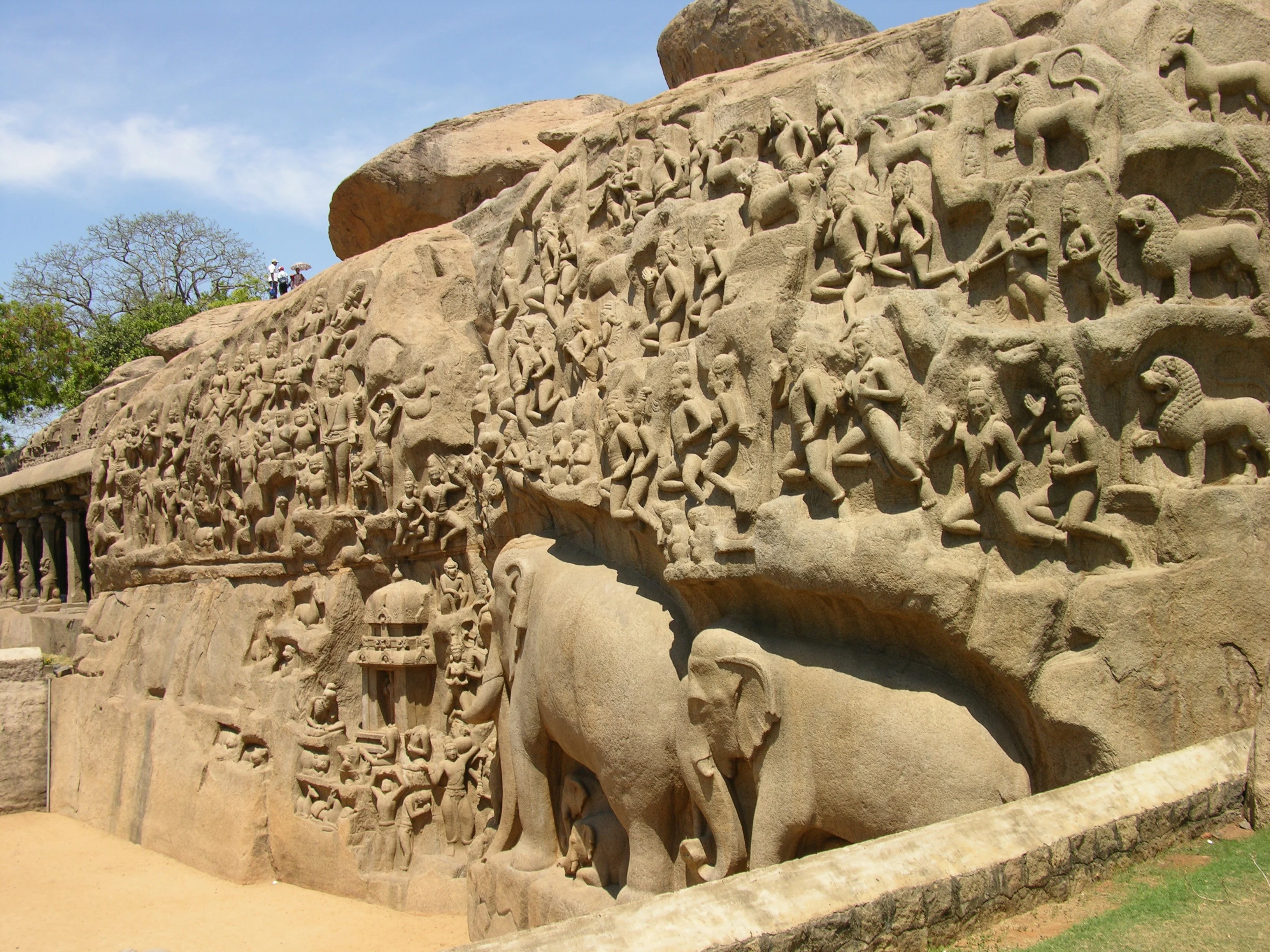
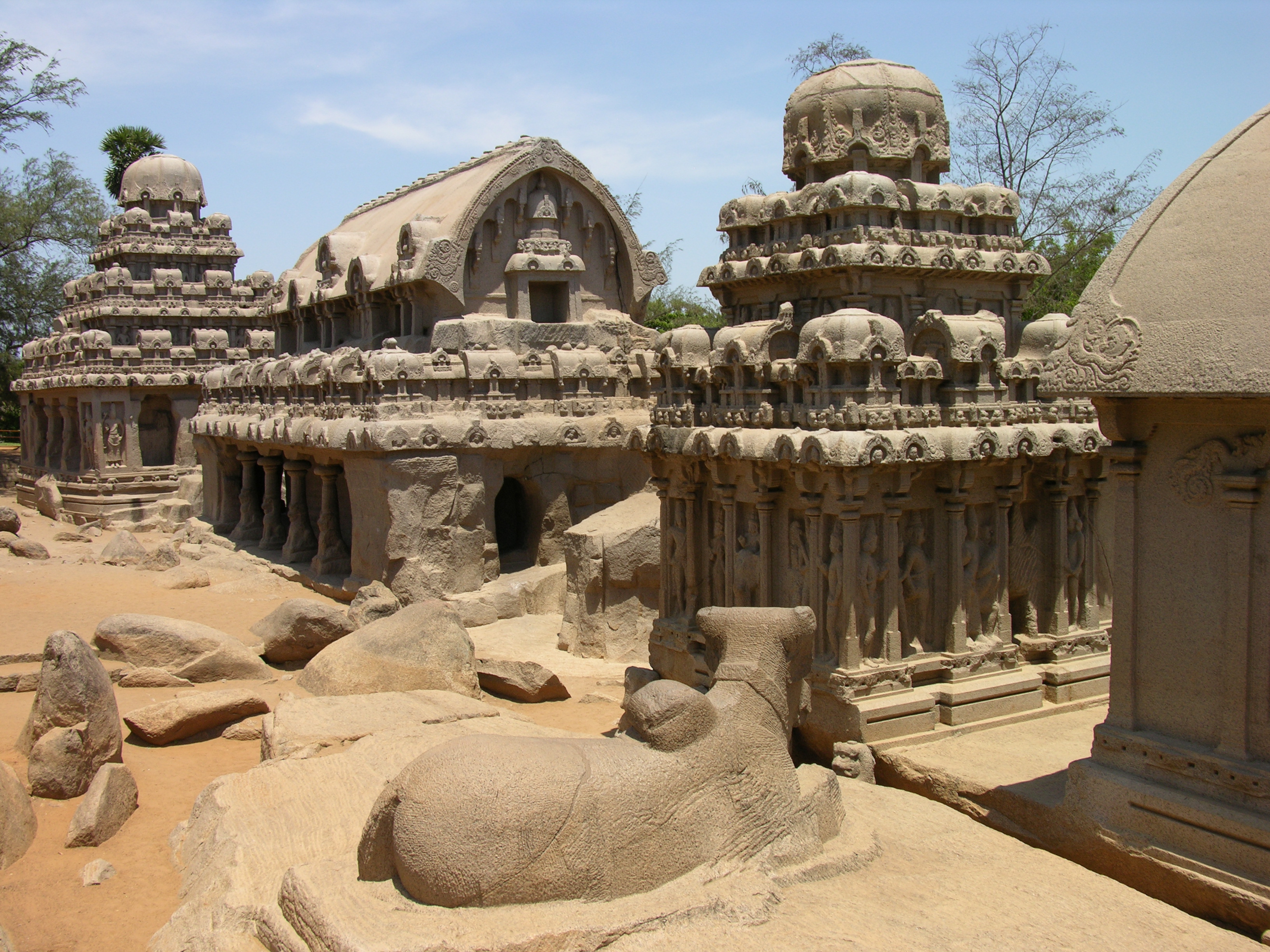
After breakfast, you begin your exploration with a guided tour of the ancient port of Mahabalipuram, a UNESCO World Heritage Site. This laid-back coastal town is world famous for its 8th-century Shore Temple and other historical marvels. The massive rock sculptures carved into softly sloping hills, monolithic temples, ancient man-made caverns with incredible sculptures, and the world’s largest bas-relief in stone all combine to make Mahabalipuram a living museum.
You will visit:
The famous Pancha Rathas (Five Chariots) temples
The Penance of Bhagirath (also known as Arjuna’s Penance)
The Shore Temple
The massive bas-relief Descent of the Ganges
The rock-cut mandapams (shallow halls carved out of sheer rock)
Return to your resort for lunch at any time during this touring, or you can opt for a restaurant slightly closer to the attractions—your guide will make suggestions based on your preferences.
Late afternoon, you head to the beach near the Shore Temple, which allows you to mingle with the local fishing community and their colorful wooden boats. You will see a variety of activities—many of the fishermen returning from their day’s work, pulling their boats up on the beach, organizing their nets and gear. Fish are stacked into plastic bins and weighed right there on the sand, followed by animated negotiations. Women repair nets and attend to other work while some of the larger boats head out. Photo opportunities abound, including the famed 8th-century Shore Temple, from which you are only a stone’s throw away. (Overnight – Radisson Blu Temple Bay)
Day 11: Mahabalipuram - Flexible Day Kanchipuram Excursion
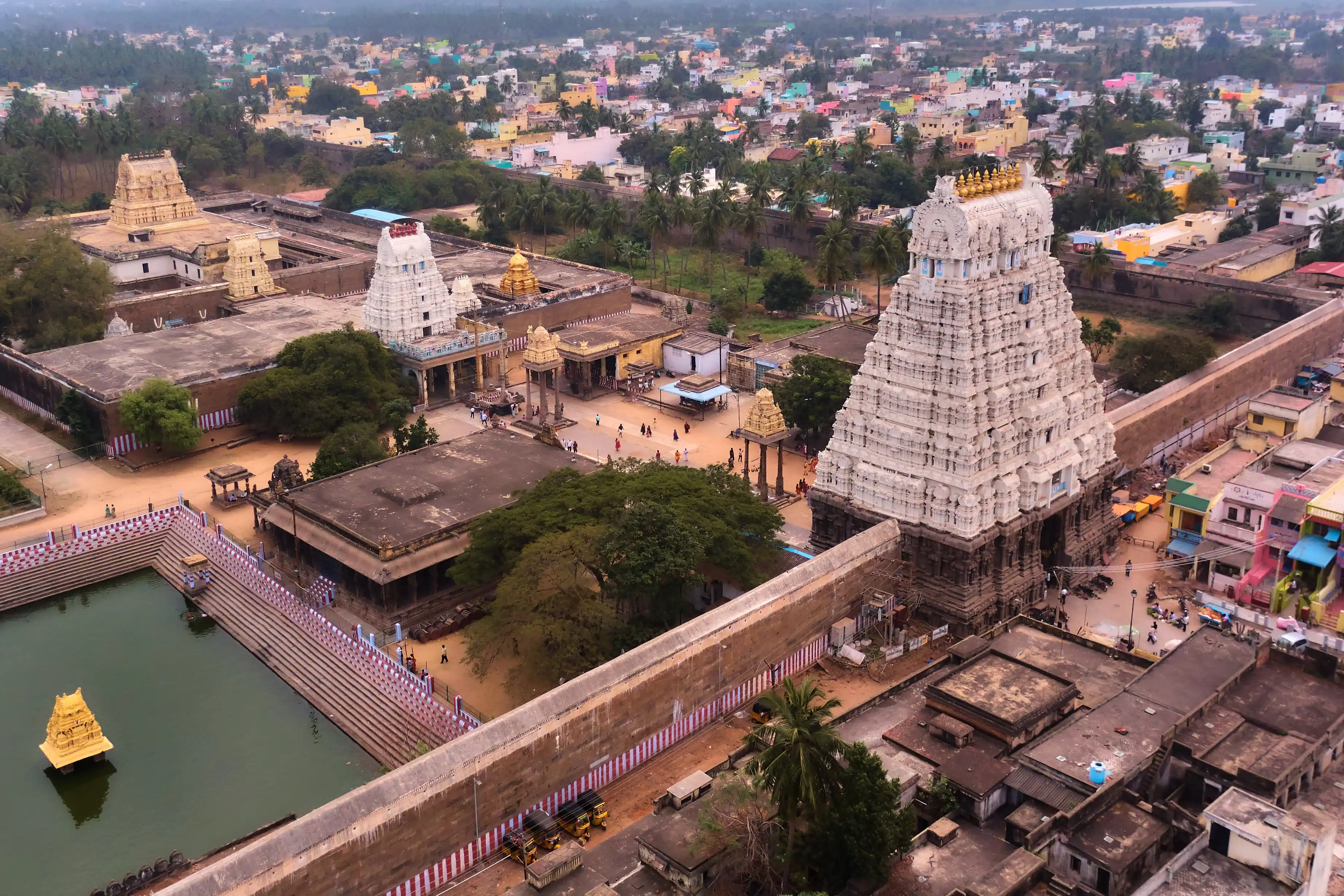
After breakfast, you may choose between remaining in Mahabalipuram or taking an excursion to Kanchipuram, a major center of Pallava-era architecture. It is also one of India’s ancient centers for the manufacture of silk, and people travel here from all over to buy wedding wear and more. A visit to a home-based silk weaving family can be arranged with prior request.
Visit Kanchipuram – Drive Time about 4 hours roundtrip.
Kailasanathar Temple (late 7th–early 8th century CE) You visit the Kailasanathar Temple, the oldest structural stone temple in Tamil Nadu. Built under the Pallava rulers, it is known for its sandstone construction, preserved shrines, and the extensive carvings that line the outer walls. The temple’s layout and detailing illustrate the transition from earlier rock-cut forms to fully structural Dravidian temple architecture.
Vaikunta Perumal Temple (8th century CE) You continue to the Vaikunta Perumal Temple, notable for its historical relief panels depicting scenes from Pallava court life. The temple reflects early architectural experimentation, including raised passageways, multiple tiers, and sculpted friezes that provide insight into the political and cultural history of the period.
You will break for lunch at your choice of time during your Kanchipuram exploration.
Other Activity Options
Guests who prefer to remain in Mahabalipuram may revisit the monuments, including the Pancha Rathas, the Descent of the Ganges, the mandapams, or the Shore Temple. You can walk through the charming small town, spend time on the beach with the fishing community, or at the resort spa. (Overnight – Radisson Blu Temple Bay, Mahabalipuram)
Day 12: Mahabalipuram – Kumbakonam
After breakfast, you are assisted with your checkout and driven to Chennai Airport for your direct flight to Trichy (Tiruchirappalli). You are assisted with check-in for your flight and greeted upon arrival at Trichy Airport.
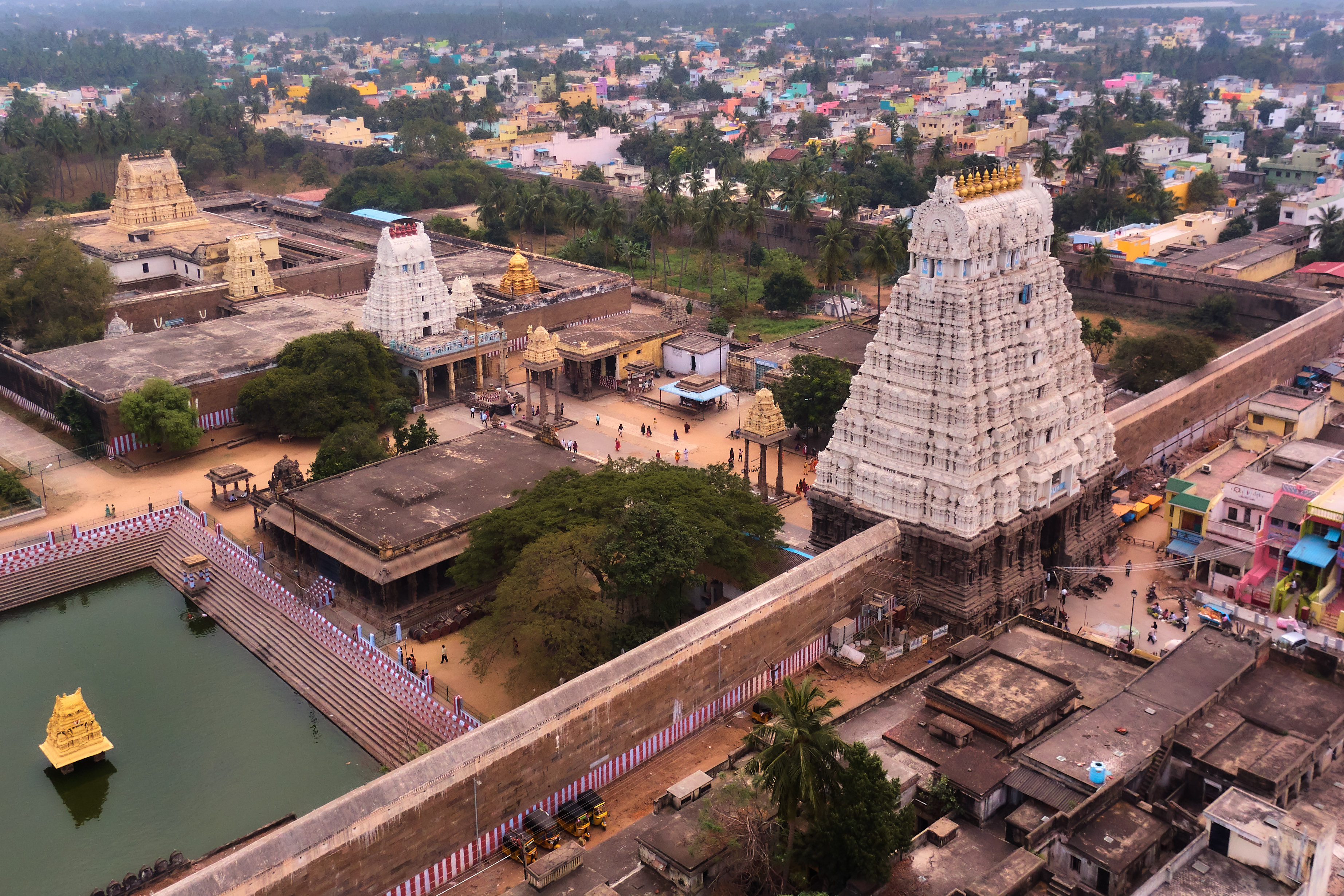
A stop in Trichy is made for a photo opportunity at the ancient Tiruchirappalli Rock Fort and Temple Complex. The complex is perched on an immense boulder that is 256 feet high. This boulder is one of the largest such formations on our planet and is also one of the oldest at more than 3 billion years. You have the option to visit the rock and climb the wide steps carved into its interior to the ancient temple at the top.
After this, you continue your journey to Kumbakonam. On arrival at Mantra Koodam, your retreat in the heart of Chola country, you check in and settle into your upgraded heritage-style cottage with private garden. The retreat is designed to echo the charm of a traditional Tamil agraharam (village street). Besides its service and cuisine, the charming CGH lodge offers Athangudi tile floors, high wooden ceilings, wide verandahs, and courtyards shaded by trees. The grounds are dotted with temple-inspired structures, serene pathways, and a lotus pond, and, as evening falls, you can relax in the gardens and listen to the sounds of village life around you. (Overnight – CGH Mantra Koodam)
Day 13: Kumbakonam
After breakfast, you begin your exploration of the Kumbakonam region.
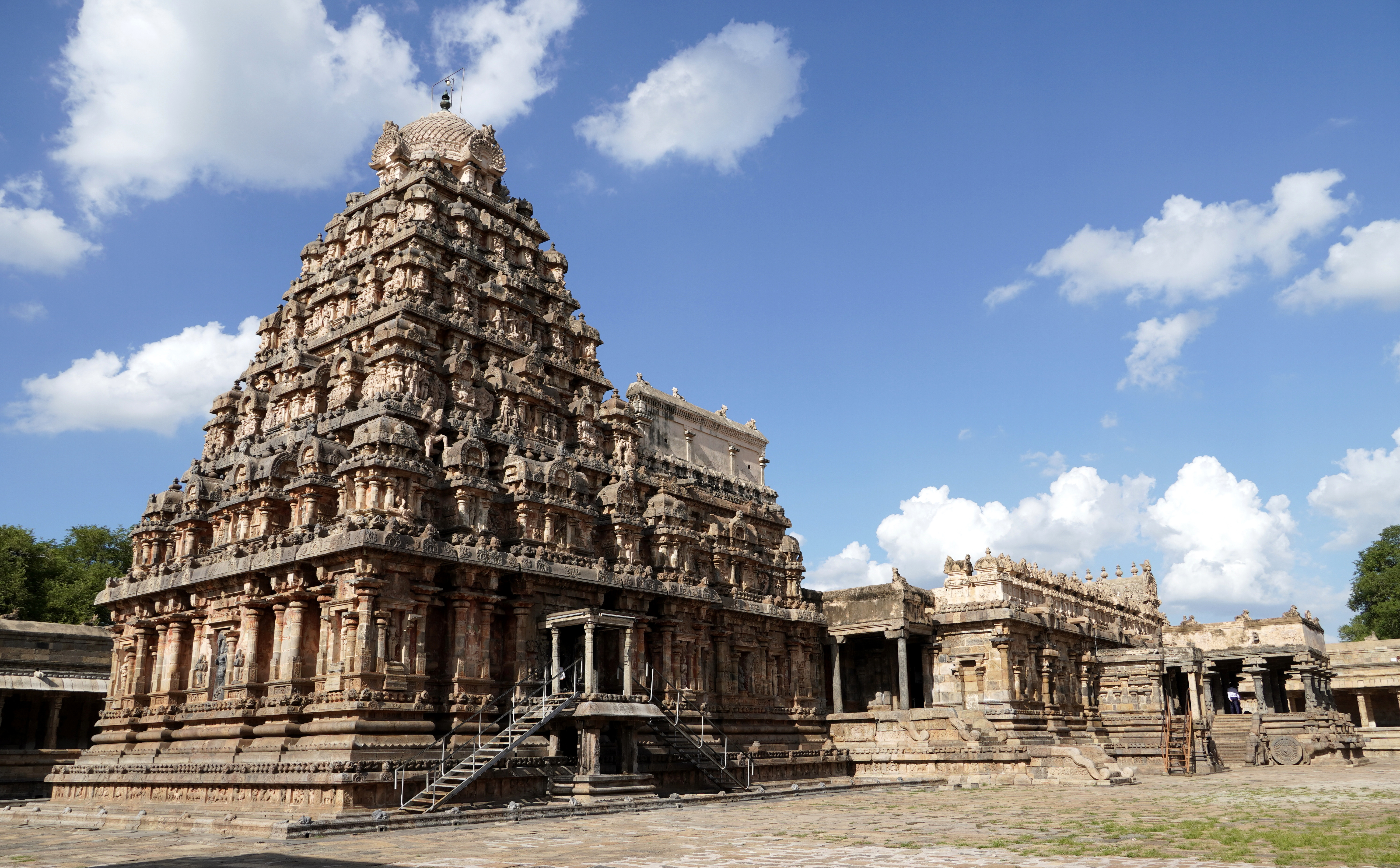
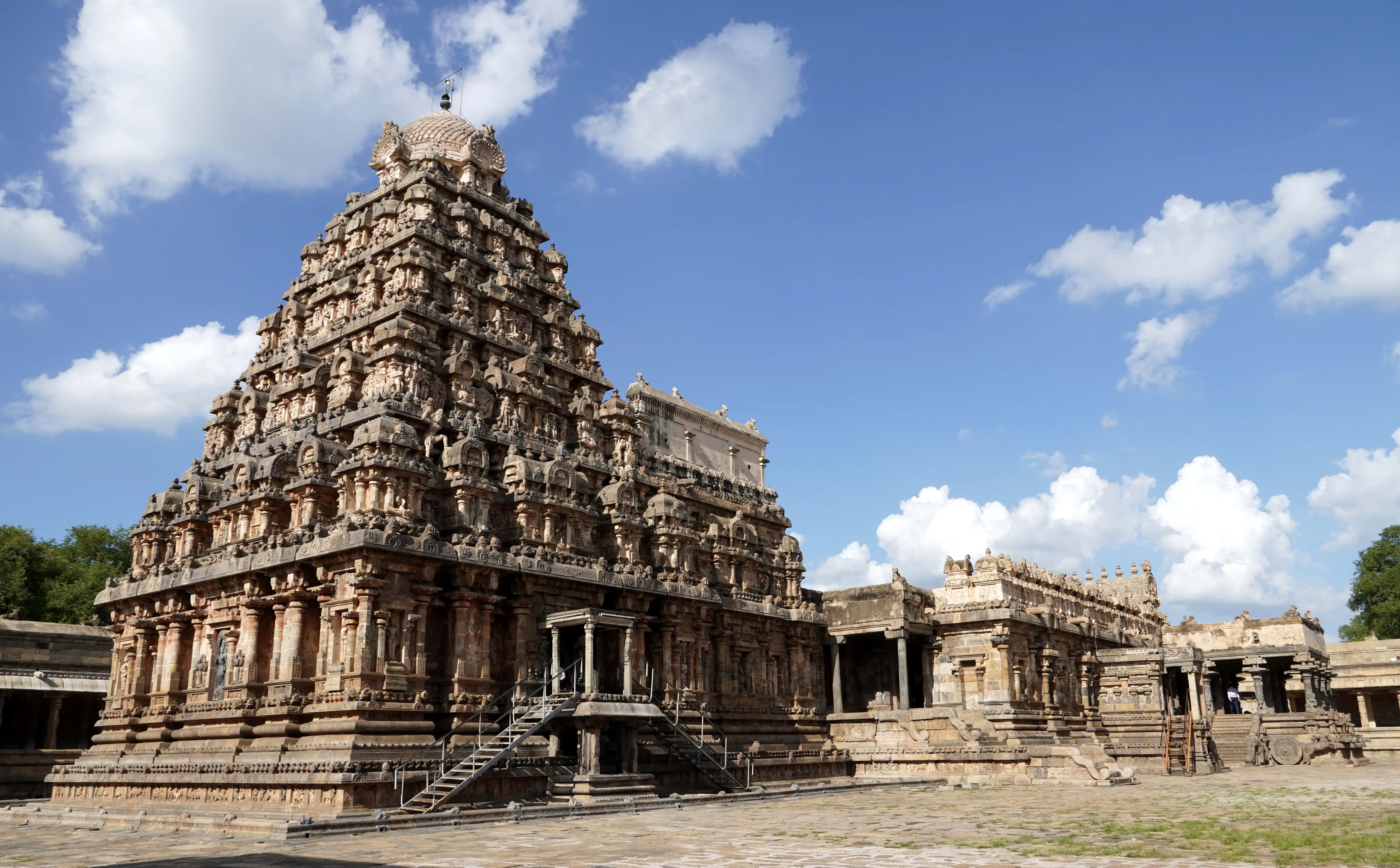
Airavateswara Temple (UWHS) The Airavateswara Temple near your lodge is one of the three celebrated Great Living Chola Temples. Although smaller in scale compared to the majestic Brihadishwara, it stands out for its exquisite artistry and attention to detail. Often described as a “sculptor’s dream in stone,” the temple is renowned for the intricacy of its carvings, remarkable both for their refinement and for the fact that they were chiseled out of exceptionally hard stone.
Among its most famous features are:
Musical Pillars Finely carved stone pillars that produce musical notes when gently tapped.
Chariot-shaped Mandapam A grand hall built to resemble a stone chariot drawn by horses, showcasing both architectural creativity and symbolic design.
Paintings and Sculptures Delicate murals and sculptures depicting mythological themes, celestial beings, and daily life, offering an artistic as well as spiritual experience.
There are various other activities available with prior notice for this day, including –
Kalamkari Step into artist Rajmohan’s home in Kumbakonam and see how he keeps the ancient art of Kalamkari alive. Using plant-based dyes made from flowers, bark, and roots — and brushes crafted from coconut shells and bamboo — he and his team hand-paint intricate designs on cotton fabric. Each piece is then washed and dried along the river, giving it its signature texture.
Pattu Silk Weaving In the backstreets of Kumbakonam, watch master weavers transform silk threads into dazzling saris. Using traditional wooden looms and real gold thread, they create intricate patterns with a skill passed down through generations.
Lost Wax Casting At Swamimalai, visit the famed Sthapathi artisans, who have practiced the lost-wax method of bronze casting for over a thousand years. Watch as molten metal is poured into clay molds shaped from wax, resulting in exquisite temple sculptures admired worldwide.
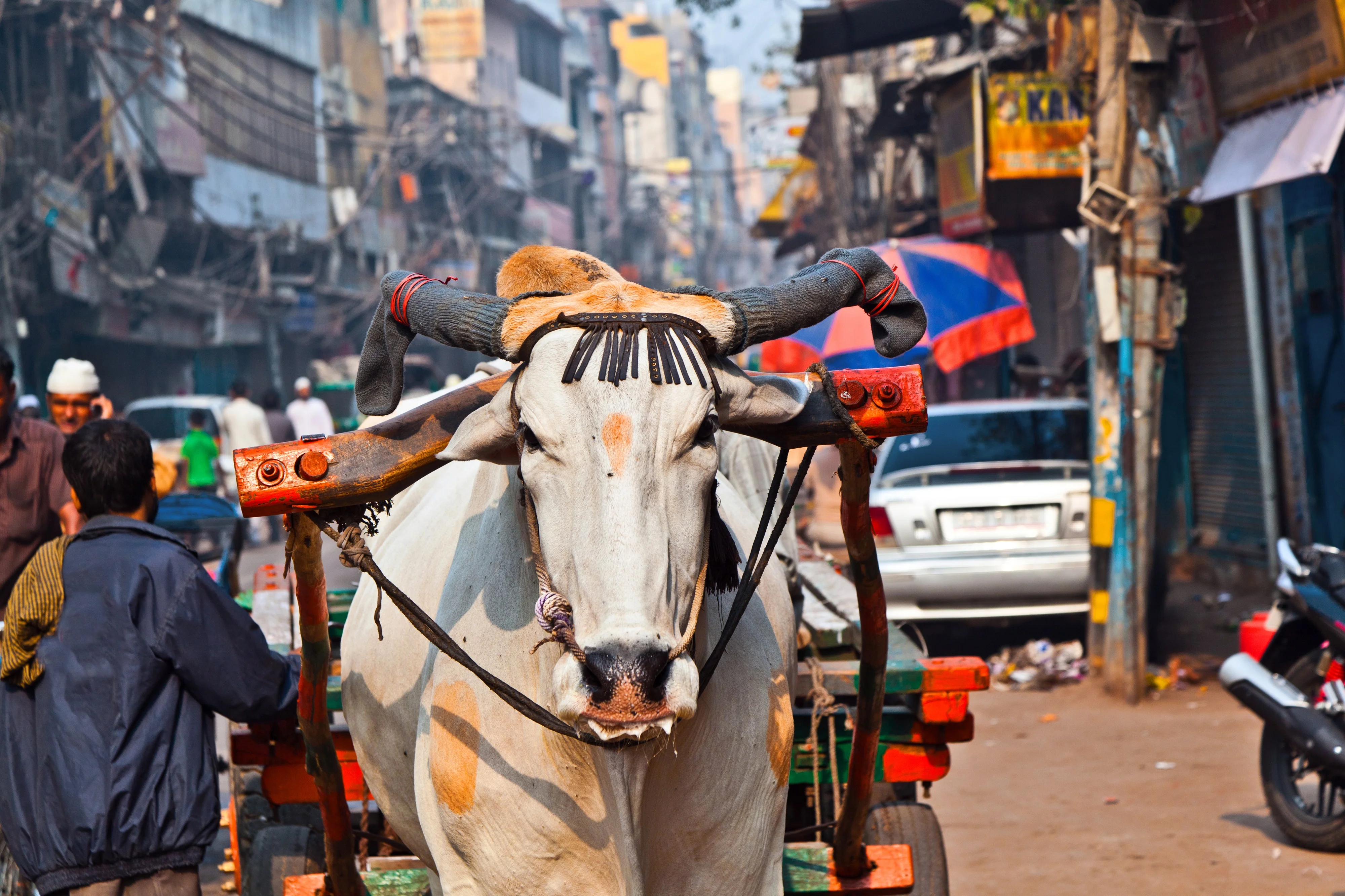
Bullock Cart Ride Enjoy a scenic bullock cart ride through the countryside. Pass paddy fields and village lanes, wave to locals, and soak in the charm of rural Tamil life at a slow, peaceful pace.
(Overnight – Mantra Koodam, Kumbakonam)
Day 14: Kumbakonam – Thanjavur Excursion
After breakfast, you drive to Thanjavur, the imperial capital of the Chola Empire.
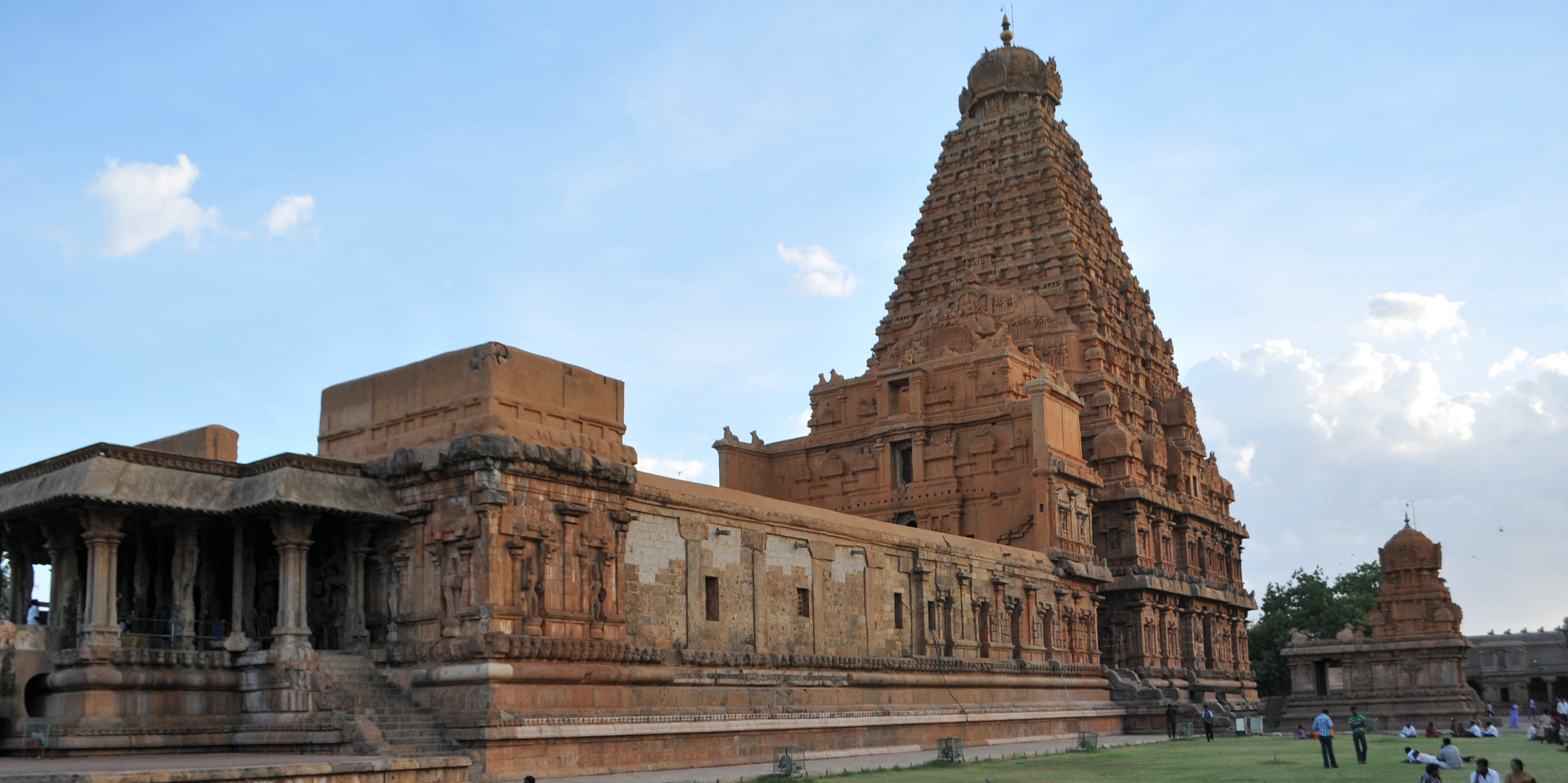
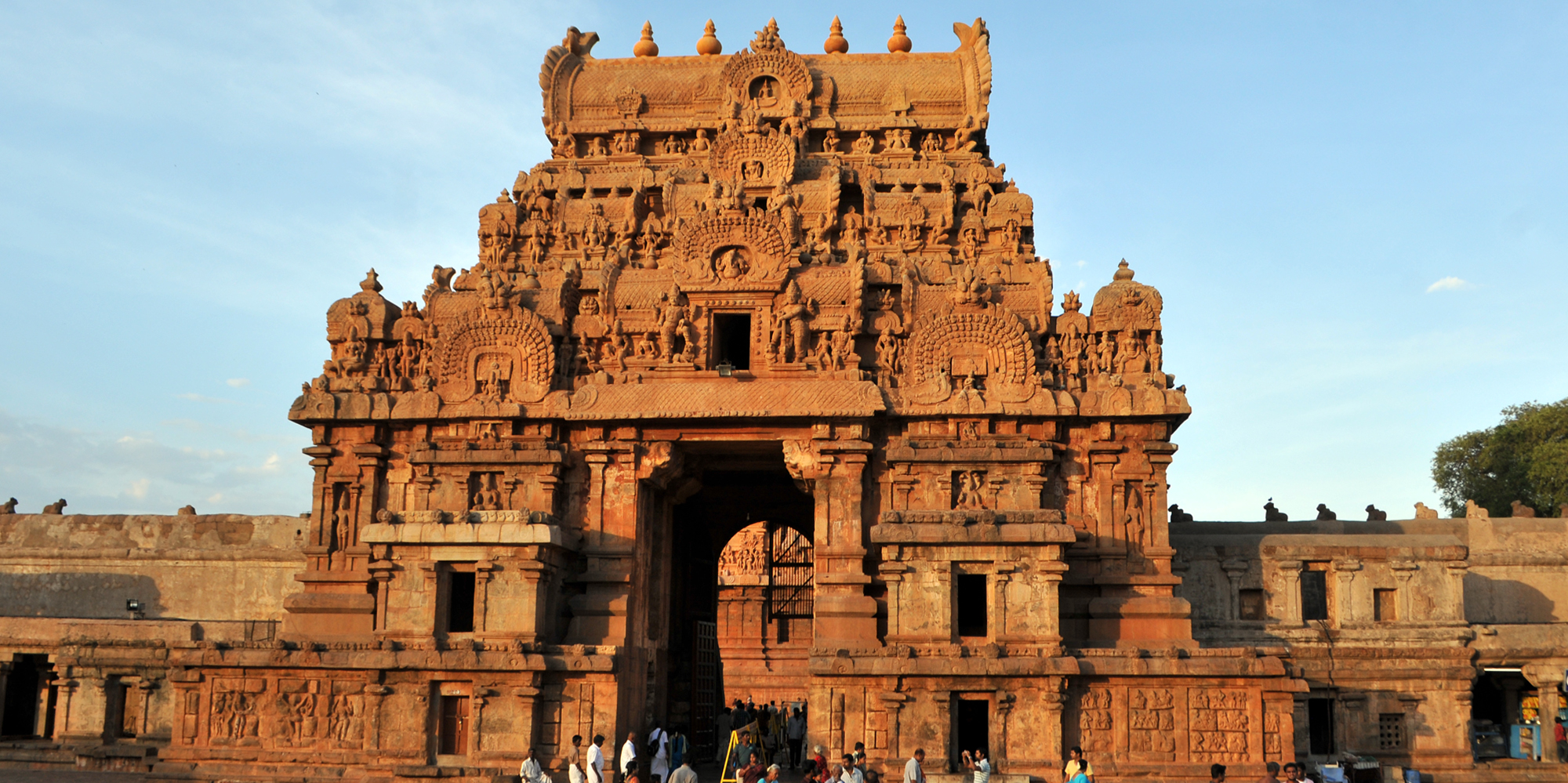
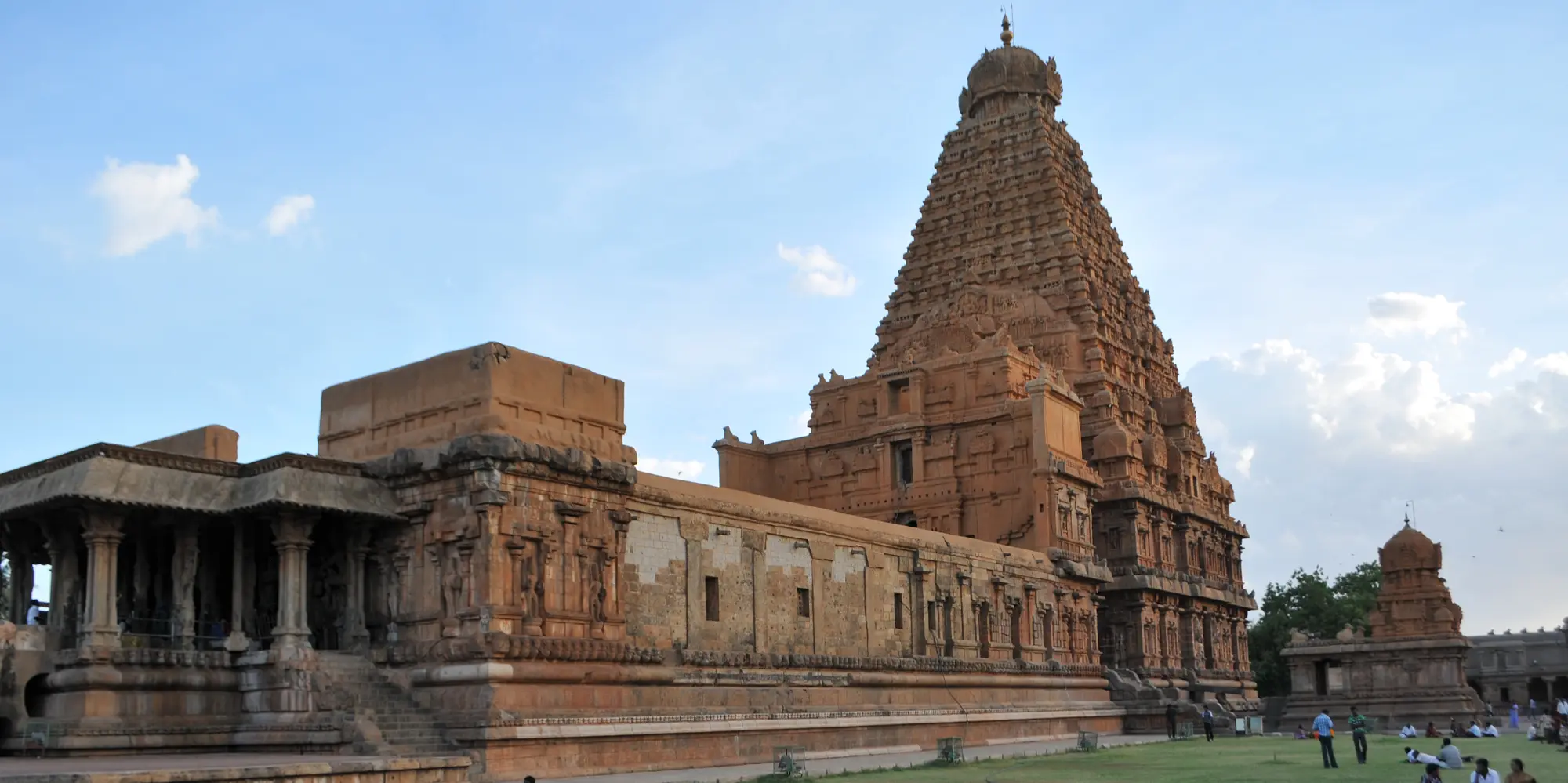
Brihadishwara(UWHS) The Great Living Chola Temples, a UNESCO World Heritage Site, offer an experience entirely different from all others. The original UNESCO selection (before the 2 others were added later) is the most awe-inspiring of them all: the Brihadishwara Temple in Thanjavur. This thousand-year-old masterpiece, built entirely of granite, remains one of India’s most treasured architectural achievements. Even today, with all our modern technology, none would attempt to carve such intricate detail or raise such massive stones with the precision achieved by the Chola artisans.
The temple’s crown is its marvel — a colossal monolithic granite cupola, made up of ten pieces weighing a combined 82 tons. This cupola was lifted nearly 200 feet to rest atop the 216-foot-high main tower, a feat accomplished over a millennium ago. Every part of the temple radiates grandeur. An immense Nandi (sacred bull) measuring 16 feet long and 13 feet high and hewn from a single block of granite, guards the main shrine. Inside, delicate frescoes still retain their vibrancy after a thousand years, their colors created not with pigments but by grinding naturally tinted stones into fine paste.
Thanjavur Art Gallery After a break for lunch, your afternoon begins with a visit to the Thanjavur Art Gallery, housed within the historic Nayak palace complex. . Whether you are an art enthusiast or simply curious, the experience is deeply rewarding. The highlight here is the gallery’s extraordinary collection of Chola bronzes, masterpieces of the ancient lost-wax process. Gathered from temples across the region, these sculptures are celebrated for their elegance, expressive detail, and timeless spiritual presence. Alongside them, the gallery also showcases stone idols, carved temple panels, and vivid murals, offering a vivid glimpse into Tamil Nadu’s artistic legacy
You are driven back a scenic hour or so to Mantra Koodam. (Overnight – Mantra Koodam, Kumbakonam)
Day 15: Kumbakonam – Aurangabad
After breakfast and checkout, you are driven to Tiruchirappalli Airport to board your flight to Aurangabad with a one-stop connecting flight.
Upon arrival at Aurangabad Airport, you are greeted at the airport and driven to Aurangabad’s best upscale hotel and assisted with check-in to an upgraded room with a balcony overlooking the gardens.
The Ajanta and Ellora sites are both individually UNESCO World Heritage Sites near Aurangabad for excellent reasons. They are widely recognized as among the world’s most incredible achievements of ancient man. (Overnight – Taj Gateway Aurangabad)
Day 16: Aurangabad – Ajanta Excursion
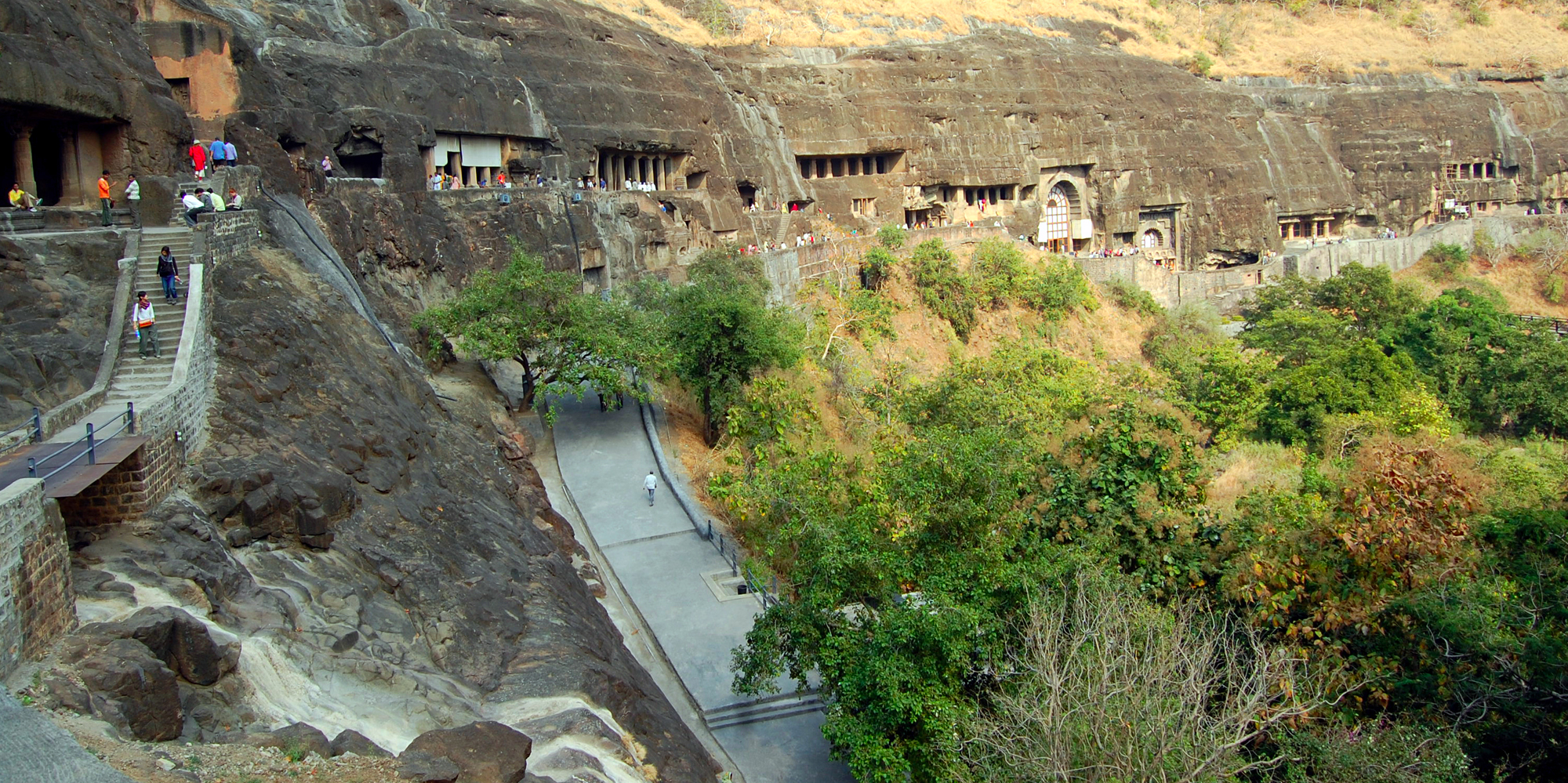
After breakfast you will enjoy an excursion to the UNESCO World Heritage Site of Ajanta. A choice of sandwiches and accompaniments that will be edible for a few hours is included from your hotel for this excursion. Buddhist monks and local craftsmen began excavating, sculpting, and painting at Ajanta in the 2nd century BCE. The incredible variety of paintings and sculptures were created using primitive yet ingenious lighting, tools and materials to carve hard rock into perfection.
Of particular interest is the concept of vertical excavation. You will have no choice but awe when your guide illustrates how the creators hung upside down and chiseled away hundreds of thousands of tons of hard rock, by the achievements of the craftsmen.
These 28 caves are a testimony to the devotion of the Buddhists, as well as the talents of their skilled craftsmen. As you walk from one to the next, gorgeously sculpted cave interiors feature the Buddha in various poses signifying his status.
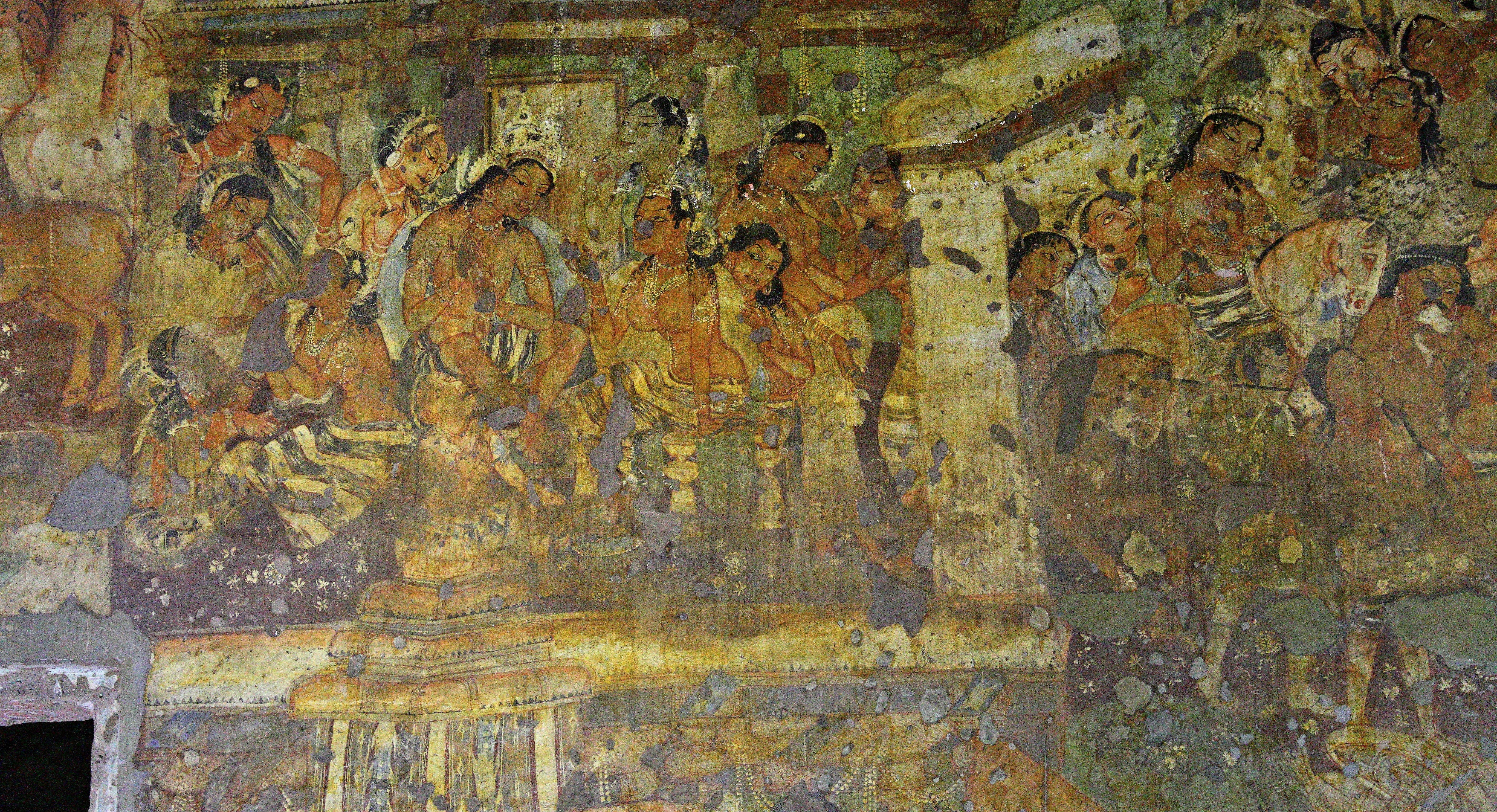
Although the caves themselves are very impressive in their design, the incredible sculptures, and the massive volume of excavation, it is the art inside the caves that will take your breath away. The incredible artistry and colors of the paintings and sculptures are unique—such art has not been seen anywhere else in the world. Ajanta’s incredible paintings are even more impressive considering that the color and texture you’re admiring today was created by artists over two thousand years ago. (Overnight – Taj Gateway Aurangabad)
Day 17: Aurangabad – Delhi or Mumbai
Ellora Excursion: You are assisted with your checkout from your hotel after breakfast, and you will leave your baggage with the bell desk. Proceed for an excursion to the UNESCO World Heritage Site of Ellora.
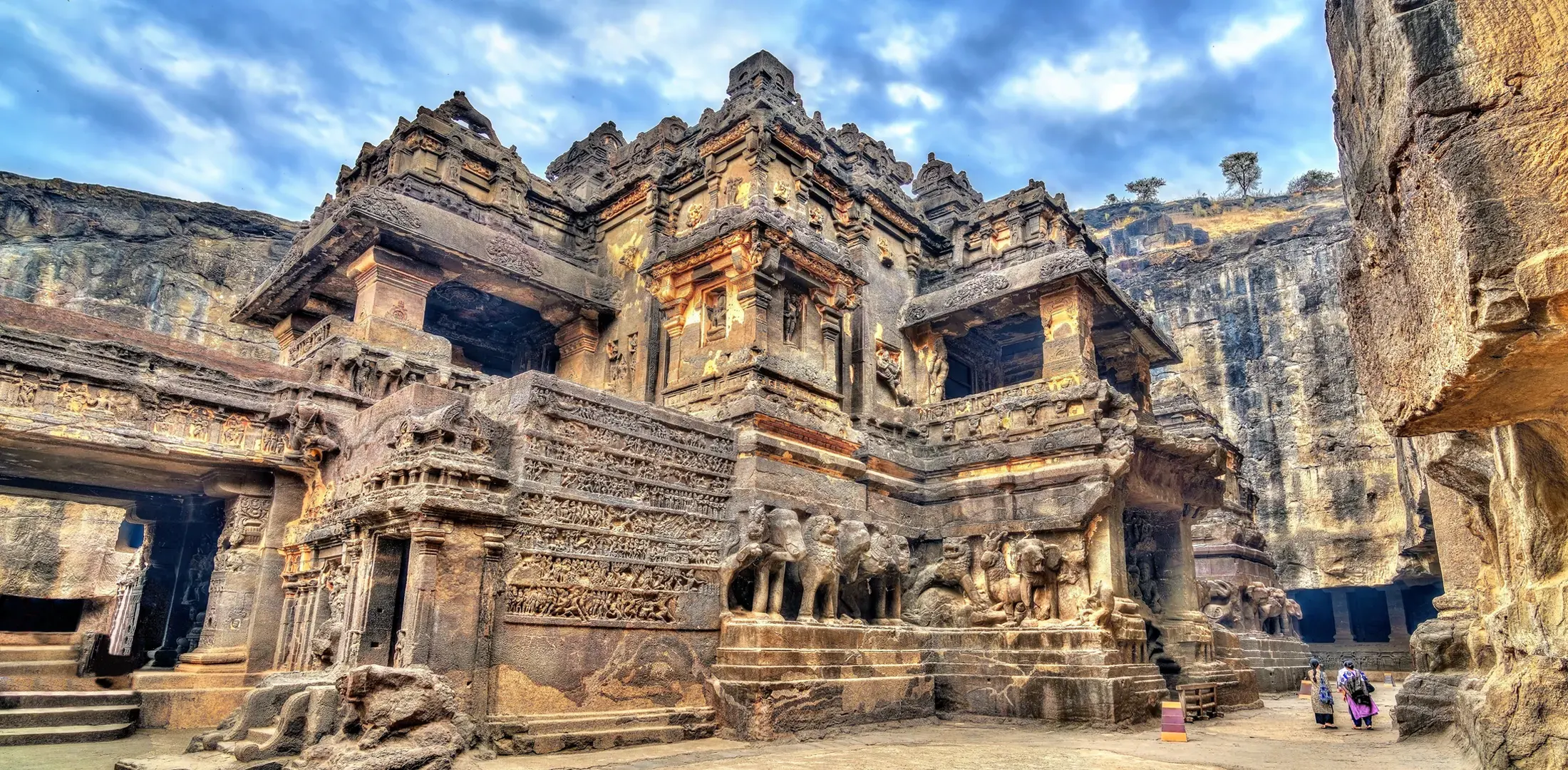
Ellora Caves Explore the magnificently sculptured cave temples and monasteries of Ellora. There are 34 caves here, and they were built between 600–1000 CE and are devoted to Buddhism, Hinduism and Jainism. Seventeen of these caves illustrate a resurgence of Hinduism in this area, as reflected by their Hindu themes, sculpture, and art. Again, the large Buddha and other deities’ sculptures are awe-inspiring, but what takes your breath away is the scale and precision of the sculpting throughout the massive site.
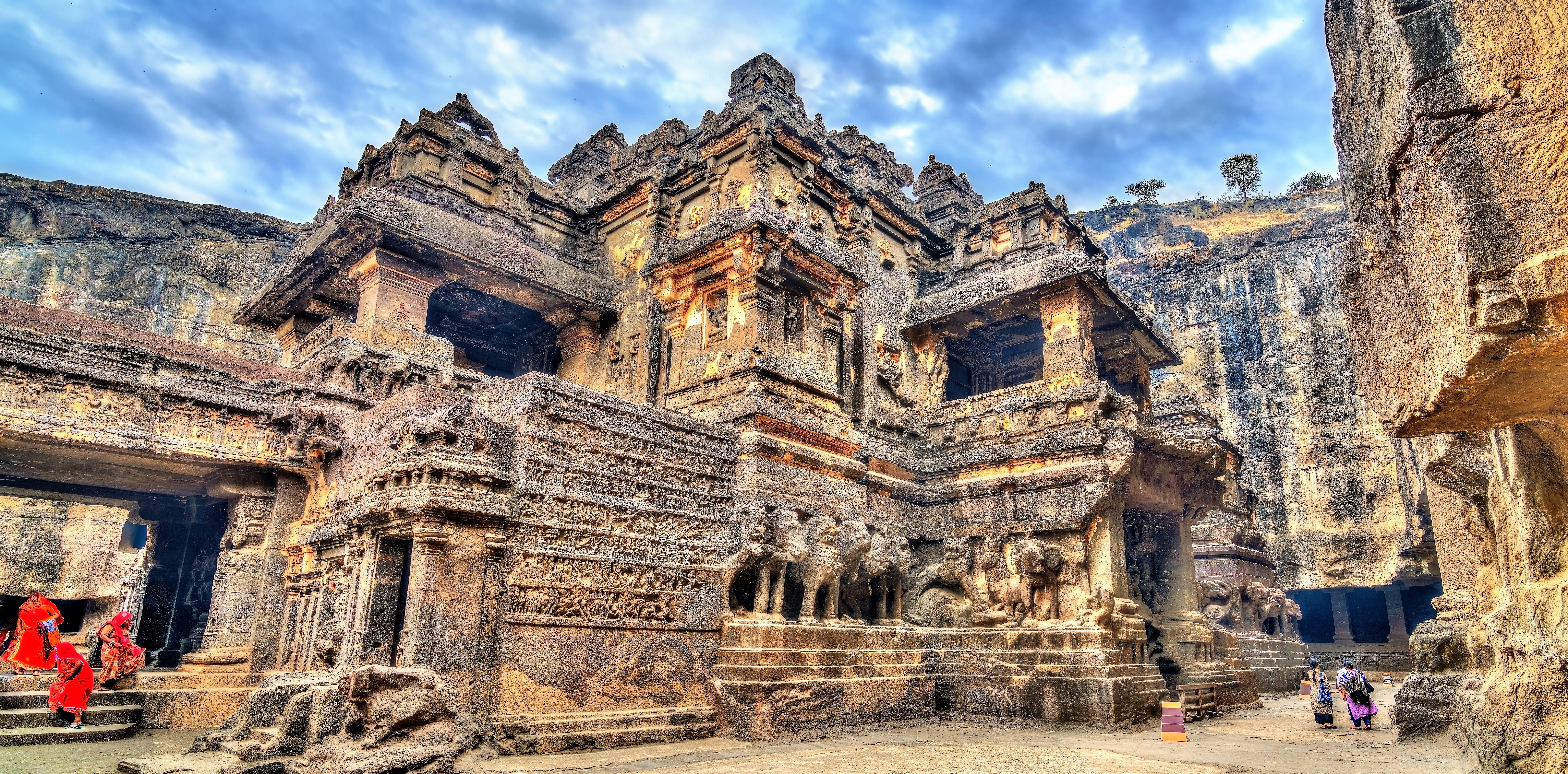
Kailash Temple The epitome of this is Cave 16, the unmatched Kailash Temple. It was finished during the 8th century and evokes one of the abodes of Lord Shiva, Mount Kailash in the Himalayas. The Kailash Temple is notable for its immense scale and detail; it is the most awe-inspiring of all of the amazing monuments at Ajanta/Ellora. More than 200,000 tons of rock were excavated and six generations of craftsmen worked for a hundred and twenty years to create this masterpiece. By itself, the Kailash Temple makes Aurangabad well worth visiting, as nothing like it exists on our planet.
Return to your hotel to pick up your baggage and use the facilities to freshen up before heading to the airport to board flight to Delhi or Mumbai, from where you will board your international flight.
Upon arrival, you are greeted by hotel staff at either airport and driven to your hotel where you will check-in. (Overnight – Pullman Aerocity Delhi Or Leela Mumbai)
Day 18: Delhi/Mumbai Airport Hotel – International Flight
International Flight Check-out at the appropriate time (your room is available until noon) and a private hotel vehicle will transfer you to the airport where you will board your international flight.
Our services end at Aurangabad Airport
Day
01
Delhi Arrival
Greeted at Delhi Airport upon Arrival.
Private Escorted Transfer to Hotel.
Assistance with Check-in.
Additional Services at Delhi as Needed.
Day
02
Delhi – Khajuraho
Flight to Khajuraho – Chandela Period Temple Capital.
Western Group of Temples – UWHS – 10th–11th Century.
Hotel Check-in and Orientation.
Kandariya Mahadeva & Lakshmana Temples – Nagara Masterworks.
Day
03
Khajuraho – Varanasi
Flexible Morning – Eastern & Jain Temples.
Revisit Western Group as Desired.
Early Afternoon Flight to Varanasi.
Assisted Arrival & Hotel Check-in.
Day
04
Varanasi
Pre-Dawn Sunrise Cruise on the Ganga.
Drive via Banaras Hindu University.
Ramnagar Fort & Museum – 18th Century.
Slow Walk Along the Ghats – Rituals & Daily Life.
Sunset Return Boat Ride on the Ganga.
Day
05
Varanasi – Bodh Gaya
Drive to Bodh Gaya.
Sarnath – Buddha’s First Sermon Site – UWHS Region.
Sarnath Archaeological Museum – Lion Capital.
Assisted Check-in at Bodh Gaya.
Bodhgaya Museum to understand scale and history of the Ancient Site.
Day
06
Bodh Gaya
Mahabodhi Temple – UWHS – 5th–6th Century CE.
Bodhi Tree Area.
Site of Enlightenment Muchalinda Lake.
Phalgu River and Gay, the ancient Hindu Holi City.
Buddhism and Hinduism – Peaceful Coexistence.
Bhutanese Monastery – Gorgeous Introduction to Bhutanese Culture.
Thai Monastery – Striking Thai Architecture and Interiors.
Day
07
Bodh Gaya – Rajgir – Nalanda – Patna
Drive to Rajgir – Early Magadha Capital.
Vulture’s Peak – Early Teaching Site.
Cyclopean Walls – 6th Century BCE Fortifications.
Ajatashatru’s Fort – Early Defensive Structures.
Nalanda University – UWHS – 5th–12th Century CE.
Nalanda Archaeological Museum – Bronzes, Stucco, Seals.
Patna Museum – Didarganj Yakshi & Early Buddhist Art.
Day
09
Patna – Chennai – Mahabalipuram
Exploration of Mauryan Kumhrar - Legendary Patliputra.
Exploration of Unique British Granary at Golghar.
Flight to Chennai.
Greeted on Arrival.
Coastal Drive to Mahabalipuram.
Hotel Check-in at Beachfront Resort.
Day
10
Mahabalipuram
Pancha Rathas – 7th Century Monoliths – UWHS Component.
Arjuna’s Penance – Massive Bas Relief.
Rock-Cut Mandapams – Mythological Carvings.
Shore Temple – Early 8th Century Structural Temple – UWHS.
Day
11
Mahabalipuram or Optional Kanchipuram
Excursion to Kanchipuram (If Chosen).
Kailasanathar Temple – Oldest Structural Temple in Tamil Nadu.
Vaikunta Perumal Temple – Pallava Court Reliefs.
Lunch in Kanchipuram.
Alternate Option: Mahabalipuram Monuments, Beach, or Resort Facilities.
Day
12
Mahabalipuram – Chennai – Tiruchirappalli – Kumbakonam
Drive to Chennai Airport.
Flight to Tiruchirappalli.
Rock Fort Temple – 3-Billion-Year-Old Hill Formation.
Drive to Kumbakonam & Hotel Check-in.
Day
13
Kumbakonam Region
Airavatesvara Temple – UWHS – 12th Century Chola Architecture.
Visits to Local Artisans – Bronze Casting, Weaving, Kalamkari.
Diverse Rural Activity Options.
Day
14
Kumbakonam – Thanjavur Excursion
Scenic Drive to Thanjavur.
Brihadishwara Temple – UWHS – 1010 CE Chola Masterpiece.
Thanjavur Art Gallery – Chola Bronzes & Stone Sculpture.
Day
15
Kumbakonam – Aurangabad
Short Drive to Tiruchirappalli Airport.
Flight to Aurangabad (One-Stop Connecting).
Greeted at Aurangabad Airport.
Hotel Check-in at Aurangabad.
Day
16
Ajanta Caves
Full-Day Excursion to Ajanta – UWHS – 2nd BCE–6th CE.
Buddhist Monasteries, Chaitya Halls & Murals.
Packed Lunch Included.
Return to Aurangabad Hotel.
Day
17
Ellora Caves – Delhi/Mumbai
Ellora Caves – UWHS – 6th–10th Century CE.
Kailasa Temple – Monumental Rock-Cut Masterpiece.
Return to Hotel to Freshen Up.
Flight to Delhi/Mumbai.
Transferred to Hotel by Hotel Staff.
Overnight at Pullman Aerocity Delhi or Leela Mumbai.
Day
18
Delhi/Mumbai – International Departure
Room Available Until Noon.
Private Hotel Transfer to International Terminal.
Board International Flight – End of Journey.
Lodging
Destination
Lodging
Room Type
Delhi
Pullman Aerocity
Superior Room
Khajuraho
Lalit Temple View Hotel
Garden View Room
Patna
Taj City Centre Patna
Deluxe Room
Bodh Gaya
Hyatt Place Bodh Gaya
Balcony Room
Varanasi
Taj Ganges
Luxury Room
Mahabalipuram
Radisson Blu Resort Temple Bay
Sea View Chalet
Kumbakonam
CGH Earth: Mantra Koodam
Mantra Cottage
Aurangabad
Vivanta Aurangabad
Premium Room
Delhi / Mumbai Airport
Pullman Aerocity or Leela Mumbai
Superior Room OR Club
Destination
Delhi
Lodging
Pullman Aerocity
Room Type
Superior Room
Destination
Khajuraho
Lodging
Lalit Temple View Hotel
Room Type
Garden View Room
Destination
Patna
Lodging
Taj City Centre Patna
Room Type
Deluxe Room
Destination
Bodh Gaya
Lodging
Hyatt Place Bodh Gaya
Room Type
Balcony Room
Destination
Varanasi
Lodging
Taj Ganges
Room Type
Luxury Room
Destination
Mahabalipuram
Lodging
Radisson Blu Resort Temple Bay
Room Type
Sea View Chalet
Destination
Kumbakonam
Lodging
CGH Earth: Mantra Koodam
Room Type
Mantra Cottage
Destination
Aurangabad
Lodging
Vivanta Aurangabad
Room Type
Premium Room
Destination
Delhi / Mumbai Airport
Lodging
Pullman Aerocity or Leela Mumbai
Room Type
Superior Room OR Club
Inclusions
Included
Not Included
India’s Best Guides at each destination.
International Travel.
All Listed Activities, including Optional Excursions.
Expenses of a personal nature like tips, laundry, telephone calls, etc.
Services of your vehicle and an Easy Tours Facilitator for all transfers.
All alcoholic and premium non-alcoholic beverages.
Availability of a Easy Tours Representative at each destination.
Meals other than those specified above.
Daily breakfast except for Arrival Day (Meal Supplements Available).
Travel insurance, visa etc.
2 Lunches at Aurangabad
Camera and Video Camera Fees.
Bottled water during your travel and sightseeing.
All currently applicable taxes.
Included
India’s Best Guides at each destination.
All Listed Activities, including Optional Excursions.
Services of your vehicle and an Easy Tours Facilitator for all transfers.
Availability of a Easy Tours Representative at each destination.
Daily breakfast except for Arrival Day (Meal Supplements Available).
2 Lunches at Aurangabad
Bottled water during your travel and sightseeing.
All currently applicable taxes.
Not Included
International Travel.
Expenses of a personal nature like tips, laundry, telephone calls, etc.
All alcoholic and premium non-alcoholic beverages.
Meals other than those specified above.
Travel insurance, visa etc.
Camera and Video Camera Fees.
Pricing
Dates
Land Cost
On Tour Flights
Total Cost
Oct 1st to Dec 18th & Jan 8th to Apr 15th
$7,250 PP
$1,196 PP
$8,446 / per person
Apr 16th to Sep 30th
Prices are Significantly Lower, Quoted Upon Request
Dec 19th to Jan 7th
Prices are Significantly Higher, Quoted Upon Request
Date
Oct 1st to Dec 18th & Jan 8th to Apr 15th
Land Cost
$7,250 PP
On Tour Flights
$1,196 PP
Total
$8,446 / per person
Date
Apr 16th to Sep 30th
Price
Prices are Significantly Lower, Quoted Upon Request
Date
Dec 19th to Jan 7th
Price
Prices are Significantly Higher, Quoted Upon Request
Day 1: Delhi Arrival – Greeting & Transfer to Hotel
You are greeted in the arrival area and ushered to your private vehicle. Most international flights arrive in the evening or at night, and we recommend arriving a day earlier to recuperate from jetlag and safeguard against flight delays. An additional night can be added at the time of reservation.
You are driven to your airport hotel and assisted with your check-in if it is 3 pm or later. Upon arrival at Delhi Airport, you are greeted by hotel staff and driven to your airport hotel and assisted with your check-in. The next day's plans are briefly reviewed, and you are at leisure for the remainder of the day. (Overnight – Oberoi Gurgaon)
Day 2: Delhi – Khajuraho
After breakfast and checkout, you are driven to Delhi Airport and assisted with check-in for your flight to Khajuraho, home to some of the greatest masterpieces of early medieval North Indian temple architecture.
Upon arrival at Khajuraho Airport, you are greeted and driven to your upscale hotel, where you are assisted with check-in and have a short break for lunch and refreshment.
Western Group of Temples (UNESCO World Heritage Site)
In the afternoon, your exploration begins with the Western Group, the artistic heart of Khajuraho. These exquisitely carved temples, built between the 10th and 11th centuries under the Chandela rulers, represent the highest achievements of the Nagara style of temple architecture.
Highlights include:
Kandariya Mahadeva Temple – Often regarded as the finest temple in the group, with a soaring shikhara and an extraordinary profusion of sculpture.
Lakshmana Temple – A major early monument at Khajuraho, richly carved and carefully proportioned, offering a complete program of narrative and devotional sculpture.
Other Western Group shrines that reveal the evolution of temple design, sculpture, and iconography during the Chandela era.
Your guide will help you interpret the architectural form, the layered sculptural registers, and the historical context of the Chandela kingdom, setting the stage for your journey through India’s ancient and early medieval monuments.
Drive to & Check-In at Oberoi Rajgarh Palace.
After the temples, you will drive to the nearby hills, arriving for check-in at The Oberoi Rajgarh Palace—a newly restored 350-year-old Bundela-era palace that has only just reopened after an extensive, meticulous renovation.
Arrival here feels like a clean change of pace: the approach gives way to calm courtyards, arches, and an unmistakable sense of heritage that has been brought back to life with Oberoi polish and restraint. You are assisted with check-in and escorted to your upgraded Premier room with a private garden, giving you a quiet, personal outdoor space to decompress after the day's touring—perfect for a short pause, a shower, and a slow return to yourself before the evening. (Overnight – Oberoi Rajgarh Palace)
Day 3: Khajuraho – Varanasi
After breakfast and checkout, the first part of this morning in Khajuraho is flexible, allowing you to explore according to your interests and your guide’s recommendations. Khajuraho offers one of India’s most remarkable concentrations of early medieval temple architecture, and this unstructured time lets you experience more of the complex at your own pace.
Eastern & Jain Temples You may visit the beautifully preserved Jain temples and selected Eastern Group shrines, which offer a quieter atmosphere and finely detailed sculpture. These temples provide a different perspective on the artistry and religious landscape of the Chandela period.
Revisit the Western Group If you wish, you may also return to the Western Group temples explored the previous afternoon. Many travelers appreciate a second visit to their favorites.
Your guide will shape the morning around what you want—whether that means extended time at specific shrines, quieter photographic opportunities, or a more relaxed pace before your flight. In the late morning you are driven to Khajuraho Airport and assisted with check-in for your early afternoon flight to Varanasi.
Varanasi Arrival Upon arrival at Varanasi Airport, you are greeted in the arrival area and ushered to your private vehicle. You are then driven into the city and escorted to your palace accommodations set amidst landscaped gardens on the edge of the city's historic core. Originally built in the 19th century for the Maharaja of Varanasi, the palace is steeped in history and charm. Surrounded by 28 acres of lush gardens and mango orchards, the palace retains an atmosphere of quiet privilege that feels worlds away from the intensity of the ghats. You are assisted with check-in and shown to your spacious historical suite, where high ceilings, period details, and a sense of old-world residence define the experience.
Your guide reviews the arrangements for the following morning's sunrise cruise and Ganga experience. (Overnight – Taj Nadesar Palace)
Day 4: Varanasi
Sunrise Cruise Your day begins well before dawn with a hot beverage and light snack, followed by a drive to the Ganga. You’ll arrive at the Ghats just before sunrise, one of the most powerful and timeless experiences in all of India.
Boarding your private boat, you begin a slow cruise along theholiest stretch of the Ganga, observing morning rituals that have taken place here for thousands of years. As the sun rises over the river, the Ghats come to life:
Devout Hindus greet the dawn, immersing themselves in the sacred river as an act of purification
Women in sarees step modestly into the water to perform ablutions
Sadhus and priests, waist-deep in the Ganga, pour holy water over themselves in prayer
Others sit insilent meditation or practice yoga, facing the rising sun
You will also pass Manikarnika Ghat, the main cremation ghat of Kashi (the original ancient Holy City). Here, open-air cremations take place around the clock. Though solemn, it is a site of spiritual liberation—many Hindus believe that being cremated here breaks the cycle of rebirth and grants the soul salvation (moksha). Those interested can choose to visit the Ghat.
Your guide will provide respectful interpretation throughout the cruise, offering insight into the meaning and context of what you see—rituals that are both personal and universal, unchanged across millennia. After disembarkation, you are driven back to your hotel for a relaxed breakfast. The rest of the morning is at leisure—time to freshen up, rest, or enjoy the hotel’s facilities.
Afternoon: Drive to Ramnagar Fort via Banaras Hindu University Following lunch at your hotel, your exploration begins with a drive through Varanasi’s southern neighborhoods en route to the far bank of the Ganga. You pass the grounds of Banaras Hindu University (BHU), India’s leading Hindu academic center, and optionally pause for a short walk depending on your interests. You then cross the river to reach Ramnagar Fort, the 18th-century riverside residence of the Kashi Naresh. The fort’s carved balconies, courtyards, and small museum provide historical continuity with centuries of royal patronage in Kashi.
After visiting the fort, you return to the western bank of the Ganga.
Evening on the Ghats You are driven to a very interesting ghat at the edge of the main ghat span, where you begin a long, unhurried walk along the riverfront. Your guide leads you gradually into the succession of Kashi’s historic ghats, allowing you to absorb the setting at a natural pace.
As you walk northward, your guide explains how kings, nobles, and wealthy patrons have been building along the Ganga for five millennia, creating the river-facing palaces and stone embankments that dominate the riverfront today. Structures such as the palace of Raja Man Singh, the grand Darbhanga Palace, and Chet Singh’s riverside fort are pointed out as examples of the most recent layers in this long-standing tradition of royal presence on the Ganga.
At the same time, you witness the many late-afternoon activities that have remained remarkably unchanged over thousands of years — people gathering water, pilgrims arriving with purpose, bathers making quiet offerings, priests preparing for evening rituals, and families spending time along the steps. Your guide explains how these timeless rhythms reflect the continuity of daily life on a riverfront that has been active since antiquity.
As the sun begins to descend, you continue walking until you reach the ghat where your private boat and crew are waiting. You are assisted aboard, and the boat begins a sunset journey on the river, moving gently along the water and offering a wide, glowing view of the palaces and ghats you have just explored. The warm light of the setting sun reveals the forms and colors of the riverfront in a way that is both atmospheric and unhurried. Your boat returns you directly to the ghat where your vehicle and chauffeur are waiting, and you are driven back to your hotel. (Overnight – Taj Nadesar Palace)
Day 5: Varanasi – Bodh Gaya
After breakfast and assisted checkout, you drive out of Varanasi toward the quiet site of Sarnath, where Siddhartha Gautama, the Buddha, delivered his first sermon—setting in motion the Wheel of Dharma and laying the foundations of Buddhism.
Sarnath – Where the Wheel of Dharma First Turned Enjoy a walk through the main archaeological park, where ruins of ancient monasteries and temples stand in quiet reverence. The centerpiece is the towering Dhamek Stupa, originally built over 2,300 years ago by Ashoka and later enlarged in the 5th–6th century CE. It marks the exact spot where the Buddha is said to have taught his first five disciples. Your guide will interpret the layers of history around you—Mauryan brickwork, Gupta-style carvings, and the long continuity of pilgrimage at this site.
You also visit the Sarnath Archaeological Museum, home of India’s National Emblem. Its modest size belies the significance of its collection. Here you will find the exquisitely carved Ashokan Lion Capital, a 3rd-century BCE sculpture featuring four back-to-back lions—now immortalized as the national emblem of India. Your guide will explain the symbolism behind the lions, wheels, and base figures, and how Emperor Ashoka used such imagery to spread both imperial authority and Buddhist ideals.
After your visit, you rejoin your chauffeur and drive through rural countryside that has changed, yet still evokes the landscapes of early Buddhist texts, on your way to Bodh Gaya, the most important pilgrimage center in Buddhism. There is a break for lunch either along the route or after you arrive, depending on timing. Upon arrival, you check in to your hotel and then proceed to the Bodhgaya Archaeological Museum.
Your guide introduces the site’s chronology through its collection of railings, sculptures, inscriptions, and architectural fragments spanning more than two millennia. You learn how Emperor Ashoka visited Bodhgaya in the 3rd century BCE and commissioned an early shrine marking the place of enlightenment. Centuries later, during the Gupta period (5th–6th century CE), this shrine was reconstructed and enlarged in the architectural style that forms the basis of the present Mahabodhi Temple. Additional contributions from subsequent eras illustrate how Bodhgaya continued to develop as a major center of learning and pilgrimage. (Overnight – Hyatt Place Bodh Gaya)
Day 6: Bodh Gaya
After breakfast, you begin the day at the Mahabodhi Temple, the monumental centerpiece of Bodhgaya and one of the most significant surviving examples of early Indian sacred architecture. The temple’s soaring shikhara, covered with geometric reliefs and niche shrines, exemplifies a design that influenced religious architecture across eastern India for centuries. As you walk the surrounding paths and examine the subsidiary shrines, your guide explains how additions and restorations from different periods have created a layered architectural landscape representing contributions from across Asia.
Adjacent to the temple stands the revered Bodhi Tree, a direct descendant of the ancient pipal tree associated with the Buddha’s enlightenment. The tree has been regenerated multiple times over the centuries, each time using cuttings from its predecessor to preserve continuity with the original lineage. The stone railing and platform surrounding the tree contain structural and sculptural details added at various points in the site’s long history. The combination of the living tree, the monumental shrine, and the surrounding devotional structures reflects the unique continuity of Bodhgaya as both a historical and contemporary center of Buddhist culture.
You then walk to Muchalinda Lake, located directly beside the temple complex. The lake illustrates how water features were integrated into monastic and settlement environments in this region and provides a quiet vantage point for observing the landscape that shaped early life here.
Next, you visit the Phalgu (Niranjana) River, the geographic feature that influenced settlement patterns, agriculture, and ritual activity long before Bodhgaya became associated with the Buddha. Your guide explains how the river contributed to Gaya’s development as an enduring cultural center with traditions that evolved over many centuries.
Lunch is flexible today, and your guide will suggest options based on your preferences. In the afternoon, you visit two of Bodhgaya’s most distinctive international monasteries, which highlight the site’s global significance:
Bhutanese Monastery Featuring characteristic Himalayan architectural elements such as carved woodwork and vivid painted motifs, the Bhutanese monastery represents Bhutan’s long-standing monastic ties to Bodhgaya and its role in supporting scholarship and restoration efforts.
Thai Monastery Built in classical Thai style with tiered roofs and ornate gilded décor, this monastery reflects the contributions of the Thai kingdom and the Theravada tradition to Bodhgaya.
You may continue visiting additional monasteries or return to your hotel afterward. (Overnight – Hyatt Place Bodh Gaya)
Day 7: Bodh Gaya – Patna
After breakfast, you are assisted with your checkout and then you drive through rural Bihar to Rajgir, one of India’s oldest continuously referenced capitals.
Rajgir – Early Magadhan Capital (6th–5th Century BCE)
Your visit includes several important early-historic sites:
Vulture’s Peak – A hilltop location associated with early Buddhist teachings. It offers panoramic views of the surrounding valley and is one of the most frequently mentioned sites in early Buddhist texts.
Cyclopean Walls – Massive dry-stone defensive walls, built in the 6th century BCE, once encircled the ancient city. They are among the oldest surviving examples of large-scale stone fortification in India.
Ajatashatru’s Fort – Identified portions of an early fortified enclosure attributed to the ruler Ajatashatru, reflecting the political consolidation of Magadha before the Mauryan Empire.
There is a break for lunch.
Nalanda – The Great Monastic University (5th–12th Century CE)
You continue to Nalanda, which flourished as the world’s preeminent Buddhist academic center for centuries. You walk through:
Viharas – Long monastic living quarters arranged around central courts.
Chaityas and Temples – Including Temple 3, with its distinctive stepped pyramidal form, representing the architectural development of the Gupta era.
Lecture and Meditation Halls – Foundations showing the organized layout of the university, which once housed thousands of monks and scholars from across Asia.
You then visit the Nalanda Archaeological Museum, whose displays of bronzes, stucco fragments, seals, terracotta plaques, and carved stone pieces deepen your understanding of the university’s intellectual and artistic life.
Afterward, you are driven onward to Patna and assisted with check-in at your hotel. (Overnight – Taj City Centre, Patna)
Day 8: Patna – Vaishali Excursion
After breakfast, you travel by road to one of the most important early-historic and Buddhist sites in the region.
Vaishali – Ashokan Pillar & Sacred Buddhist Sites
You drive out to Vaishali, an ancient Licchavi republic and major center of Buddhism during the Buddha’s lifetime. At Kolhua, you see one of the best-preserved Ashokan pillars in India, notable for its single lion capital and mirror-like Mauryan polish. Unlike many pillars that survive only in fragments, this one remains fully erect, much as it stood more than 2,200 years ago.
Nearby are the Kolhua Stupa, associated with the Buddha’s last sermon, and the remains of monastic structures and ancient brick constructions linked with early Buddhist communities. The rural atmosphere and open landscape offer a vivid sense of the early Buddhist sacred geography, more expansive than what can be seen within the modern city.
After your visit, you return toward Patna, with a break for lunch en route or in the city.
Patna Museum – Treasures of Mauryan and Gupta Era Art In the afternoon, you visit the Patna Museum, whose collection includes some of the greatest early sculptures from the region. Highlights include the celebrated Didarganj Yakshi (3rd century BCE), famous for its flawless Mauryan polish and elegant form, as well as stone and bronze Buddhist images, terracotta panels, relic caskets, and other objects spanning from the Mauryan through the Gupta periods.
After your museum visit, you are driven back to your hotel. (Overnight – Taj City Centre, Patna)
Day 9: Varanasi – Chennai – Mahabalipuram
Kumhrar – Archaeological Remains of Pataliputra Start any time before noon this morning and, after checkout, you begin with a visit to Kumhrar, an excavated area linked with ancient Pataliputra, the early capital of Magadha and later the Mauryan Empire. The site includes the remains traditionally associated with the 80-pillared hall, offering a sense of the scale and layout of the early imperial city. Your guide summarizes the significance of these discoveries and how they connect to the political and cultural developments of the region during the Mauryan period.
You walk through the landscaped grounds and view the excavated sections, gaining a clearer understanding of how ancient Pataliputra extended across what is now modern Patna.
Golghar – Colonial-Era Granary You then continue to Golghar, a large beehive-shaped granary built in 1786 after the Bengal famine. The structure’s massive curving form and thick brick walls illustrate an important example of late-18th-century public works. Your guide explains the purpose behind its construction and its place within colonial-era Patna. The surrounding garden provides an easy opportunity to view the granary and its exterior details.
A break for lunch can be facilitated during the course of this sightseeing.
Flight to Chennai, Drive to Mahabaliuram. Later in the afternoon, you are driven to Patna Airport and assisted with check-in for your flight to Chennai.the afternoon you are driven to Patna Airport and assisted with check-in for your flight to Chennai Your bags are checked through.
Upon arrival in Chennai, you are greeted and driven along the scenic East Coast Road to Mahabalipuram. This laid-back coastal town south of Chennai is world famous for its 7th–8th century Pallava monuments and its long, sandy beach.
Your lodging is the closest upscale resort near the ancient sites of Mahabalipuram, and your hotel’s beach has a great view of the 8th-century UNESCO World Heritage Site Shore Temple, as well as the fishing village activities between you and the temple. You are assisted with check-in. (Overnight – Radisson Blu Temple Bay)
Day 10: Mahabalipuram
After breakfast, you begin your exploration with a guided tour of the ancient port of Mahabalipuram, a UNESCO World Heritage Site. This laid-back coastal town is world famous for its 8th-century Shore Temple and other historical marvels. The massive rock sculptures carved into softly sloping hills, monolithic temples, ancient man-made caverns with incredible sculptures, and the world’s largest bas-relief in stone all combine to make Mahabalipuram a living museum.
You will visit:
The famous Pancha Rathas (Five Chariots) temples
The Penance of Bhagirath (also known as Arjuna’s Penance)
The Shore Temple
The massive bas-relief Descent of the Ganges
The rock-cut mandapams (shallow halls carved out of sheer rock)
Return to your resort for lunch at any time during this touring, or you can opt for a restaurant slightly closer to the attractions—your guide will make suggestions based on your preferences.
Late afternoon, you head to the beach near the Shore Temple, which allows you to mingle with the local fishing community and their colorful wooden boats. You will see a variety of activities—many of the fishermen returning from their day’s work, pulling their boats up on the beach, organizing their nets and gear. Fish are stacked into plastic bins and weighed right there on the sand, followed by animated negotiations. Women repair nets and attend to other work while some of the larger boats head out. Photo opportunities abound, including the famed 8th-century Shore Temple, from which you are only a stone’s throw away. (Overnight – Radisson Blu Temple Bay)
Day 11: Mahabalipuram - Flexible Day Kanchipuram Excursion
After breakfast, you may choose between remaining in Mahabalipuram or taking an excursion to Kanchipuram, a major center of Pallava-era architecture. It is also one of India’s ancient centers for the manufacture of silk, and people travel here from all over to buy wedding wear and more. A visit to a home-based silk weaving family can be arranged with prior request.
Visit Kanchipuram – Drive Time about 4 hours roundtrip.
Kailasanathar Temple (late 7th–early 8th century CE) You visit the Kailasanathar Temple, the oldest structural stone temple in Tamil Nadu. Built under the Pallava rulers, it is known for its sandstone construction, preserved shrines, and the extensive carvings that line the outer walls. The temple’s layout and detailing illustrate the transition from earlier rock-cut forms to fully structural Dravidian temple architecture.
Vaikunta Perumal Temple (8th century CE) You continue to the Vaikunta Perumal Temple, notable for its historical relief panels depicting scenes from Pallava court life. The temple reflects early architectural experimentation, including raised passageways, multiple tiers, and sculpted friezes that provide insight into the political and cultural history of the period.
You will break for lunch at your choice of time during your Kanchipuram exploration.
Other Activity Options Guests who prefer to remain in Mahabalipuram may revisit the monuments, including the Pancha Rathas, the Descent of the Ganges, the mandapams, or the Shore Temple. You can walk through the charming small town, spend time on the beach with the fishing community, or at the resort spa. (Overnight – Radisson Blu Temple Bay, Mahabalipuram)
Day 12: Mahabalipuram – Kumbakonam
After breakfast, you are assisted with your checkout and driven to Chennai Airport for your direct flight to Trichy (Tiruchirappalli). You are assisted with check-in for your flight and greeted upon arrival at Trichy Airport.
A stop in Trichy is made for a photo opportunity at the ancient Tiruchirappalli Rock Fort and Temple Complex. The complex is perched on an immense boulder that is 256 feet high. This boulder is one of the largest such formations on our planet and is also one of the oldest at more than 3 billion years. You have the option to visit the rock and climb the wide steps carved into its interior to the ancient temple at the top.
After this, you continue your journey to Kumbakonam. On arrival at Mantra Koodam, your retreat in the heart of Chola country, you check in and settle into your upgraded heritage-style cottage with private garden. The retreat is designed to echo the charm of a traditional Tamil agraharam (village street). Besides its service and cuisine, the charming CGH lodge offers Athangudi tile floors, high wooden ceilings, wide verandahs, and courtyards shaded by trees. The grounds are dotted with temple-inspired structures, serene pathways, and a lotus pond, and, as evening falls, you can relax in the gardens and listen to the sounds of village life around you. (Overnight – CGH Mantra Koodam)
Day 13: Kumbakonam
After breakfast, you begin your exploration of the Kumbakonam region.
Airavateswara temple (UWHS) The Airavateswara Temple near your lodge is one of the three celebrated Great Living Chola Temples. Although smaller in scale compared to the majestic Brihadishwara, it stands out for its exquisite artistry and attention to detail. Often described as a “sculptor’s dream in stone,” the temple is renowned for the intricacy of its carvings, remarkable both for their refinement and for the fact that they were chiseled out of exceptionally hard stone. Among its most famous features are:
Musical Pillars Finely carved stone pillars that produce musical notes when gently tapped.
Chariot-shaped Mandapam A grand hall built to resemble a stone chariot drawn by horses, showcasing both architectural creativity and symbolic design.
Paintings and Sculptures Delicate murals and sculptures depicting mythological themes, celestial beings, and daily life, offering an artistic as well as spiritual experience.
There are various other activities available with prior notice for this day, including –
Kalamkari Step into artist Rajmohan’s home in Kumbakonam and see how he keeps the ancient art of Kalamkari alive. Using plant-based dyes made from flowers, bark, and roots — and brushes crafted from coconut shells and bamboo — he and his team hand-paint intricate designs on cotton fabric. Each piece is then washed and dried along the river, giving it its signature texture.
Pattu Silk Weaving In the backstreets of Kumbakonam, watch master weavers transform silk threads into dazzling saris. Using traditional wooden looms and real gold thread, they create intricate patterns with a skill passed down through generations.
Lost Wax Casting At Swamimalai, visit the famed Sthapathi artisans, who have practiced the lost-wax method of bronze casting for over a thousand years. Watch as molten metal is poured into clay molds shaped from wax, resulting in exquisite temple sculptures admired worldwide.
Bullock Cart Ride Enjoy a scenic bullock cart ride through the countryside. Pass paddy fields and village lanes, wave to locals, and soak in the charm of rural Tamil life at a slow, peaceful pace.
(Overnight – Mantra Koodam CGH)
Day 14: Kumbakonam – Thanjavur Excursion
After breakfast, you drive to Thanjavur, the imperial capital of the Chola Empire.
Brihadishwara(UWHS) The Great Living Chola Temples, a UNESCO World Heritage Site, offer an experience entirely different from all others. The original UNESCO selection (before the 2 others were added later) is the most awe-inspiring of them all: the Brihadishwara Temple in Thanjavur. This thousand-year-old masterpiece, built entirely of granite, remains one of India’s most treasured architectural achievements. Even today, with all our modern technology, none would attempt to carve such intricate detail or raise such massive stones with the precision achieved by the Chola artisans.
The temple’s crown is its marvel — a colossal monolithic granite cupola, made up of ten pieces weighing a combined 82 tons. This cupola was lifted nearly 200 feet to rest atop the 216-foot-high main tower, a feat accomplished over a millennium ago. Every part of the temple radiates grandeur. An immense Nandi (sacred bull) measuring 16 feet long and 13 feet high and hewn from a single block of granite, guards the main shrine. Inside, delicate frescoes still retain their vibrancy after a thousand years, their colors created not with pigments but by grinding naturally tinted stones into fine paste.
Thanjavur Art Gallery After a break for lunch, your afternoon begins with a visit to the Thanjavur Art Gallery, housed within the historic Nayak palace complex. . Whether you are an art enthusiast or simply curious, the experience is deeply rewarding. The highlight here is the gallery’s extraordinary collection of Chola bronzes, masterpieces of the ancient lost-wax process. Gathered from temples across the region, these sculptures are celebrated for their elegance, expressive detail, and timeless spiritual presence. Alongside them, the gallery also showcases stone idols, carved temple panels, and vivid murals, offering a vivid glimpse into Tamil Nadu’s artistic legacy
You are driven back a scenic hour or so to Mantra Koodam. (Overnight – Mantra Koodam CGH)
Day 15: Kumbakonam – Aurangabad
After breakfast and checkout, you are driven to Tiruchirappalli Airport to board your flight to Aurangabad with a one-stop connecting flight.
Upon arrival at Aurangabad Airport, you are greeted at the airport and driven to Aurangabad’s best upscale hotel and assisted with check-in to an upgraded room with a balcony overlooking the gardens.
The Ajanta and Ellora sites are both individually UNESCO World Heritage Sites near Aurangabad for excellent reasons. They are widely recognized as among the world’s most incredible achievements of ancient man. (Overnight – Taj Gateway)
Day 16: Aurangabad – Ajanta Excursion
After breakfast you will enjoy an excursion to the UNESCO World Heritage Site of Ajanta. A choice of sandwiches and accompaniments that will be edible for a few hours is included from your hotel for this excursion. Buddhist monks and local craftsmen began excavating, sculpting, and painting at Ajanta in the 2nd century BCE. The incredible variety of paintings and sculptures were created using primitive yet ingenious lighting, tools and materials to carve hard rock into perfection.
Of particular interest is the concept of vertical excavation. You will have no choice but awe when your guide illustrates how the creators hung upside down and chiseled away hundreds of thousands of tons of hard rock, by the achievements of the craftsmen. These 28 caves are a testimony to the devotion of the Buddhists, as well as the talents of their skilled craftsmen. As you walk from one to the next, gorgeously sculpted cave interiors feature the Buddha in various poses signifying his status.
Although the caves themselves are very impressive in their design, the incredible sculptures, and the massive volume of excavation, it is the art inside the caves that will take your breath away. The incredible artistry and colors of the paintings and sculptures are unique—such art has not been seen anywhere else in the world. Ajanta’s incredible paintings are even more impressive considering that the color and texture you’re admiring today was created by artists over two thousand years ago. (Overnight – Taj Gateway)
Day 17: Aurangabad – Delhi or Mumbai
Ellora Excursion: You are assisted with your checkout from your hotel after breakfast, and you will leave your baggage with the bell desk. Proceed for an excursion to the UNESCO World Heritage Site of Ellora.
Ellora Caves Explore the magnificently sculptured cave temples and monasteries of Ellora. There are 34 caves here, and they were built between 600–1000 CE and are devoted to Buddhism, Hinduism and Jainism. Seventeen of these caves illustrate a resurgence of Hinduism in this area, as reflected by their Hindu themes, sculpture, and art. Again, the large Buddha and other deities’ sculptures are awe-inspiring, but what takes your breath away is the scale and precision of the sculpting throughout the massive site.
Kailash Temple The epitome of this is Cave 16, the unmatched Kailash Temple. It was finished during the 8th century and evokes one of the abodes of Lord Shiva, Mount Kailash in the Himalayas. The Kailash Temple is notable for its immense scale and detail; it is the most awe-inspiring of all of the amazing monuments at Ajanta/Ellora. More than 200,000 tons of rock were excavated and six generations of craftsmen worked for a hundred and twenty years to create this masterpiece. By itself, the Kailash Temple makes Aurangabad well worth visiting, as nothing like it exists on our planet.
Return to your hotel to pick up your baggage and use the facilities to freshen up before heading to the airport to board flight to Delhi or Mumbai, from where you will board your international flight.
Upon arrival, you are greeted by hotel staff at either airport and driven to your hotel where you will check-in. (Overnight – Oberoi Gurgaon OR Leela Mumbai)
Day 18: Delhi/Mumbai Airport Hotel – International Flight
International Flight Check-out at the appropriate time (your room is available until noon) and a private hotel vehicle will transfer you to the airport where you will board your international flight.
Our services end at Aurangabad Airport
Day
01
Delhi Arrival
Greeted at Delhi Airport upon Arrival.
Private Escorted Transfer to Hotel.
Assistance with Check-in.
Additional Services at Delhi as Needed.
Day
02
Delhi – Khajuraho
Flight to Khajuraho – Chandela Period Temple Capital.
Western Group of Temples – UWHS – 10th–11th Century.
Hotel Check-in and Orientation.
Kandariya Mahadeva & Lakshmana Temples – Nagara Masterworks.
Day
03
Khajuraho – Varanasi
Flexible Morning – Eastern & Jain Temples.
Revisit Western Group as Desired.
Early Afternoon Flight to Varanasi.
Assisted Arrival & Hotel Check-in.
Day
04
Varanasi
Pre-Dawn Sunrise Cruise on the Ganga.
Drive via Banaras Hindu University.
Ramnagar Fort & Museum – 18th Century.
Slow Walk Along the Ghats – Rituals & Daily Life.
Sunset Return Boat Ride on the Ganga.
Day
05
Varanasi – Bodh Gaya
Drive to Bodh Gaya.
Sarnath – Buddha’s First Sermon Site – UWHS Region.
Sarnath Archaeological Museum – Lion Capital.
Assisted Check-in at Bodh Gaya.
Bodhgaya Museum to understand scale and history of the Ancient Site.
Day
06
Bodh Gaya
Mahabodhi Temple – UWHS – 5th–6th Century CE.
Bodhi Tree Area.
Site of Enlightenment Muchalinda Lake.
Phalgu River and Gay, the ancient Hindu Holi City.
Buddhism and Hinduism – Peaceful Coexistence.
Bhutanese Monastery – Gorgeous Introduction to Bhutanese Culture.
Thai Monastery – Striking Thai Architecture and Interiors.
Day
07
Bodh Gaya – Rajgir – Nalanda – Patna
Drive to Rajgir – Early Magadha Capital.
Vulture’s Peak – Early Teaching Site.
Cyclopean Walls – 6th Century BCE Fortifications.
Ajatashatru’s Fort – Early Defensive Structures.
Nalanda University – UWHS – 5th–12th Century CE.
Nalanda Archaeological Museum – Bronzes, Stucco, Seals.